

The University of Ibadan scholarship examination hall is a study in quiet desperation. Thousands of candidates- engineers, doctors, pharmacists, nurses- fill the room not for a promotion or a lateral move but for the right to leave. The foreign government sponsorship exam is their lottery ticket, their audition for a life elsewhere. The sharpest minds the Nigerian education system has produced are sitting in rows, carefully filling in the bubbles that might free them from the system that educated them. This is the opening scene of Nigeria’s defining internal contradiction: the nation invests years in developing human capital. Then it creates conditions so hostile that the capital’s most rational decision is departure.
The numbers do not understate the scale. Between 2020 and 2023, the UK General Medical Council registered more than 4,000 Nigerian-trained doctors, a figure that represents not emigration as an anomaly but emigration as an institution. The United States, Canada, Australia, and Saudi Arabia are running parallel pipelines. Nigerian engineers fill gaps in infrastructure projects from London to Riyadh. Tech professionals trained at Lagos or Abuja firms are now building products in Toronto and Berlin. The World Bank estimates Nigeria loses over $1 billion annually in human capital investment when high-skilled emigrants are factored against the cost of their education. The japa movement, the Yoruba word for escape now adopted by a generation as a collective noun for mass emigration, is no longer a personal choice made in kitchens and WhatsApp groups. It is a structural feature of how the Nigerian state operates and who it operates for.
Why They Leave
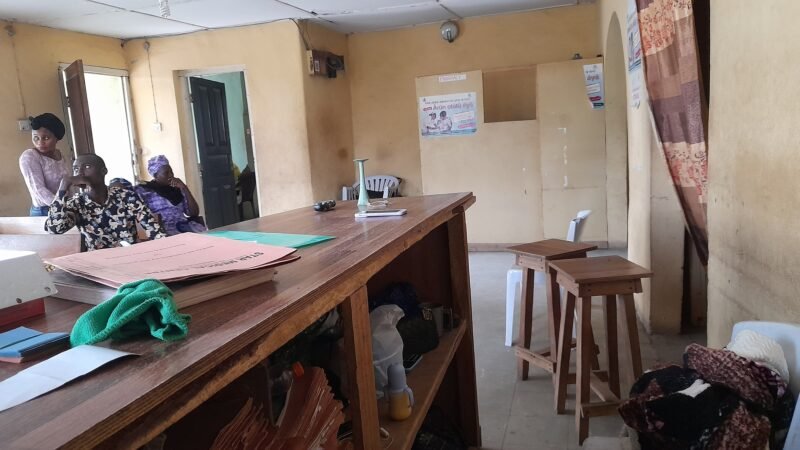
What drives them away is not poverty of ambition. The young Nigerians queuing at British High Commission gates and cramming for IELTS in café corners are among the most motivated, most credentialled people their country has produced. They leave because the infrastructure of professional life in Nigeria has been allowed to decay past the point of endurance. Doctors work without basic supplies in hospitals where the generator breaks mid-surgery. Engineers apply for roles that never materialise because procurement is captured and contracts are awarded to the connected rather than the qualified. Academics on university campuses interrupt lectures for ASUU strikes that stretch for months while the government offers extended silence in response. The talented leave not because they do not love Nigeria but because staying requires a tolerance for institutional indignity that has no relationship to competence or effort. That is a governance failure, not a cultural one.
The Remittance Consolation
The counter-argument, made most famously, and most carelessly, by former Labour Minister Chris Ngige, is that emigration is a surplus distribution mechanism, that remittances compensate for the professional exodus, that doctors working in Manchester are still serving Nigeria with the foreign exchange they send home. The World Bank reported Nigerian remittances at $20.9 billion in 2022. This figure is real. The interpretation is not. A remittance can buy medicine; it cannot train a specialist. It can pay school fees; it cannot staff a rural hospital. It can maintain a family; it cannot substitute for a functioning state. Countries do not develop by outsourcing their human capital and counting the incoming transfers. The remittance consolation prize is the statistical equivalent of celebrating a haemorrhage because the blood has found a use elsewhere.
The Real Architects

The architects of japa are not the migrants. They are the governors who have presided over three decades of declining real wages in the public sector, the legislators who have approved healthcare budgets that remain among the lowest as a proportion of GDP on the continent, the policymakers who have watched brain drain data accumulate across successive reports without designing any retention mechanism with teeth. Every year of inaction is an active decision. The departure queues at Murtala Muhammed Airport are not a natural disaster. They are a policy outcome, the cumulative consequence of a governing class that has built its own children’s futures in London, Houston, and Dubai while allowing the conditions that create japa to deepen. The system expels talent because the system was never designed to retain it. It was designed to extract from those who stay.
The argument for retention is not sentimental patriotism. It is structural. An economy cannot achieve industrialisation without an engineering workforce. A healthcare system cannot survive without doctors. A digital economy cannot emerge without technologists who build and stay. Every high-skilled emigrant who leaves takes with them not just a salary but networks, institutional knowledge, and the years of state investment in their formation. The question Nigeria must eventually answer, not in a speech, but in a budget, in a pay scale, in a functional hospital procurement system, is what it costs to keep them, against what it costs to keep losing them. That calculation has been avoided for too long. And the departure queues keep growing.
Read as an economic transaction rather than a lament, the exodus is a subsidy flowing in the wrong direction. Nigeria carries the full cost of producing a doctor or an engineer, the subsidised university place, the public teaching hospital, the years of training, and then delivers the finished professional, at the peak of trainability and the start of productivity, to a health or technology system that paid none of those costs. A poor country is capitalising the workforce of rich ones, and the direction of the transfer runs precisely opposite to the language of aid that supposedly governs the relationship. Britain and Canada do not need to develop Nigeria; Nigeria is quietly developing them, one departing graduate at a time, and presenting the remittance receipts as though the exchange had been favourable.
The hardest part of the verdict is that it points inward as much as outward. The destination states recruit because recruiting is rational, but Nigeria loses because retaining was never made rational, and the second fact is the one Nigerians can act on. A government that withholds salaries, underbuilds laboratories, and treats its professionals as an export commodity has authored the supply side of its own crisis. The migrant is not the author of japa. The author is the budget that funds a legislator’s allowances while a teaching hospital’s generator fails mid-surgery, and that budget is written in Abuja, not in London. Until the arithmetic of staying changes, the queues at the visa windows are not a betrayal of the nation. They are the most honest review the nation receives, delivered in the one currency a failing state cannot dispute: the feet of the people it trained and could not keep.