

Ghana and Zambia entered the last decade carrying near-identical structural burdens. Both are commodity-dependent economies. Both faced sustained currency pressure and fiscal shortfalls. Both submitted to IMF programme conditionality, the same external architecture, the same lending philosophy, the same structural adjustment prescriptions. Yet the trajectories that followed diverged in ways that neither the commodity story nor the IMF script can adequately explain. Understanding why is not a technical exercise in economic policy. It is a question about the thing that structural analysis most consistently underweights: the quality of governing coherence within the state itself.
The IMF programmes that Ghana and Zambia both entered were designed on similar principles. Revenue mobilisation. Expenditure rationalisation. Debt restructuring with external creditors. Currency stabilisation. The technical logic is internally consistent, and there are cases, globally, where it has produced the intended outcomes. The variable it cannot control, the variable it consistently underweights in programme design, is whether the state receiving the programme has sufficient internal coherence to implement it against the political pressures that reform creates. Fiscal adjustment produces losers. Losers organise. The state’s ability to hold the programme together against that organisation is determined not by the programme’s technical quality but by the governing coalition’s capacity for sustained political discipline. That capacity is not uniformly distributed. It is not randomly distributed either.
The Coherence Test
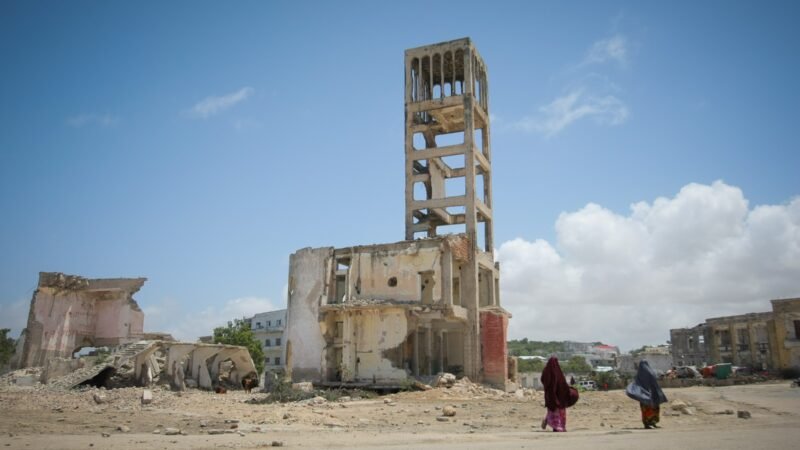
The coherence test, as it applies to African states, is a test of whether the institutions of governance, the executive, the legislature, the central bank, the revenue authority, the public procurement system, operate according to a shared logic that prioritises the state’s long-term structural position over short-term factional interest. Most African states fail this test most of the time. Not because their leaders are uniquely corrupt or incompetent; leadership quality in Africa is not systematically lower than in other regions at comparable development levels, but because the structural architecture of the post-colonial African state creates conditions in which incoherence is the politically rational choice.
The African state does not fail because it lacks resources or technical knowledge. It fails because governing coherence, the alignment of institutional incentives toward a shared strategic objective, is structurally harder to build in contexts where the prize of state capture is high, and the cost of losing power is catastrophic.
The prize-cost dynamic shapes everything. In states where state capture is the primary route to economic security for political actors, where losing an election means losing access to the contracts, appointments, and regulatory decisions that constitute the governing class’s economic base, every governance decision is simultaneously an economic decision. A revenue authority head who pursues a large corporate taxpayer that is politically connected to the sitting government faces not just bureaucratic resistance but existential economic risk. A central bank governor who refuses to accommodate off-budget expenditure faces removal. A finance minister who resists supplementary budget requests that would blow the deficit target faces political marginalisation. These are not failures of individual virtue. They are rational responses to an incentive structure that punishes institutional integrity.
What Coherence Looks Like
Rwanda occupies a position in the African governance conversation that is simultaneously instructive and overinterpreted. The Kagame government’s governing coherence is real and measurable, in the alignment between stated policy and budgetary allocation, in the enforcement of standards against politically connected actors when those actors create reputational risks, in the long-term consistency between development strategy and institutional priorities. But the mechanism of that coherence is a specific political economy: a dominant governing coalition without meaningful internal competition, sustained by a legitimacy narrative rooted in post-genocide reconstruction and a developmental nationalist compact between the government and the diaspora-connected private sector. Rwanda’s coherence cannot simply be extracted and transplanted. It is the product of conditions, some of them not reproducible without their authoritarian dimensions, that are specific to Rwanda’s recent history.
The more generalisable question is what governing coherence looks like in contexts with genuine electoral competition, the form of democracy that the majority of African states have, in principle, adopted. The evidence from Botswana, Mauritius, and, more recently, Ghana’s electoral alternations suggests that democratic competition and governing coherence are not inherently incompatible. But their compatibility is not guaranteed either. It is produced by specific institutional arrangements, strong independent revenue authorities, credible anti-corruption bodies with actual prosecution records, and civil service systems that insulate technical expertise from political rotation and require sustained investment and political will to build and maintain.
The Plan and the Architecture

The doctrine deficit, the gap between the stated strategic objectives of an African state and the institutional arrangements that would be required to pursue them seriously, is the coherence test’s most visible expression. Nigeria’s successive development plans have, over seven decades, described a diversified, industrialised, technologically advanced economy. The fiscal and regulatory architecture of the Nigerian state has, over the same period, consistently prioritised the political management of oil revenue over the structural investments that diversification would require. The gap between the plan and the architecture is not a planning failure. It is a coherence failure, the absence of an aligned institutional logic capable of subordinating short-term political calculations to long-term structural objectives.
Naming this as a coherence problem rather than a corruption problem or a capacity problem changes what the solution looks like. Anti-corruption programmes address the symptom without the systemic cause. Capacity building adds technical skills to institutions whose incentive structures continue to punish their use in the intended direction. The coherence problem requires interventions at the level of political economy: changes to how political actors relate to state resources, which requires changes to how state power is structured and contested. That is a deeper and more difficult reform target than technical assistance programmes typically engage with, which is partly why technical assistance programmes produce so much activity and so little sustained change.
Africa’s states do not fail under identical conditions because of identical failures. They fail because governing coherence is the variable that external conditions cannot provide and that technical assistance cannot supply. Its presence or absence, within states that share the same commodity prices, the same creditors, and the same IMF programme design, is the difference between outcomes that look like recovery and outcomes that look like repetition. The coherence test is the one examination that no external examiner can sit for an African state. It can only be passed from within.