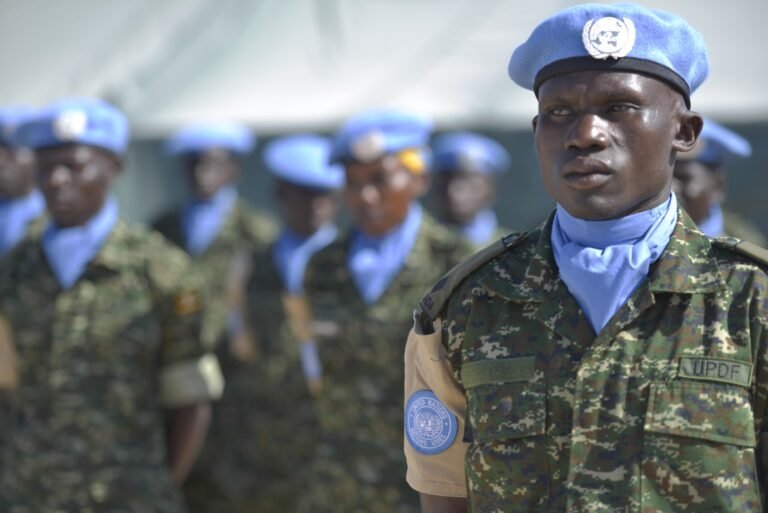
Uganda contributes more troops to African Union peacekeeping missions than almost any other nation on the continent. It has been Washington’s most dependable operational partner in East Africa for two decades, hosting intelligence infrastructure, conducting joint counterterrorism strikes, and anchoring the U.S. security architecture across a region the Pentagon classifies as a tier-one threat environment. Uganda also held an election in January 2026 accompanied by a four-day nationwide internet shutdown, mass arbitrary arrests, and violent crackdowns on opposition supporters. The incumbent extended his forty-year hold on power—no serious diplomatic consequences followed from Washington.
This is not a story about American hypocrisy. Hypocrisy implies a gap between stated values and actual behaviour, a failure of principle. What Uganda demonstrates is something more structurally significant: a system operating exactly as designed. The U.S. security architecture in East Africa does not demand democracy. It demands access. And Museveni, who has understood this calculus longer than most heads of state on the continent, has delivered access with remarkable consistency, in exchange for the one thing external guarantors reliably provide: regime survival insulation.
The Transaction, Not the Theft
The dominant analytical frame for U.S. interventionism in Africa positions African states as passive recipients of external pressure, fragmented by forces they cannot control, destabilised by decisions made in Washington or Brussels or Beijing. That frame is analytically incomplete and comes across as condescending. Uganda’s forty-year transaction exposes the mechanism that most coverage refuses to name: African governments do not lose sovereignty to external powers. The more precise governments trade it, rationally, deliberately, and with clear-eyed calculation of what they receive in return. The instrument was a regional security contribution. Uganda’s deployment of troops to Somalia under the African Union Mission gave Kampala something of extraordinary geopolitical value: indispensability. A state that Washington needs for a mission it cannot abandon is a state that Washington will not pressure beyond a threshold of public embarrassment. Somalia was not a humanitarian contribution. It was a premium payment on a regime survival insurance policy.
The returns were consistent. U.S. counterterrorism cooperation deepened through AFRICOM’s East Africa posture. Training, intelligence sharing, and security sector support flowed into Ugandan military and police structures, the same structures deployed to suppress the Walk-to-Work protests of 2011, the opposition crackdowns of 2021, and the internet shutdown and mass arrests that accompanied the January 2026 election. The equipment and institutional capacity built through external partnership became the operational backbone of domestic repression. The transaction was not incidental to this outcome. It was constitutive of it.
Why Repression Becomes Rational
The core tension in Uganda’s arrangement is not that Washington funds repression, though the resource flows do exactly that. The core tension is that the arrangement makes repression rational. When a regime’s survival does not depend on generating internal legitimacy, because external guarantors provide the security insulation that legitimacy would otherwise supply, the incentive to govern accountably collapses. Why build the consent of the governed when the architecture of external partnership makes consent unnecessary? Uganda’s governance trajectory since 2005 is not a failure of political will. It is a rational response to a system of incentives that external security architecture created and sustains. Uganda did not lose its sovereignty. It sold the option on it, and renewed the contract every election cycle.
The Same Logic Elsewhere
The comparative cases clarify the mechanism. Somalia’s engagement with external security guarantors followed a different surface form, not a stable incumbent leveraging partnerships, but a fragile federal government requiring them for basic survival. Yet the structural logic was identical: external security provision substituted for the internal state-building that would have made external provision unnecessary. The result was managed insecurity, a security environment permanently precarious enough to justify continued external presence, but never resolved enough to trigger the political transformation that might end it. Across the Sahel, the pre-coup governments of Mali, Burkina Faso, and Niger reproduced the same dependency architecture. These counterterrorism partnerships resourced security sectors while the governance failures producing insurgency went unaddressed. When the coups came, they came precisely because populations had concluded that the external security architecture was sustaining the regimes, not protecting them.
The global conversation about U.S. interventionism in Africa reaches, almost inevitably, for the language of imposition: what external powers do to African states, what Africa endures, what the continent is denied. That framing is not wrong. But it is incomplete in a way that matters politically. It renders Africa passive in a transaction that African governments have actively shaped, priced, and renewed. It locates agency entirely outside Africa, and in doing so, it absolves African elites of the choices they have made and the populations they have abandoned. The question Africa’s next generation of political movements must answer is not whether the external system is exploitative. It is. The question is whether African states will continue to make the trade, and whether citizens will continue to absorb the cost of transactions they never agreed to. Sovereignty is not taken from states that are too weak to resist. It is surrendered by governments that have calculated it is worth less than what they receive in exchange. Reclaiming it requires building what the trade was designed to avoid: governments whose survival depends on the people they govern.
The insistence on the word “sold” rather than “stolen” is not a debating point; it is the whole strategy. Theft locates the agency, and therefore the remedy, outside Africa: if sovereignty was taken, the task is to persuade or resist the taker, which is to say to wait on someone else’s restraint. A sale locates the agency inside: if sovereignty was traded, it can be withheld, repriced, or refused at the next renewal by the party that traded it. The grievance frame is comforting precisely because it asks nothing of African elites except indignation, while the transaction frame is uncomfortable precisely because it hands them the bill. Museveni’s arrangement is not Washington’s crime; it is Kampala’s contract, signed and re-signed in full knowledge of its terms. That is the harder and more useful truth, because a continent that admits it sold something is a continent that retains the power to stop selling it.