
In many African traditions, the elder does not cling to the stool. He shapes those who will sit on it, then steps back into the shade, because his authority was never in the seat. It was in the knowledge he carried away from it. What Africa’s contemporary political architecture has produced is something different: an elder who has fused himself to the wood and built a system to ensure no one can pry him loose.
The conventional critique of African gerontocracy reaches for biography. It catalogues ageing presidents, counts their years in office, and concludes that the problem is men who will not leave. That analysis is not wrong. It is simply insufficient. What it misses is the architecture beneath the men, a governance system that does not merely tolerate long rule but depends on it. One that has been engineered, layer by layer, to convert the passage of time into an instrument of political control. Africa is the youngest continent on earth. More than 60 per cent of its population is under 25. That demographic fact is not a latent political force awaiting activation. It is a pressure that the system has already anticipated and designed to absorb.
The Four Mechanisms
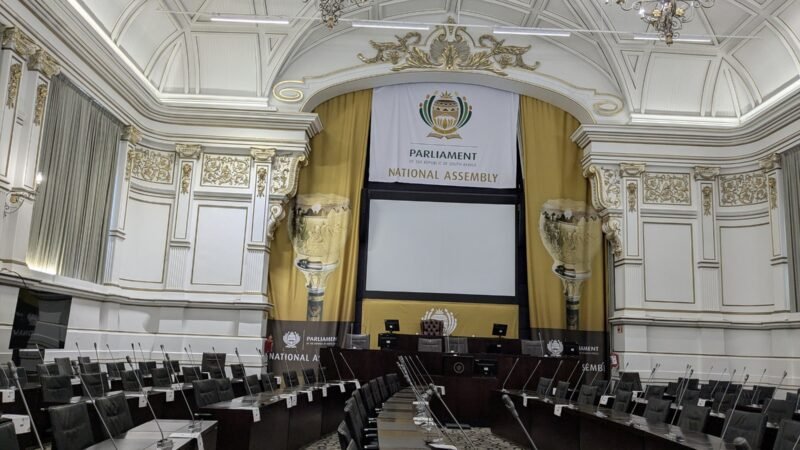
Gerontocracy sustains itself through four interlocking mechanisms. Constitutional engineering is the most visible: Uganda removed presidential term limits in 2005 and abolished age restrictions in 2017; Cameroon eliminated term limits in 2008; Togo’s Faure Gnassingbé rewrote the constitutional clock, following in the footsteps of a father who governed for nearly four decades. These are not aberrations. They are the legal codification of permanence, incumbency legalised as a governance model. Patronage distribution converts state resources into loyalty infrastructure; contracts, licences, subsidies, and public employment flow not through policy logic but through proximity to the regime, building a moat so deep that those outside are structurally excluded from the assets that would make challenge viable. Institutional throttling calibrates courts, electoral bodies, and opposition spaces, functional enough to produce legitimacy signals, too constrained to produce genuine accountability. Elections occur, opposition candidates stand, international observers file reports, and the architecture of democracy is maintained on the surface while its load-bearing structures are quietly removed.
The fourth mechanism binds the others. Time-delay governance moves policy at the speed of regime survival, not societal need. Reforms are announced, stalled, recycled, and re-announced. Each cycle buys continuity without delivery. Youth unemployment, digital infrastructure deficits, and climate adaptation gaps accumulate not because the state lacks capacity, but because urgency threatens incumbency. A system under pressure to perform is a system under pressure to change. Latency is control.
The External Customers
The system does not operate in isolation. It has external customers, and they are among its most important structural supports. What global capital and bilateral partners describe as stability in long-governed African states is better understood as transactional predictability: the same counterpart across the negotiating table, year after year; the same access channels; the same concession frameworks. For investors navigating complex operating environments, the long-serving African leader is not a governance problem. He is a known variable in a continent full of unknowns. His longevity is, from this vantage point, a service. This is why external pressure on gerontocracy is structurally limited. Capital that matters in extractive-sector investment, bilateral lending, and security cooperation flows toward predictability rather than democratic health. The system is sustained partly from within and partly by the preferences of those who engage with it from the outside.
Where the Architecture Cracks
The break conditions are not theoretical. Sudan represents the full rupture case: state liquidity and security cohesion collapsed simultaneously, and the architecture did not reform; it fractured into competing armed factions, each attempting to reconstruct a version of the same control model. Nigeria is operating under sustained fiscal and monetary pressures that are narrowing the patronage window; fuel subsidy removal, naira devaluation, and persistent public sector arrears indicate a state losing the financial bandwidth to sustain its loyalty infrastructure at historical volumes. Senegal offers the most instructive case of near-break resistance; the attempted extension of President Sall’s tenure met institutional and civic resistance sufficient to trigger a political concession without systemic collapse, demonstrating that the architecture has limits, not that those limits have been dismantled. The Sahel states have executed a different logic entirely: military formations that lost confidence in the civilian patronage system’s returns deliberately enacted a security fracture. The coups reset the clock without replacing the architecture. The mechanism changes. The design principle does not.
Africa’s demographic future is not approaching. It is already here, impatient, connected, economically pressured, and structurally locked out of the governance systems that shape its conditions. The time-control architecture has absorbed a great deal of that pressure with considerable skill. But absorption is not neutralisation. Every deferred reform, every recycled promise, every co-opted youth voice that delivers nothing, shortens the window before absorption fails. The question is not whether Africa’s governance architecture will change. Systems that convert time into control eventually run out of time to convert. The question is whether the transition, when it comes, produces replacement architectures of genuine accountability or simply new configurations of the same design, wearing younger faces. The elder who knows his season has passed does not wait to be removed. He rises from the stool, places the younger hand upon it, and walks toward the shade where his counsel becomes wisdom rather than obstruction. That elder still exists across Africa. The tragedy is not his absence. It is that the system was redesigned to make his departure optional, and then ensured he never had to choose.