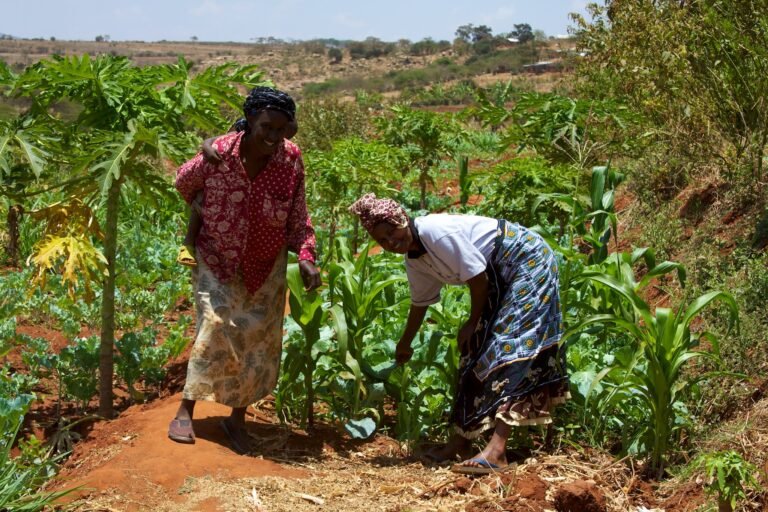

At dusk in a village whose name does not appear in any development report, a fourteen-year-old girl is dressed in bridal cloth. Her mother, asked to explain, says: a cow is more important than a girl. The mother is not a monster. She is a woman calculating within the economic, legal, social, and institutional systems surrounding her, systems that have consistently validated that calculation. That is the problem we need to name precisely. Child marriage in Africa is not primarily a failure of individual morality. It is a failure of systems that have spent decades pricing girls below the value of cattle.
More than 125 million women and girls alive in Africa today were married as children. One in three girls in West and Central Africa is married before eighteen. Without accelerated intervention, the African Union projects that Africa will hold the world’s largest absolute number of child brides by 2050, not because Africa is uniquely brutal, but because population growth is outpacing the slow, uneven decline in prevalence. The scale demands more than sympathy. It demands a structural account of why the practice persists, how it is sustained, and what kind of power- economic, political, and social- would be required to end it.
A Price Signal, Not a Tradition
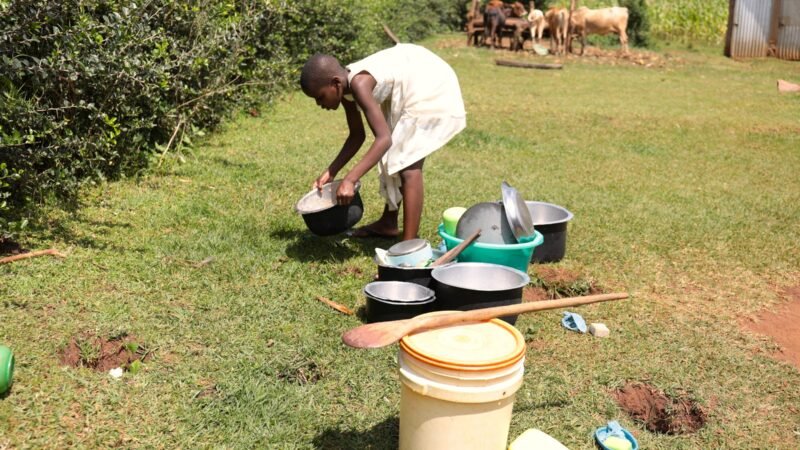
Poverty is the most consistent driver, and the data is precise enough to be damning. In Nigeria, 58 per cent of girls from the poorest households are married before 18, compared with four per cent from the wealthiest households. That gap is not a cultural difference. It is a price signal. In conditions of extreme scarcity, a daughter’s marriage generates resources, a bride price, reduced household expenditure, land or livestock, that families facing destitution cannot afford to refuse. The transaction is rational within the available incentive structure. The World Bank has quantified the macro cost: eliminating child marriage in Nigeria was calculated to generate an additional $7.6 billion in women’s earnings; in Ethiopia, ending the practice is projected to add up to $1.5 billion annually. These are not advocacy statistics. They are the price tag of the current arrangement, the sum that African economies pay every year to maintain a system that treats girls as liabilities to be transferred rather than assets to be developed. Child marriage is not a poverty response. It is a poverty generator.
Where the Culture Argument Fails
The standard framing of child marriage as a cultural problem is not wrong, but it is dangerously incomplete. Culture shapes the form the practice takes, the specific age thresholds, the bride price mechanisms, the religious justifications invoked. But culture does not explain the correlation between poverty and prevalence, or why child marriage rates drop sharply when girls access secondary education, or why Rwanda, sharing a regional cultural heritage, has driven its rate to below seven per cent. In comparison, Niger remains above 75 per cent.
Rwanda’s success is instructive precisely because it did not frame the problem as tradition to be shamed out of existence. It built the infrastructure that makes early marriage economically unnecessary and legally untenable: near-universal primary schooling, strict enforcement of the eighteen-year minimum, and community awareness programmes that reframed early marriage as a harm rather than a norm. These examples share a common logic: they attacked the structural conditions rather than the expression. They built schools. They enforced laws. They shifted the rational household calculation.
The Law and Its Enforcement Gap
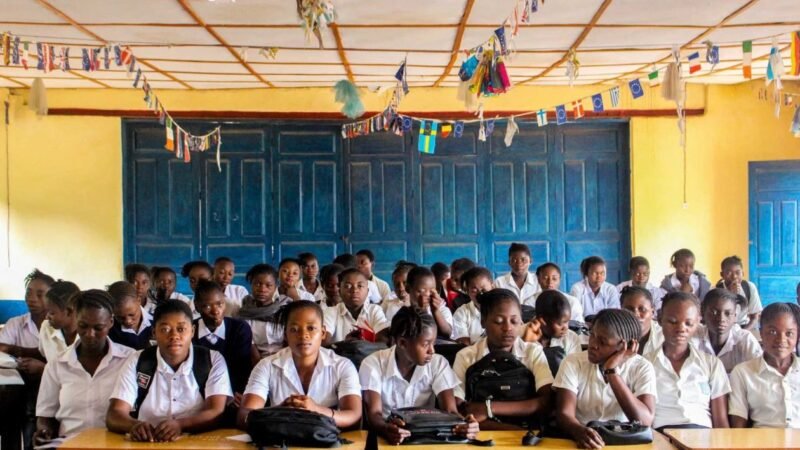
Nearly every African country has set eighteen as the legal minimum marriage age. The law exists. The gap between the law and its enforcement is where girls are lost. In Nigeria, federal law mandates eighteen, but Sharia and customary state codes create exceptions that federal legislation cannot override in practice. In Bauchi State, 74 per cent of young women were married before eighteen, a figure that coexists with a national legal framework that technically prohibits the practice. The law is not absent. The will to enforce it against community and customary authority is. Legal reform without an enforcement architecture is not protection. Zambia’s 2023 legislation annulling child marriages is significant precisely because it was accompanied by a political commitment to enforcement, not merely passage. That is the distinction between a law that protects and a law that performs.
No African region is currently on track to eliminate child marriage by the 2030 SDG deadline. That is a fact. It is not a reason for resignation. It is an argument for a different quality of urgency, one that moves beyond annual commitments at continental summits and manifests in budget lines, enforcement mechanisms, secondary school completion rates for girls, and the kind of social protection infrastructure that removes poverty as a driver of child marriage rather than simply condemning poverty’s consequences. There is a harder corollary that the advocacy language tends to soften, and the kernel of this argument requires stating it: the mother who prices her daughter below a cow is responding correctly to the incentives she was handed. Condemn her and nothing changes, because her arithmetic is sound within the system she inhabits. Change the arithmetic: a secondary-school place that makes the girl an earner rather than a cost, a social-protection floor that lets a destitute household survive without selling her future, an eighteen-year minimum enforced against customary authority rather than printed and ignored, and the same rational mother makes a different choice. Rwanda did not lecture its way below seven per cent. It rebuilt the calculation. The lesson the continent keeps declining to learn is that a value is not changed by being asserted; it is changed by being made affordable to act on. The villages where girls are dressed in bridal cloth at dusk are not waiting for a continent to feel more strongly. They are waiting for one to budget differently.
A cow is not more important than a girl. The time for Africa’s systems to reflect that truth, in law, in budget, and in the daily reality of every village at dusk, is not 2030. It is now.