Global agriculture depends on three primary nutrients for synthetic fertiliser: nitrogen, potassium, and phosphorus. Nitrogen can be manufactured industrially from air. Potassium and phosphorus cannot; they must be mined from finite geological deposits distributed unevenly around the world. Morocco, together with Western Sahara territory it administers, holds the majority of the world’s known phosphate rock reserves, a concentration of a single agricultural input more extreme than OPEC’s historical grip on oil production. Every country that grows food using phosphate fertiliser, which is to say nearly every country practising industrial agriculture, has some exposure to Moroccan phosphate supply, directly or through the global price it helps set.
A Chokepoint With Less Attention Than It Deserves
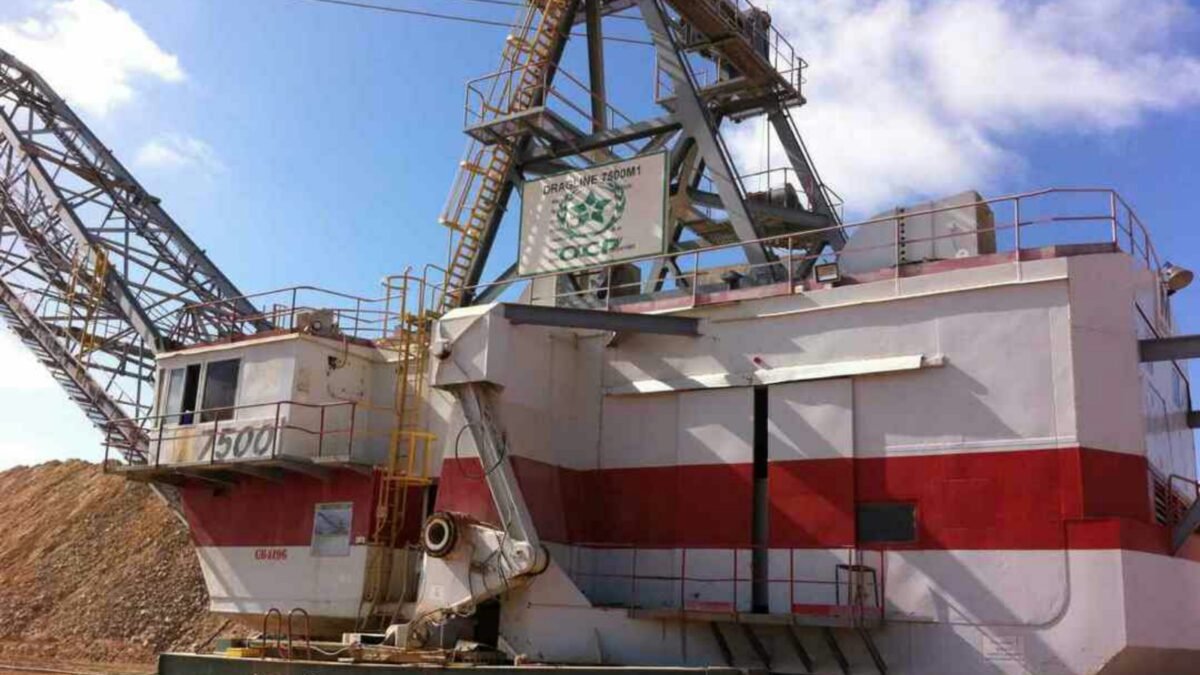
OCP Group, Morocco’s state-controlled phosphate company, is the world’s largest exporter of phosphate and phosphate-derived fertilisers. The Moroccan state has pursued that position with deliberate industrial strategy over several decades, investing in downstream processing capacity that converts raw phosphate rock into higher-value fertiliser products rather than exporting ore alone, a value-capture strategy several of the continent’s mineral-exporting states have struggled to replicate with cobalt or lithium. That distinction matters: Morocco did not simply have the geological luck of sitting on a large reserve. It built the processing capacity to convert that reserve into a controlling position across the entire fertiliser value chain, from mine to finished product.
Morocco did not simply have the geological luck of sitting on a large reserve. It built the capacity to convert that reserve into control of the entire value chain.
What the Reserves Actually Cover
The scale is worth stating plainly rather than left implicit. Estimates from the United States Geological Survey and industry analysts have for years placed Morocco’s share of global phosphate rock reserves at well over half of the known total, with the next-largest holders, China and a scattering of other producers, controlling reserve bases an order of magnitude smaller. That is not a market with several credible alternative suppliers a buyer can pivot toward if Moroccan supply is disrupted; it is closer to a genuine single point of failure for a nutrient with no industrial substitute. Nitrogen fertiliser production can, in principle, expand wherever natural gas is available. Phosphate cannot be manufactured. It is mined from a finite, geographically concentrated deposit, and Morocco holds most of what is left.
Why This Gets Less Attention Than Oil or Lithium
Phosphate lacks the geopolitical drama of oil, the climate salience of lithium, or the security anxiety of rare earths used in weapons systems, which is precisely why its concentration receives comparatively little strategic analysis despite arguably higher stakes: a sustained disruption to phosphate supply does not raise fuel prices or delay a smartphone shipment. It threatens the fertiliser inputs global food production depends on, with consequences that show up in crop yields and food prices with a lag most commentary has moved on before connecting to the source. When global fertiliser prices spiked sharply following the 2022 disruption to Russian and Belarusian potash and nitrogen exports, phosphate supply, concentrated in Morocco, China, and a small number of other producers, was part of the same tightening squeeze on global agricultural inputs, a dimension of that crisis discussed far less than the grain and energy angles that dominated coverage.
Morocco has, so far, used its position primarily as commercial leverage rather than overt political leverage, expanding OCP’s customer base across Africa, Latin America, and Asia and positioning the country as an indispensable supplier to food-insecure regions rather than as a source of geopolitical pressure. That restraint is itself notable and could change; a country holding this degree of concentration in an input this essential possesses a form of structural power that does not require exercising it aggressively to matter. The African Union and African governments dependent on imported fertiliser have an interest in understanding phosphate concentration as clearly as they understand oil dependency, because a continent still working to close its own food-security gap is, in this particular input, dependent on a single African country’s reserves and processing capacity functioning smoothly, a dependency worth naming even when it happens to run through African rather than foreign hands.
There is also a continental dimension to the story that gets flattened when phosphate is discussed only as a Morocco-specific asset. A resource this concentrated, in a country willing to invest in the processing capacity that turns geology into leverage, is a demonstration of a pathway other African mineral exporters have talked about pursuing and rarely executed with the same discipline: build the downstream industry before the reserve is depleted or the market moves elsewhere. Whether that model gets studied seriously by the countries sitting on the continent’s cobalt, lithium, and rare earth deposits, or dismissed as a one-off advantage of Moroccan geology, will say a great deal about how much of the current minerals rush actually changes who captures the value it generates.