
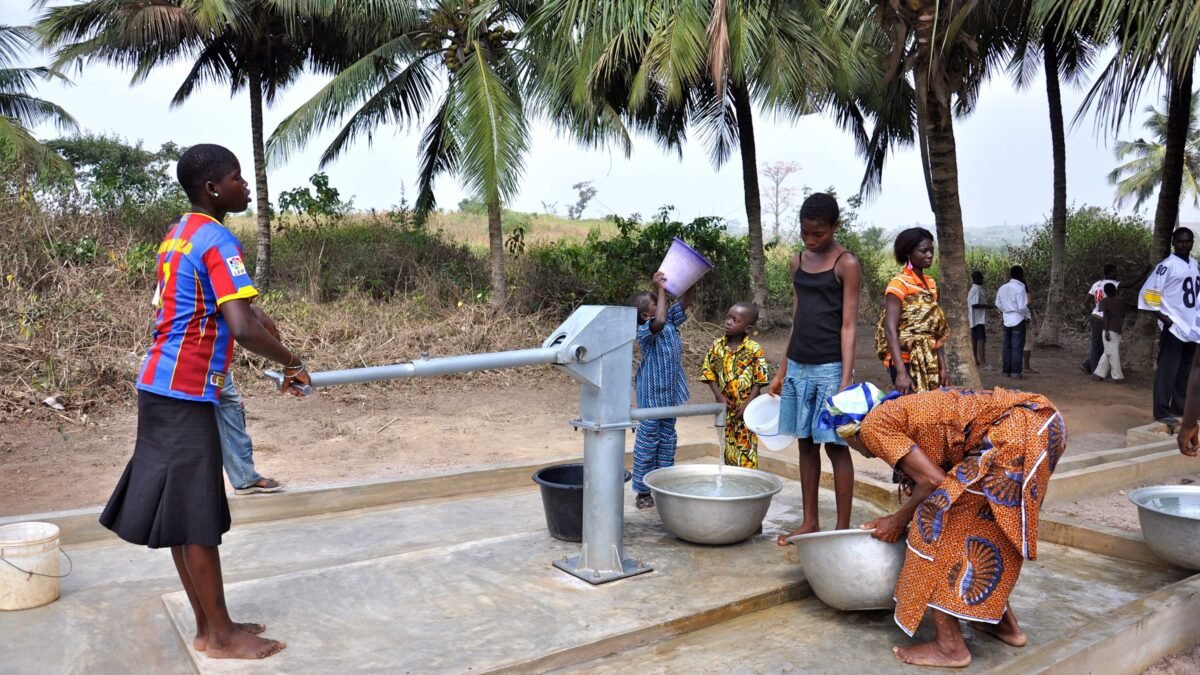
Nearly 540 million people across Africa defecate in fields, along riverbanks, and in open spaces because no alternative exists for them. That number is not a projection or a worst-case estimate. It is the present. The African sanitation gap is not a development challenge waiting to be addressed; it is a daily emergency administered through infrastructure neglect and political indifference, and it kills with quiet efficiency.
The World Bank has estimated that poor sanitation contributes to the deaths of 122,000 Nigerians every year, among them 87,000 children under five. Diarrhoeal diseases, transmitted through contaminated water sources fouled by open defecation, are not exotic illnesses. They are preventable outcomes of a system that has never been adequately built. Nigeria is not an outlier on this measure; it is the most populous demonstration of a continental pattern.
The structural logic is straightforward and damning. Wealthy urban households have flush toilets connected to functional septic systems. Rural households without wealth use rudimentary latrines, often sited over wetlands or near water bodies, offering little protection against disease transmission. The gap between these two realities is not a matter of culture or individual choice. It is a capital allocation problem that maps precisely onto economic inequality. Improved sanitation is a market good that the state has failed to make a public right.
The Politics of the Invisible Good
To understand why the state fails here specifically, look at what sanitation does not offer a politician. A buried sewer line has no ribbon to cut. A functioning septic network produces no photograph, no commissioning ceremony, no monument with a name on it. A stadium does, a highway interchange does, an airport terminal does. Public capital in much of the continent flows toward infrastructure that can be seen, named, and claimed, because visibility is the currency of incumbency. Sanitation is the archetypal invisible good: its success is the absence of a funeral, a cholera ward that never fills, a statistic that does not rise. Systems that are rewarded only when they are seen will always underfund the things that work best when no one notices them.
The Gendered Cost
Beyond the mortality count, the Africa sanitation gap exacts a toll on gender equity that is rarely disaggregated in policy discourse. Women and girls who lack access to private sanitation bear a dual burden: the indignity of exposure and the elevated risk of sexual violence during nighttime trips to open spaces. This is not incidental to the infrastructure failure; it is an embedded consequence of it. Sanitation policy that does not begin with this reality is not sanitation policy at all.
What Is Structurally Possible
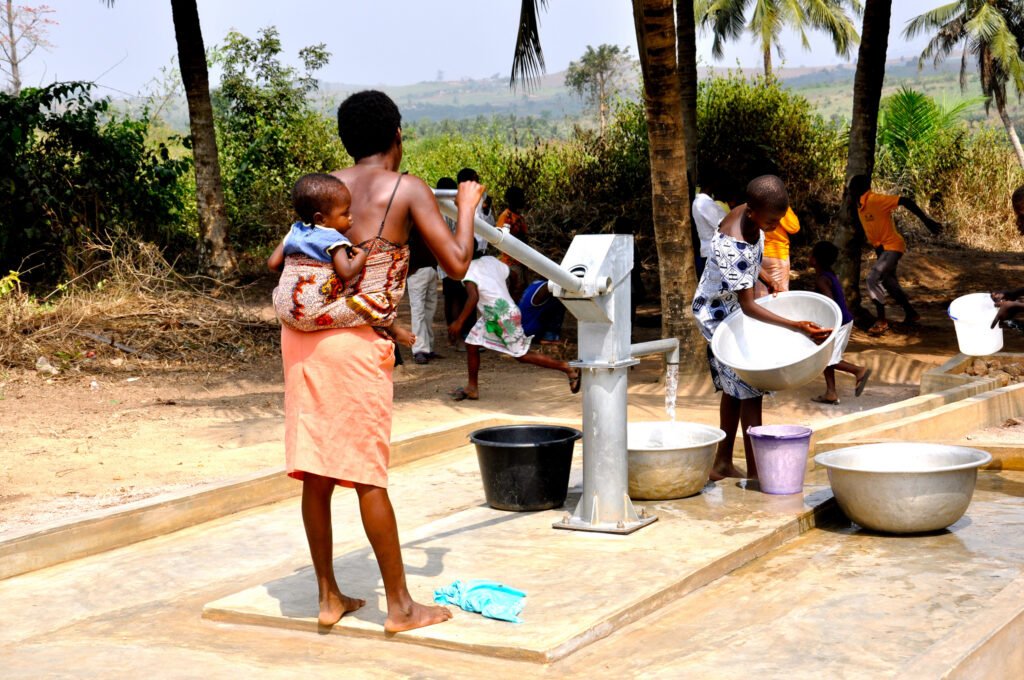
Comparisons offer some perspective on what is structurally possible. Bangladesh, a country with significantly lower GDP per capita than Nigeria at the time of its intervention, achieved near-elimination of open defecation within two decades through coordinated community mobilisation, sustained government financing, and political will at the executive level. The sanitation ladder framework, the progression from open defecation through basic latrines to hygienic sanitation, is not aspirational fiction. Bangladesh walked it. South Sudan and Chad, burdened by active conflict and extreme poverty, have not. Nigeria, which has neither conflict at national scale nor the extreme poverty of the Sahel’s worst performers, occupies a position that demands a more uncomfortable accounting. The variable that separated Dhaka from Abuja was not wealth. It was the decision to treat the invisible good as a sovereign obligation rather than a donor’s hobby.
The financing gap is real, but it is not the primary explanation. African governments collectively spend only a fraction of the investment required to meet SDG 6.2, the Sustainable Development Goal that commits nations to universal access to safe and hygienic sanitation by 2030. That target is now structurally unachievable across much of the continent at current funding trajectories. Less discussed is where the funding goes when it does arrive. Community-led approaches that invest in local ownership and maintenance have outperformed top-down infrastructure projects that leave hardware without management systems. The toilet built and abandoned is not progress. It reflects a misallocation of resources.
Behavioural resistance to adopting sanitation facilities, where it genuinely exists, is not a cultural curiosity to be managed through shame campaigns. It reflects rational responses to infrastructure that arrives without water supply, maintenance support, or community trust. Coercive enforcement strategies, including fines applied without parallel investment in access, generate compliance on paper and defiance in practice. Countries that have closed their sanitation gaps have done so by making the alternative to open defecation reliable, affordable, and accessible, not by penalising its absence.
The leverage here is brutally simple to trace. The benefit of cheap neglect is captured today by treasuries that redirect capital toward visible priorities and by officials who collect the political dividend from those priorities. The cost is carried tomorrow by the child who dies of a preventable infection and the woman who calculates her safety against her dignity every night. The Africa sanitation gap is ultimately a test of whether governments treat public health as a sovereign obligation or a donor-funded supplement. Sanitation infrastructure in underserved rural areas requires Treasury-backed capital expenditure, not project-by-project philanthropic patching. Political leaders who preside over 87,000 dead Nigerian children annually while the legislature debates more photogenic priorities have made a resource allocation choice. That choice has a name, and it is not a technical one.