The language of Africa’s potential has outpaced the machinery designed to realise it by at least a generation. Youthful demographics, mineral wealth, agricultural land, and expanding middle-class consumption represent genuine structural advantages. Still, their conversion into sustained, equitable growth depends on financial systems, infrastructure networks, and governance architectures that have been systematically undercapitalised, underbuilt, and under-reformed.
The continent’s resources are real. Africa holds a disproportionate share of global reserves in cobalt, lithium, manganese, and other minerals central to the energy transition. It contains approximately 60 per cent of the world’s uncultivated arable land [World Bank estimates]. Its youth population, the fastest-growing in the world, represents the largest cohort of working-age entrants into any regional labour market over the coming three decades. These are not rhetorical assertions. They are structural facts. The question is not whether Africa has the raw material for economic transformation. The question is what kind of transformation is actually occurring, and who captures its value.
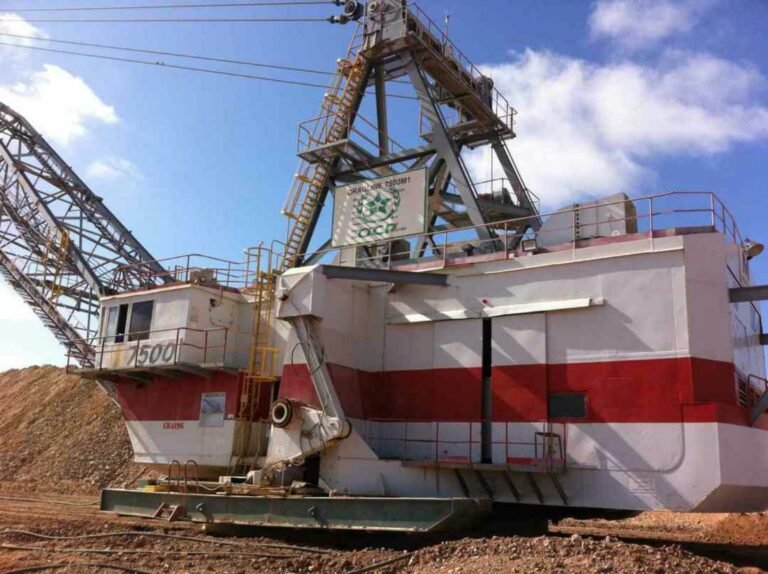
The answer, across most resource sectors, is consistent and clarifying: extraction without industrialisation, production without processing, growth without structural transformation. Africa exports raw materials and imports finished goods. It generates foreign exchange from commodity exports while the value-added manufacturing, processing, and technology development that commodity revenues could finance remains concentrated elsewhere.
The Financing Gap as Structural Design
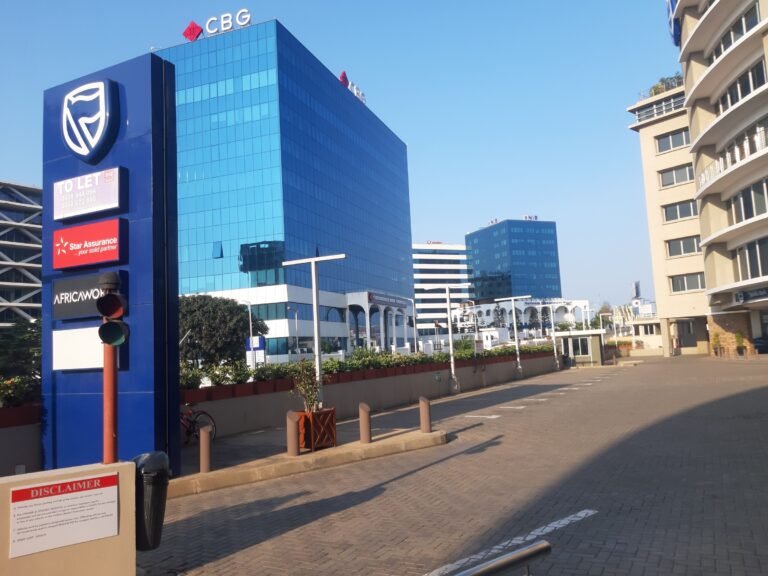
Africa’s infrastructure financing gap, estimated at between $68 billion and $108 billion annually by the African Development Bank, is not simply a funding shortfall. It is a structural feature of an international financial system that prices African sovereign risk at multiples above those of comparable emerging market peers, routes capital toward established markets where return predictability is highest, and has consistently underfunded the infrastructure that would reduce the risk premium it uses to justify its own under-investment. The logic is circular and self-reinforcing.
The Risk Premium Trap
In many cases, African governments pay a sovereign risk premium that reflects their structural positioning within global capital markets rather than their actual economic fundamentals. Countries with strong commodity export revenues, manageable debt-to-GDP ratios, and credible central bank frameworks routinely borrow at rates that would be considered punitive in more established market contexts. The premium extracts value that could otherwise finance the very infrastructure development that would reduce the risk premium over time.
Africa exports raw materials and imports finished goods. It grows without transforming. The promise is real. The architecture designed to deliver it remains someone else’s.
Youth as Variable, Not Asset
The demographic dividend narrative, that Africa’s youth bulge will drive economic growth through expanding labour supply and consumption, carries a conditional clause that is rarely stated explicitly: the dividend is only realised if the youth population is productively employed in an economy generating sufficient formal sector jobs at adequate wage levels. The conditions are not currently being met across most of the continent. Youth unemployment and underemployment rates in sub-Saharan Africa remain among the highest globally. The informal sector absorbs labour in ways that do not generate the productivity gains, tax revenue, or consumption growth that economic transformation requires.
An unrealised demographic dividend becomes a demographic pressure. A youth population that does not find productive economic participation within formal systems does not remain quiescent. The social and political instability that has accompanied youth unemployment across parts of the Sahel, the Horn, and West Africa is not incidental to economic mismanagement; it is consequential to it.
The Terms of the Next Phase
The African Continental Free Trade Area represents the most serious attempt to restructure African economic development from the supply side, creating the market scale that could justify domestic industrialisation, enable the emergence of regional value chains, and reduce the continent’s vulnerability to external commodity price cycles. Its implementation is uneven and slow, but its logic is sound: a single African market of 1.4 billion people with a combined GDP above $3 trillion creates the conditions in which African manufacturing becomes economically viable in ways it cannot be when producing for fragmented national markets.
The difference between Africa’s current development trajectory and the trajectory its structural assets make possible is not primarily a matter of more foreign investment, more development aid, or more policy reports on the continent’s potential. It is a matter of whether African governments can create the infrastructure, regulatory environments, and industrial policies that redirect commodity revenues into the structural transformation those commodities could fund, and whether the international financial architecture can be reformed enough to stop treating African economic development as a risk premium rather than an opportunity.
The continent’s natural endowments did not create the systems that underdeliver on them. Those systems were designed elsewhere, for purposes that did not include African prosperity as a primary objective. Changing the outcome requires changing the architecture. The materials to build a different structure have been present for some time. The engineering remains the work of this generation.
If one mechanism deserves to be singled out, it is the risk premium, because it is where the architecture does its quietest and most expensive work. A government whose fundamentals would earn a moderate rating in a more established market is charged a punitive one for the crime of having an African address, and the surcharge is justified by the very underdevelopment it perpetuates. The premium drains the capital that would build the infrastructure that would lower the premium, a circle engineered to close on itself. This is not the market making a neutral judgement about Africa; it is the market charging Africa for a reputation it was assigned rather than earned, and then citing the cost of that reputation as proof it was deserved. Until the continent can price its own risk, through deeper domestic capital markets, regional financial institutions, and a credit architecture it part-owns, it will keep paying a tax to borrow against a future the tax itself defers. The endowment is not the variable. The terms of access to capital are, and the lenders wrote those terms.