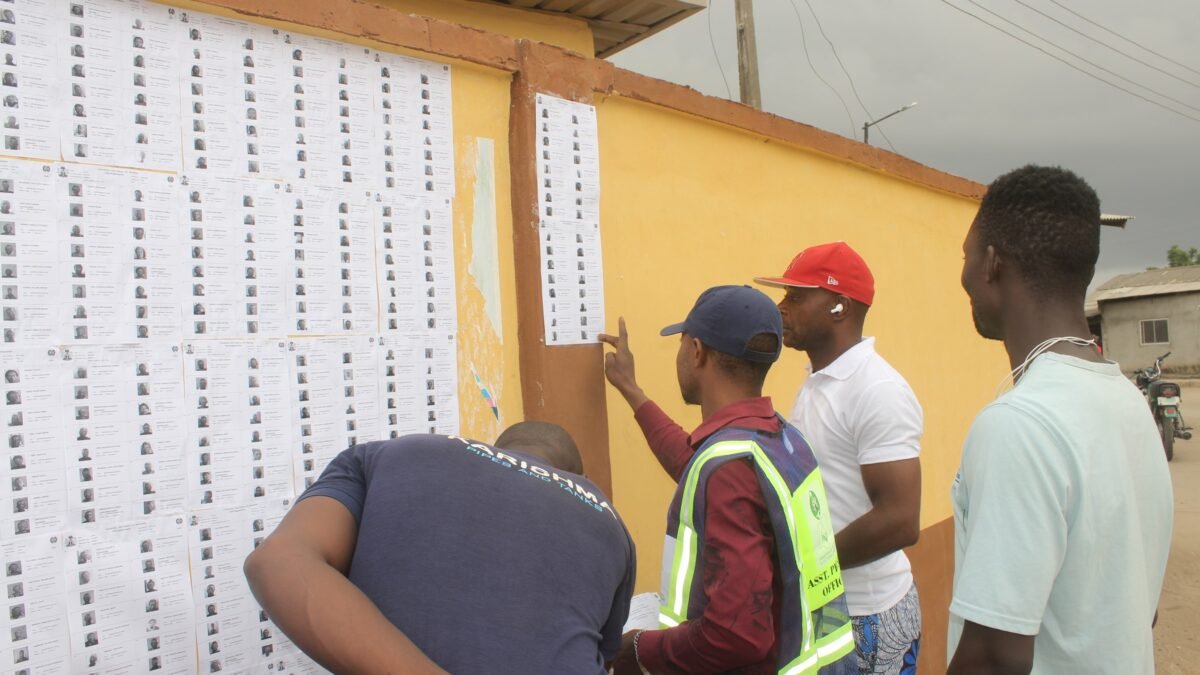
Since Nigeria’s return to civilian rule in 1999, every general election cycle has produced a specific category of documented violence: pre-election intimidation, ballot snatching at polling units, post-result clashes, and the selective targeting of candidates, officials, and voters whose political allegiances made them strategic threats. The 2011 post-election unrest killed over 800 people. The 2015 cycle, deemed relatively peaceful by international standards that had calibrated themselves to Nigerian conditions, still recorded at least 108 fatalities. The 2019 elections were conducted against a backdrop of campaign violence that had already claimed lives before a single ballot was cast. Nigeria electoral violence is not a crisis that arrives suddenly; it is a standing condition of the political system, documented in advance by the International Crisis Group and other monitoring bodies, identifiable by geography and political configuration, and consistently not prevented by the institutions whose function includes preventing it.
The Map of Risk
The six states identified by the International Crisis Group as highest risk for the 2019 cycle, Rivers, Akwa Ibom, Kaduna, Kano, Plateau, and Adamawa, share structural features that explain their vulnerability. Each combines at least two of the following conditions: an intensely personalised rivalry between major political actors who have instrumentalised violence as a competitive tool; an ethnic or religious cleavage that election campaigns activate; security forces whose neutrality is compromised by proximity to incumbent interests; and an Independent National Electoral Commission presence that lacks the logistical and institutional authority to enforce process in a hostile environment. These are not unpredictable combinations. They are the standard configuration of Nigerian electoral violence, observable in state after state across election cycles.
Rivers as Diagnostic
Rivers State is the diagnostic case. Governor Nyesom Wike’s bitter political rivalry with his predecessor, Rotimi Amaechi, was not a 2019 development; it had been active for years, and its consequences for electoral security had been documented in preceding cycles. Armed groups, predominantly linked to cult organisations, had been established as instruments of political competition in Port Harcourt and across Rivers State well before the 2019 elections were scheduled. The suspension of a Port Harcourt bye-election in August 2018 due to violence, the kidnapping and murder of an APC official in November 2018, and gun attacks on rallies of both major parties were not warning signs. They were the pattern itself, operating ahead of the general election as a preview of what its competition dynamics would produce. The state received this pattern and produced the same pattern.
Kaduna illuminates the ethnic and religious dimension of Nigeria’s electoral violence at its most structurally embedded. The state had recorded more than half the national death toll from election violence in 2011. By 2019, the religious tension created by Governor Nasir El-Rufai’s decision to select a Muslim running mate, breaking the Muslim-Christian power-sharing convention that had managed interfaith tension, was operating alongside an ongoing herder-farmer conflict that had displaced tens of thousands and killed hundreds in recent years. Southern Kaduna’s communities, Christian-majority and historically marginalised in state power distributions, entered the 2019 elections already carrying grievances that the campaign period had not diminished. The structural conditions for violence were not hidden. They were documented, mapped, and analysed. The prevention infrastructure matched to that analysis was inadequate.
Kano’s politics of scale- over eleven million residents, five million registered voters, the historical dominance of whichever candidate won there in the presidential result- had produced the Abdullahi Ganduje–Rabiu Kwankwaso rivalry, a contest between two northern political titans whose follower bases had a documented history of physical confrontation. Kwankwaso supporters attempting to hold rallies faced systematic obstruction. The risk of Kano becoming a violence flashpoint in 2019, as it had been in 2011, was assessed and documented by monitoring organisations. It was not neutralised by election management or security deployment sufficient to match the stated risk level.
Plateau’s Middle Belt geography makes it one of Nigeria’s most complex electoral environments: a patchwork of ethnic communities with overlapping “indigene” and “settler” designations whose legal ambiguity has been exploited by political actors for decades, overlaid by Fulani herder-farmer violence that had killed over 1,800 people in two years. Jos North alone contained the conditions for conflict between allegations of voter importation across state boundaries and the retaliatory threats such allegations produce from communities who perceive demographic manipulation as existential. In Adamawa, where PDP presidential candidate Atiku Abubakar and APC’s First Lady Aisha Buhari both held homeland political significance, and where youth gangs known locally as Shila Boys had been documented as instruments of political intimidation, the election was a competition for symbolic territorial dominance rather than just votes.
A Failure of Will
Nigeria’s electoral violence will not be addressed by acknowledging its existence after each cycle. The International Crisis Group’s pre-election mapping identifies these conditions in time to act on them. Acting on them requires INEC logistical capacity matched to the security environment, security forces deployed under rules of engagement that prioritise civilian protection over incumbent preference, and political parties that have signed and are legally bound by peace accords with enforcement consequences. None of these conditions fully obtained in 2019. The structural assessment of which states would experience violence was accurate. The prevention infrastructure was not equal to the assessment. That gap is not a failure of intelligence. It is a failure of institutional will.