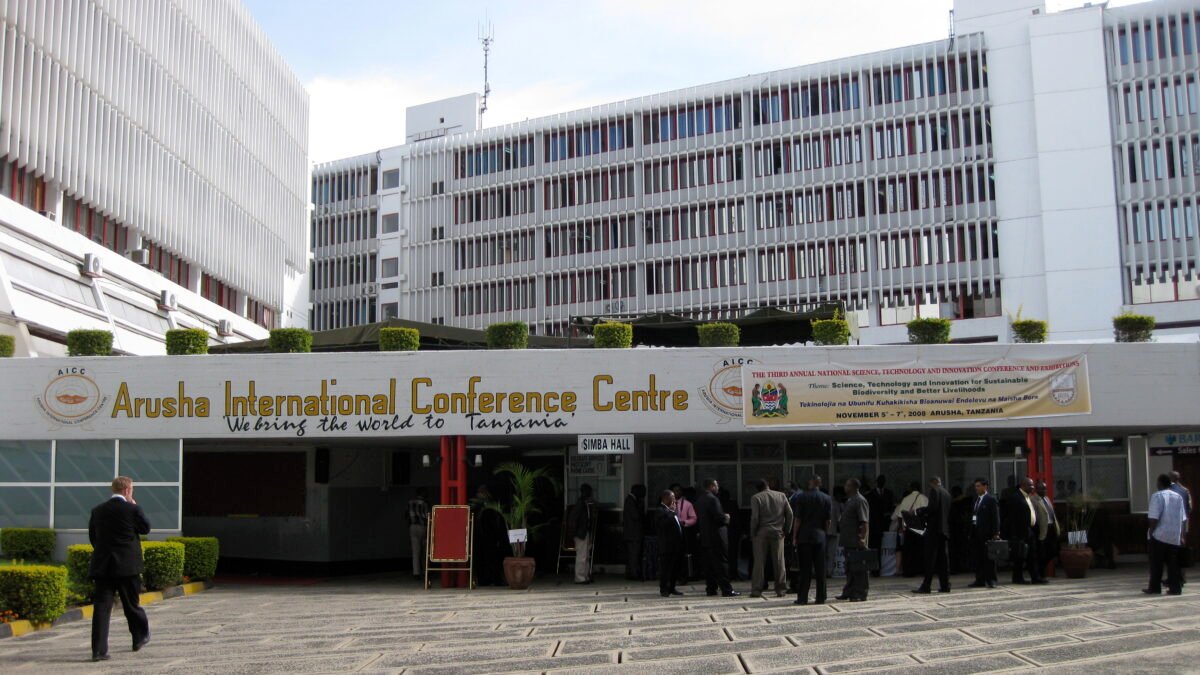
The African Court on Human and Peoples’ Rights, seated in Arusha, was designed to close a specific gap in continental governance: African citizens who believed their own government had violated their rights had, for decades, no continental judicial body to appeal to directly, only the African Commission on Human and Peoples’ Rights, a quasi-judicial body with recommendations states could and routinely did ignore. The Court’s founding protocol allowed something stronger, a mechanism under Article 34(6) by which a member state could issue a special declaration permitting its own individuals and NGOs to bring cases directly against it. A little over half of the African Union’s member states ratified the Court’s protocol at all, and a smaller number still made the additional declaration granting direct access for citizens. Since 2016, four of those states, Rwanda, Tanzania, Côte d’Ivoire, and Benin, have withdrawn the declaration entirely, each after the Court ruled against the government in a case its leadership did not welcome.
The Pattern Behind Each Withdrawal
Rwanda withdrew first, in 2016, after the Court accepted a case from an opposition figure challenging restrictions on political participation, a ruling Kigali’s government characterised as the Court overstepping into domestic political matters properly left to national sovereignty. Tanzania, the Court’s own host country, followed in 2019 after a string of rulings against it on issues ranging from electoral law to the death penalty, decisions the government argued interfered with matters the Tanzanian constitution and courts were equipped to handle domestically. Côte d’Ivoire withdrew in 2020 amid a politically charged case connected to opposition figure Guillaume Soro, and Benin withdrew the same year following a ruling related to its own electoral disputes. In each case, the sequence was the same: a government accepted direct citizen access when the political cost of doing so was low, then withdrew it once the Court used that access to rule against a decision the government considered non-negotiable.
In each case, the sequence was the same: accept direct access when the cost is low, withdraw it once the Court rules against a decision the government considers non-negotiable.
What Withdrawal Actually Removes
A state’s withdrawal of its Article 34(6) declaration does not entirely exit the Court’s jurisdiction; the state remains bound by cases that the African Commission or another state refers, and existing rulings remain formally in force. What withdrawal specifically removes is the direct route: an individual citizen or a domestic NGO petitioning the Court without first routing through the more easily deflected Commission process. That is precisely the mechanism the Court’s designers considered its most significant advance over prior continental human rights machinery, and it is precisely the mechanism governments have withdrawn once it produced a result they did not want. The withdrawals have not dismantled the Court. They have selectively turned off the one feature that gave ordinary citizens standing to use it without a government’s continued cooperation.
A Court That Depends on the Consent of the Accused
The structural problem the pattern exposes is one continental judicial bodies share with international courts more broadly: their authority ultimately rests on the continued consent of the states most likely to be sued, and that consent tends to erode precisely at the moment the institution begins functioning as designed. A human rights court that only hears cases against governments willing to keep losing them is not exercising independent judicial authority so much as operating with the standing permission of its own defendants, permission that can be revoked unilaterally, without penalty, the moment a ruling becomes politically inconvenient. The African Union has no enforcement mechanism to compel a withdrawn state to return to direct-access jurisdiction, and no member state has faced meaningful continental consequences for withdrawing.
The Court continues to function for citizens of the states that have not withdrawn, and its rulings, even against states that later withdrew, remain part of the continent’s human rights jurisprudence and are cited in domestic litigation elsewhere. But the trend line matters more than any single case: an institution designed specifically to give African citizens legal recourse independent of their own government’s goodwill is, after four withdrawals, increasingly dependent on exactly the goodwill it was built to bypass. Whether the Court survives as a meaningful check on state power or settles into a body whose direct-access jurisdiction only the currently compliant accept will depend on whether the African Union treats continued withdrawal as a governance failure worth addressing, or as an internal matter each state is entitled to manage on its own terms, the same sovereignty argument every withdrawing government has already made.
The precedent set by four withdrawals in under a decade is the part other African Union institutions should be watching most closely, because the logic generalises well beyond human rights litigation. Any continental body whose authority depends on a state’s voluntary, revocable declaration is vulnerable to the same slow hollowing out, accepted while convenient, withdrawn the moment it produces an outcome a government dislikes. A continent building integration through voluntary protocol after voluntary protocol, from free movement to judicial access, is discovering the same structural weakness in each: consent that can be given can also be taken back, and nothing in the current architecture makes that reversal costly enough to deter.