Eighty-three per cent of all Nobel laureates come from Western nations. Africa, which holds nearly a fifth of the world’s population and some of its oldest intellectual traditions, accounts for fewer than three per cent. The Africa Nobel Prize gap is frequently discussed as a recognition problem, a question of bias in selection committees or the cultural blind spots of institutions seated in Stockholm and Oslo. That framing is too easy and ultimately too convenient. The more precise diagnosis is that Africa has not yet built the research and development ecosystem that Nobel-calibre knowledge requires, and has not built it because the political and financial decisions necessary to do so have not been consistently made.
An Infrastructure Problem

The data structure of the gap itself is instructive. Of Africa’s couple of dozen laureates, the vast majority have been recognised in the Peace and Literature categories. Science, chemistry, physics, and medicine have produced almost nothing from the continent at that level. This is not a coincidence of talent or intellect. It is a direct reflection of infrastructure. Nobel science prizes go, almost without exception, to researchers who spent decades working in institutions with world-class laboratories, sustained grant funding, and global research networks. African universities have been predominantly teaching institutions, designed under colonial educational frameworks to produce administrators rather than investigators. That design has been insufficiently disrupted in the six decades since independence.
South Africa leads the continent’s laureate count for structural reasons: it developed, under apartheid and through its post-apartheid universities. These research institutions received sustained investment compared to the rest of sub-Saharan Africa. The moral complexity of that legacy does not diminish the analytical point. Research capacity compounds. It requires generation after generation of scientists training other scientists, departments producing papers that attract funding that attracts talent. Egypt, which accounts for the second-highest African laureate figure, has similarly sustained research universities over a longer timeline. The lesson is not inspiring; it is uncomfortable. Research excellence is not sudden. It is accumulated.
What It Would Take
The Africa Nobel Prize gap cannot be closed with recognition campaigns or diversity pledges from foreign award bodies. It requires that African governments allocate more than one per cent of GDP to research and development, a threshold most of the continent has persistently failed to cross. It requires that talented African scientists not spend the most productive decades of their careers in administrative roles or consulting positions that pay more than academic appointments do. It requires that African universities stop being evaluated primarily on student throughput and start being evaluated on research output, a fundamental shift in institutional mission that has implications for how they are funded, staffed, and governed.
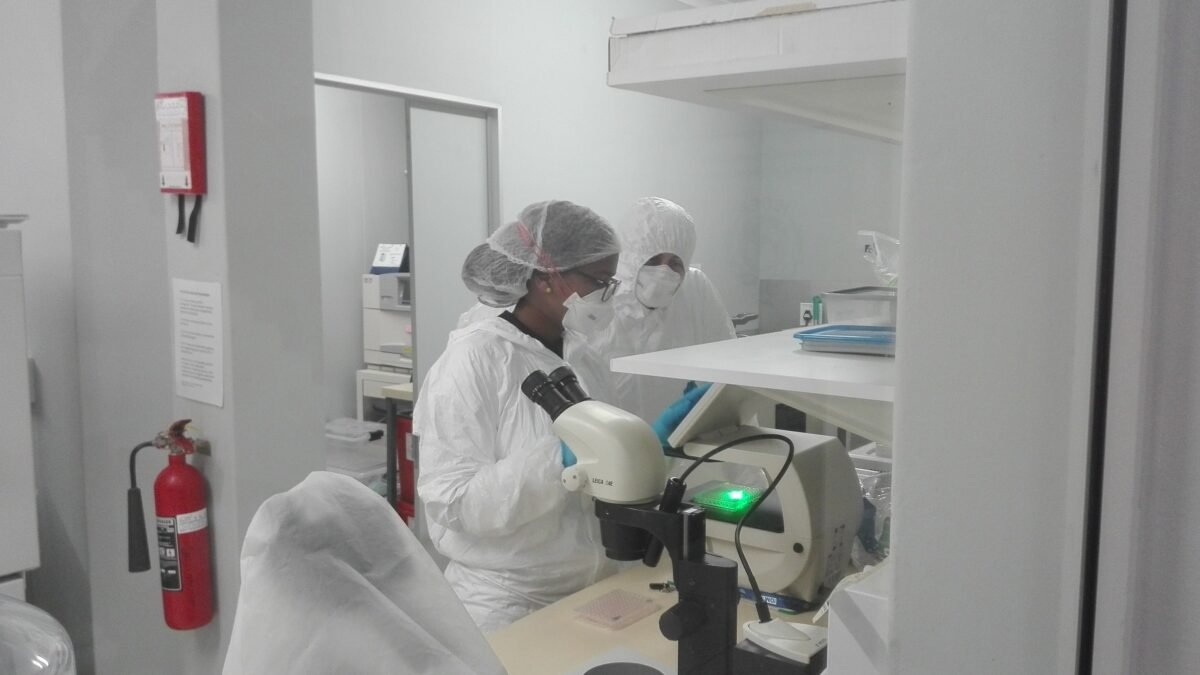
The cultural dimension of the gap is real but secondary. Scepticism toward certain scientific methodologies exists in particular community contexts across the continent, as it does in many societies with strong traditional knowledge systems. But that scepticism has not prevented African scientists from publishing, collaborating internationally, or winning recognition at levels below the Nobel. The barriers are material before they are cultural. Laboratories require an electricity supply that does not fail for six hours daily. Research requires internet connectivity that does not throttle at critical moments. Careers in science require salary structures that do not force young researchers to choose between academic ambition and household survival.
The case of Wole Soyinka, who won the Literature Prize in 1986, points to one domain where African intellectual production has reached the global summit without the infrastructure of Western research institutions. Literature requires a desk, a mind, and a language. Science requires considerably more. This is not an argument for accepting the Africa Nobel Prize gap as natural; it is an argument for understanding that closing it requires a different order of investment than cultural representation. The continent has the intellectual raw material. It has not yet built the institutional environment in which that material can be worked into Nobel-grade research.
The Sovereignty Stake
There is a sovereignty argument buried in this that the recognition framing obscures entirely. A continent that does not produce its own frontier research does not merely lose prizes; it loses the power to set the questions. The drugs developed elsewhere are priced elsewhere, the patents filed elsewhere are owned elsewhere, the standards written in foreign laboratories become the terms African economies must meet without having shaped them. Knowledge, like every other primary commodity the continent exports raw, is most valuable at the stage where it is refined into application. That stage is happening on other people’s benches. To close the research gap is therefore not a vanity project measured in medals. It is the same fight as the fight over minerals and crops, conducted in the one arena where the raw material is the mind, and where Africa exports its brightest to be refined into other nations’ citation counts. The brain drain is the Nobel gap in motion, one departing researcher at a time.
The policy path is known. Mutual recognition agreements between African universities, prioritising STEM investment in national budgets at the expense of less strategically critical expenditures, building research institutes that are permitted to pursue discovery rather than immediately applicable outcomes- these are not secrets. They are political choices that have consistently been deferred in favour of expenditure with shorter political payback periods. The Africa Nobel Prize gap is, at its foundation, a governance gap. The continent that closes it first will not do so by accident.