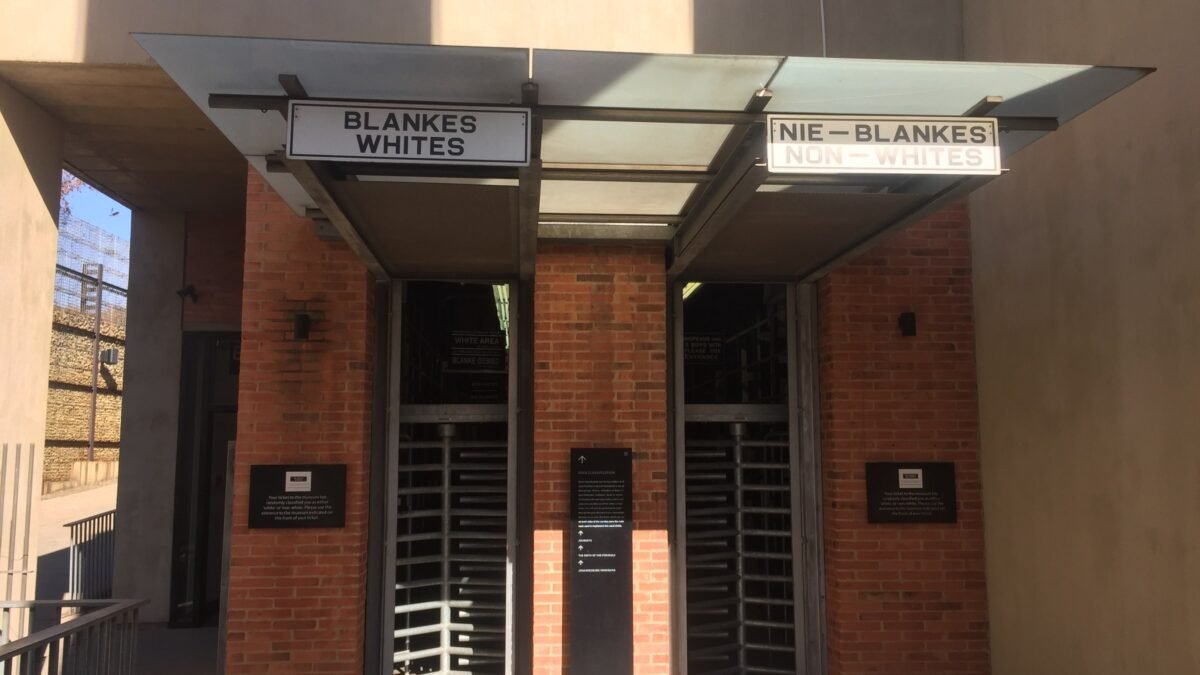
The long lines that formed across South Africa on 27 April 1994 were not a celebration of something already achieved. They were an act of collective will imposing itself on a system that had spent forty-six years designing the conditions for their impossibility. That distinction matters, because the way South Africa’s transition to democracy is narrated, as a miracle, as a gift, as a parable of reconciliation, tends to obscure the architecture of the bargain that made it possible and the structural weight that bargain would carry for the next three decades.
The negotiated settlement that produced the 1994 election was a political achievement of extraordinary complexity. It required the African National Congress to accept a framework that preserved significant economic continuity from the apartheid era, the property rights, the corporate structures, the financial institutions, in exchange for political power. The question of whether this was the only available path remains contested. What is not contested is the consequence: South Africa became politically free and economically stratified along lines that track almost precisely to the racial geography of apartheid.
The Sequencing Bargain
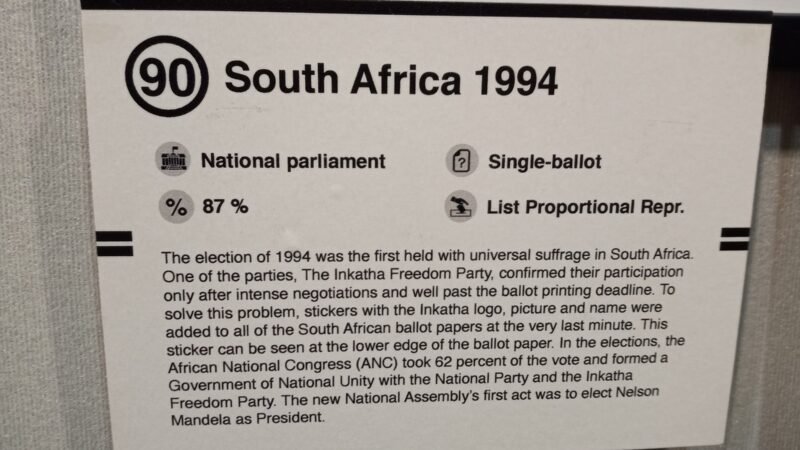
The mechanism of that outcome was sequencing, and sequencing is never neutral. At the negotiating table that produced the interim settlement, political power was placed on the agenda and economic power was largely removed from it. Property protections were written into the constitutional order, the central bank’s independence was entrenched, and the existing structures of corporate ownership were left to continue operating under new political management. The state changed hands. The order the state administers did not. A liberation movement can capture the government and discover that the commanding heights of the economy were quietly fenced off before the keys were handed over.
The Gini coefficient, the standard measure of income inequality, has remained among the highest in the world throughout the democratic period. Unemployment, particularly among Black South Africans, has not decreased as a structural matter since 1994. Land redistribution, the unresolved question at the centre of the apartheid economy, has moved slowly enough that by the third decade of democracy, the debate about whether to change the constitutional framework to accelerate it has become the central political fault line in the country. These are not accidents. They are the inherited consequences of what was agreed and what was not agreed at the moment of transition.
Truth Without Reckoning
The Truth and Reconciliation Commission, established in 1995, was the moral architecture that held the transition together in the public imagination. It gave the society a mechanism for confronting the crimes of apartheid without a legal reckoning that might have paralysed the new government in prosecutions that would have run for years. Amnesty in exchange for truth. Acknowledgement in exchange for immunity. Whether the trade was worth it depends heavily on who bears the cost of the unresolved wounds that the TRC could acknowledge but not heal.
The deeper legacy is what the amnesty settled by omission. Cases the commission referred for prosecution largely went unpursued, and the beneficiaries of apartheid’s economy, as distinct from its enforcers, were never asked to appear at all. A process built to document atrocity had no instrument for auditing accumulation, and it is the accumulation, not the atrocity, that still structures South African life.
Follow who gained and who waited, and the settlement’s logic becomes legible. The value of the existing economy, its mines, banks, listed corporations, and land, stayed with those who already held it, now insulated by constitutional protection rather than by the statutes of racial rule. The risk of the unfinished transformation was carried by the Black majority, who received the vote and the flag while inheriting the unemployment line and the title deed they did not hold. Political enfranchisement was delivered in full and at once. Economic enfranchisement was deferred to a future that the structure of the bargain made it very difficult to reach.
The Bargain Reasserts Itself
Thirty years on, the ANC that led South Africa to liberation governs a country where its own electoral majority is fragmenting. The 2024 general election produced a result no post-apartheid government had faced: no single party commanding a parliamentary majority. The ANC’s vote share fell below fifty percent for the first time, forcing a coalition that brought the Democratic Alliance, a party whose electoral base is disproportionately white and affluent, into the governing arrangement alongside the ANC. The politics of 1994’s negotiated settlement had, in a sense, reasserted themselves in new form, with the protected economic order now seated directly inside the cabinet.
None of this diminishes what happened in 1994. The shift from a regime built on racial exclusion to a constitutional democracy with universal suffrage was a structural transformation of historical consequence. South Africa did not descend into the civil war that many analysts predicted. The institutions held. The election was administered with credibility that has not been seriously challenged. These are facts that should not be flattened by the weight of everything that remained unresolved.
But the reading of 1994 that reduces it to a story of transcendence misses the system it reveals. South Africa shows what happens when political liberation and economic transformation are sequenced: you can win the state without changing the order that the state administers. The queues of 1994 imposed a democracy on a system built to refuse it; the unfinished business of those queues is now the country’s central argument with itself. The democracy that was invented under pressure has been durable precisely because its constraints were built in from the beginning. Understanding those constraints is not cynicism. It is the precondition for any honest assessment of what the next thirty years requires.