When Israeli forces escalated their military operation in Rafah, the southernmost city in Gaza, already overcrowded with displaced Palestinians fleeing earlier phases of the campaign, they triggered a sequence of international responses that were predictable in form and deeply consequential in content. Tunnels were targeted. Infrastructure was destroyed. Civilian displacement continued. And across Africa, governments that had been managing careful neutrality found themselves being pushed toward a position that the scale of the operation made impossible to avoid.
The Case Pretoria Filed
South Africa’s decision to bring genocide proceedings against Israel at the International Court of Justice, filed in December 2023, was the most legally significant intervention by any African state in the conflict. The ICJ’s provisional measures ruling in January 2024, which ordered Israel to take all possible measures to prevent acts falling within the scope of the Genocide Convention without ordering a ceasefire, gave the case a weight in international law that transcended the bilateral relationship between South Africa and Israel. It positioned an African state as the actor that had taken the most consequential legal step of any in the world, and done so through the multilateral system that Africa has historically been told it should strengthen rather than challenge.
The choice of instrument is the part worth dwelling on, because it marks a departure. Africa’s customary response to distant conflicts has been the communiqué: a resolution affirming rights, deploring violations, calling for restraint. South Africa reached instead for a binding legal forum and filed a case with standing, evidence, and consequence. The difference between a statement and a suit is the difference between expressing a position and exercising one. Pretoria did not ask the powerful to behave; it summoned them to a court, and in doing so demonstrated that the multilateral architecture can be wielded by the global South rather than merely lectured to it.
Solidarity Versus Action
For Africa more broadly, the Rafah operation has forced a confrontation with a set of strategic questions that the continent’s diplomatic culture tends to manage through rhetorical solidarity rather than structural positioning. The African Union’s record on the Palestinian question is one of consistent declaratory support, resolutions affirming Palestinian rights, language about the illegality of the occupation, without the institutional follow-through that would make those declarations consequential. When the most dramatic legal challenge to Israeli conduct in Gaza came from Pretoria rather than from Addis Ababa, it revealed where the actual agency in this question sits: with individual member states willing to act, not with the continental body.
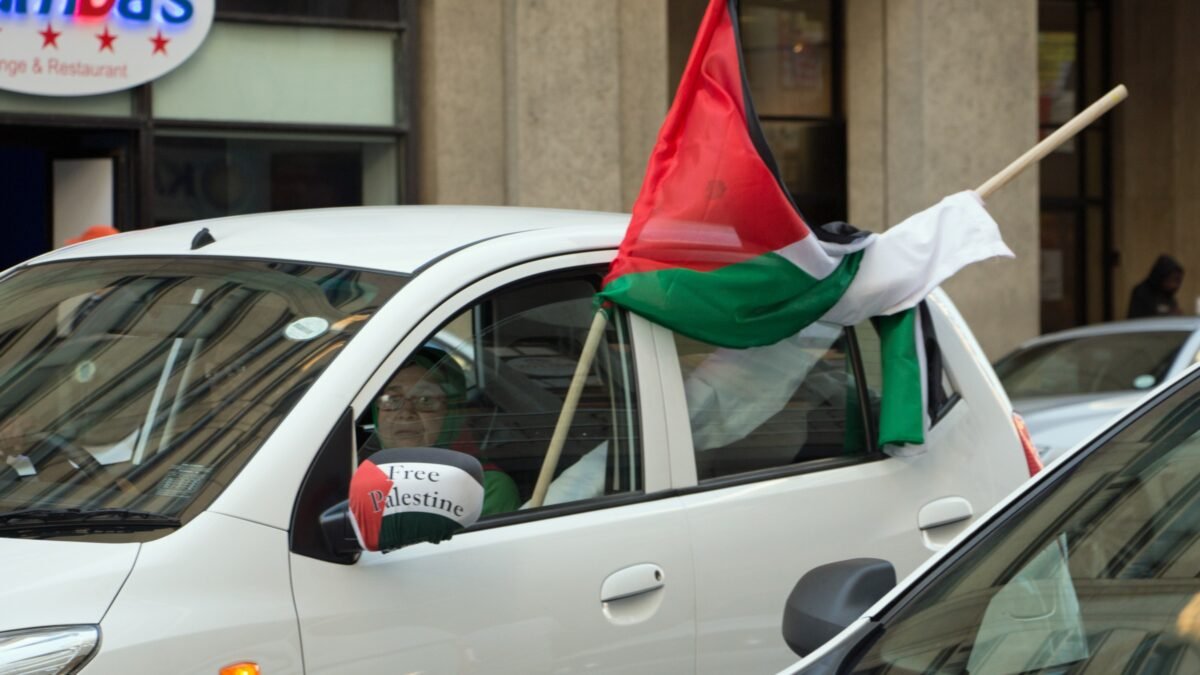
The humanitarian dimension of Rafah carries specific resonances on the continent. Africa is home to the largest Muslim population of any continent, and the public response to the images coming out of Gaza has been intense in countries from Nigeria to Morocco to Kenya. Governments that maintain diplomatic and economic relationships with Israel, and several African states do, including diplomatic ties, agricultural technology partnerships, and security cooperation, face domestic political pressures that are not trivial. Managing those pressures while maintaining strategic relationships requires exactly the kind of diplomatic dexterity that the scale and visibility of the Rafah operation makes increasingly difficult.
The pressure moves through economics as well as sentiment. Trade with Israel in agritech and security services is concentrated in a handful of capitals, while the Gulf states financing infrastructure across the continent have positions of their own to weigh. A government calibrating its Gaza language is calibrating, simultaneously, its standing with Washington, its Gulf financing, and its own street. Neutrality has rarely carried so many invoices.
What Rafah Exposed
There is a geopolitical dimension to Africa’s positioning that goes beyond solidarity. The conflict has become a test of the international legal system’s capacity to apply its own standards consistently. The countries arguing most forcefully for international law to be applied to Russian conduct in Ukraine are the countries most resistant to applying comparable frameworks to Israeli conduct in Gaza. African states that have observed this double standard, and African foreign ministers have named it explicitly in multiple forums, are drawing conclusions about the relationship between international law and geopolitical power that will shape their positioning in future multilateral debates.
That double standard is the most durable thing the operation has exposed, more durable than any single ruling. A legal order that punishes one occupation and finances another is not a neutral system of rules; it is a system of power that issues rules selectively. African capitals have learned this lesson before, in the asymmetry of who gets prosecuted at the International Criminal Court and who does not, and Gaza has refreshed it. The conclusion is not that international law is worthless. It is that international law is an arena, and arenas reward those who show up prepared to use them, which is exactly the lesson South Africa’s filing teaches the rest of the continent.
What Rafah has revealed is that Africa’s geopolitical non-alignment, the tradition of not taking sides in conflicts between great powers, is being tested by a conflict that is not between great powers but in which great powers are deeply invested on one side. That is a different structural situation than the Cold War neutralism that shaped African diplomatic culture, and it requires a different analytical framework. The continent’s most important response, South Africa’s ICJ case, demonstrates that there are instruments available for principled engagement that are more consequential than statements of solidarity. Whether other African states follow that precedent, or continue to manage the question through diplomatic distance, will define the continent’s position in the evolving architecture of international legal norms.