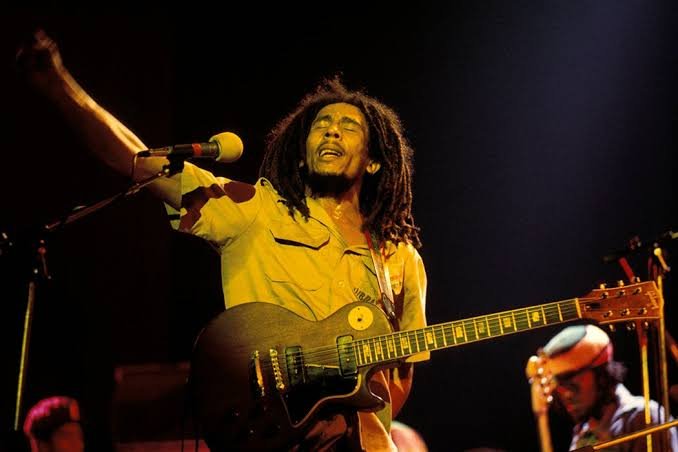
Bob Marley’s connection to Africa is routinely filed under cultural resonance. This reggae icon sang of liberation, whose dreadlocks and Rastafarian faith gave him an African aesthetic that travelled well. That filing is accurate as far as it goes and inadequate as an account. Marley’s Pan-Africanism was a political framework, coherently argued through music over a decade, that articulated a specific position on power, legitimacy, and the relationship between the African diaspora and the continent from which it had been severed. The songs were the delivery mechanism. The argument was structural.
He was born on 6 February 1945, in rural Jamaica, the son of a white British colonial officer and a Jamaican woman of African descent. This biography might have produced the kind of ambivalence about African heritage that mixed-race identity in a colonial context sometimes generates. It produced the opposite. Marley made Africa central to his artistic and philosophical identity at a moment when the 1960s and 1970s were reshaping what Pan-Africanism meant on the ground, not merely as an intellectual movement of the diaspora but as the framework within which newly independent states were defining their sovereignty. His Rastafarian faith, which venerates Emperor Haile Selassie I of Ethiopia as a theological anchor, gave that identity a spiritual architecture. The combination was unusually powerful: music that was emotionally accessible and politically precise, carrying a Pan-African argument to audiences in Jamaica, West Africa, East Africa, and eventually every part of the world where people understood what it meant to be positioned outside power.
Music as Political Act
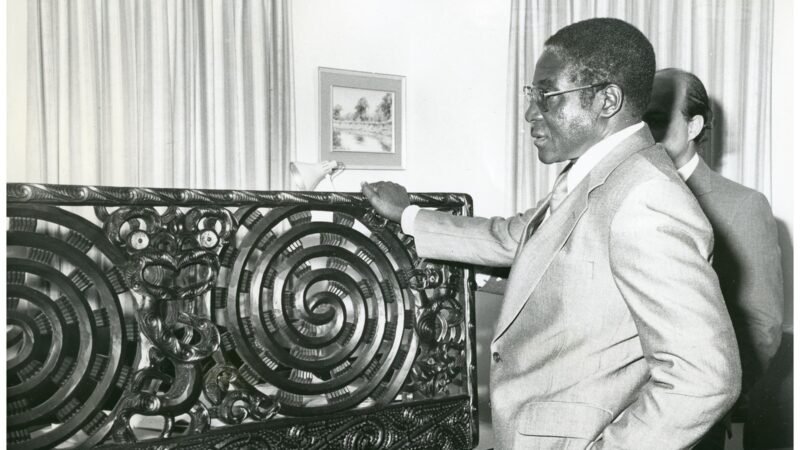
The song Zimbabwe was not metaphorical. Marley performed it at Zimbabwe’s independence celebrations on 18 April 1980, before a crowd that included Robert Mugabe and thousands of Zimbabweans who had spent years fighting for the moment the song described. The performance was not a brand partnership or a charity engagement. It was an act of political solidarity with a liberation movement whose outcome Marley had declared before it was certain. The One Love Peace Concert in Kingston in 1978, where Marley brought rival political leaders Michael Manley and Edward Seaga on stage and clasped their hands over his head, demonstrated an understanding of how cultural authority could be deployed for political de-escalation that formal diplomacy had failed to achieve. War, which drew its lyrics directly from a 1963 speech by Haile Selassie to the United Nations General Assembly, was a document of African political philosophy set to music and broadcast to a global audience that would never encounter the source. This was Bob Marley Pan-Africanism in its most precise form: using the reach that culture provides to carry an argument that politics could not place in the same rooms.
His Rastafarian faith shaped his medical decisions in ways that eventually cost him his life. The belief that the body is sacred and must not be surgically altered led to his refusal to amputate a toe when melanoma was diagnosed in 1977, a refusal that allowed the cancer to spread. He died in Miami in May 1981 at thirty-six, travelling to Jamaica. His reported final words to his son Ziggy, “Money can’t buy life”, have been read as personal wisdom, as a theological statement, and as a political observation from a man who had watched the distance between liberation rhetoric and material reality compress governments across Africa and the Caribbean. All three readings are available, and none is incorrect.
An Unfinished Argument
The legacy questions are not sentimental. Marley’s music continues to function as a soundtrack for protest movements across the continent and the diaspora in ways that his commercially successful contemporaries’ catalogues do not. Songs recorded four and five decades ago appear at demonstrations in West Africa, in South African community organising contexts, in Caribbean political campaigns, because the argument they carry has not been resolved by the passage of time. Pan-African unity remains aspirational rather than structural. The systems of extraction that he identified, colonially inherited arrangements of resource capture, the class structures that independence did not dismantle, the relationship between African states and international financial institutions that functions as dependency under a different name, have evolved in form while maintaining their essential character. Marley’s political relevance is not nostalgia. It is a measure of how much his argument is still waiting for its conclusion.
The estate battles that followed his death, the consequence of his Rastafarian objection to drafting a will, are a footnote to the larger account. What he left behind was not a catalogue but a framework: the argument that African identity is a political position, that the diaspora has obligations to the continent and vice versa, that culture is not decoration but architecture, and that liberation is a project requiring patience measured in decades rather than election cycles. Those are not sentimental claims. They are structural ones. Bob Marley made them with the tools available to him and with a consistency that the arc of his brief life never interrupted.
Culture as Delivery System
What makes the argument worth taking seriously as politics, and not merely as biography, is the distribution mechanism he understood and the formal institutions did not. A Selassie speech to the United Nations reaches the diplomats in the room; the same words, set to music as War, reach a labourer in Lagos, a student in Kingston, and a miner in the Zambian Copperbelt who will never read a communiqué. Marley grasped that culture is not a softer substitute for political power but a different delivery system for the same argument, one that crosses borders no passport opens and outlives governments no election preserves. That is why his catalogue still surfaces at protests four decades on while the speeches of his contemporaries gather dust in archives. The argument travelled because the song carried it, and it endures because the conditions it described- extraction renamed as partnership, independence without economic sovereignty- were never resolved. Marley did not write nostalgia. He wrote a brief that the continent has yet to close.