
Efforts to deepen East Africa’s economic integration are unravelling, eight years after a landmark law promised to eliminate non-tariff barriers across the region. Rising protectionism, regulatory defiance, and unresolved political tensions are hindering the East African Community’s vision of a seamless common market, eroding investor confidence and disrupting regional supply chains. The East African Community Elimination of Non-Tariff Barriers Act, passed in 2017 with the goal of unifying trade protocols among member states, remains more aspirational than operational. Despite ratification by heads of state, enforcement is inconsistent. Trade flows continue to be hampered by ad hoc tariffs, customs delays, and opaque border rules, contradicting the Act’s original promise of frictionless commerce.
Economic nationalism and fear of market domination have prompted member states to adopt defensive postures despite established regulatory frameworks. Kenya and Rwanda, the region’s leading economies, often evoke unease among other members who perceive them as potential threats to local industries. According to the Kenya National Bureau of Statistics, Kenya’s exports to EAC neighbours reached KSh 102.69 billion in the first nine months of 2019, marking a 5.77 per cent year-on-year increase. Such disparities fuel anxieties over trade imbalances, prompting retaliatory measures disguised as consumer protection or revenue generation. The uneven distribution of economic gains has exacerbated protectionist tendencies, as countries with smaller economies fear marginalisation.
The mechanism beneath the protectionism is a collective-action trap that the treaty was meant to solve and instead exposed. Every member gains if all open their borders, but each member gains more, in the short run, by keeping its own barriers up while its neighbours lower theirs. A common market asks governments to surrender a tool, the protective tariff, that is politically valuable precisely because its costs are diffuse and its benefits are concentrated in domestic industries that vote and lobby. The Act changed the law without changing that incentive, and an incentive that survives a law will outlast it. This is why ratification at the summit and obstruction at the border are not a contradiction. They are the same governments responding to two different audiences.
Mutual allegations of unfair trading practices have become routine. Uganda accused Kenya in early 2020 of seizing Ugandan products labelled as counterfeits. Kenyan manufacturers, in turn, accuse Ugandan and Tanzanian authorities of imposing punitive taxes inconsistent with EAC Customs Union protocols, including levies on Kenyan cigarettes cited at 80 per cent above agreed rates. The absence of a common regional currency further complicates cross-border transactions. The Kenyan shilling’s relative strength incentivises trade invoicing in Kenyan currency, disadvantaging partners with weaker currencies and prompting reliance on the US dollar.
The Geopolitical Layer
Underlying political tensions compound economic hurdles. Border disputes, such as the contentious Migingo Island claim between Uganda and Kenya, persist, impacting local trade dynamics. Rwanda’s accusations against Uganda for allegedly supporting opposition groups underscore deeper regional political fissures. Tanzania’s stance on external debt and foreign-funded projects has further isolated it from partners. Ongoing conflicts in Burundi and South Sudan present security and stability challenges, necessitating significant regional attention to peace-building rather than economic integration.
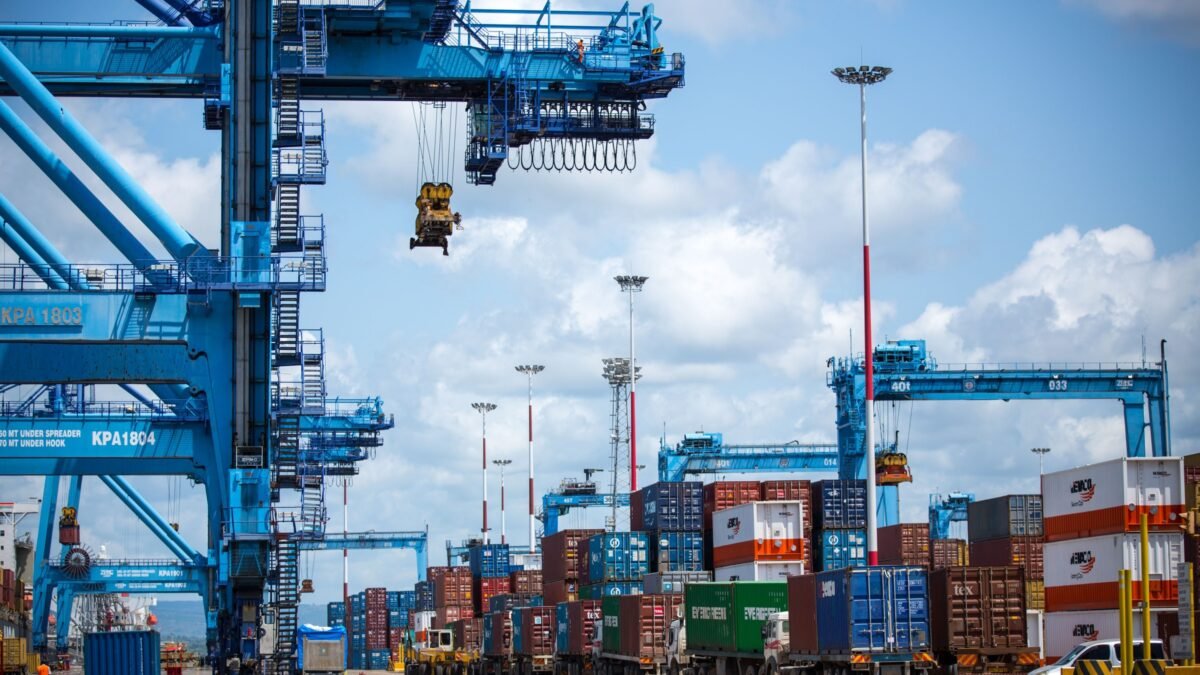
The costs are most legible along the corridors. The Northern Corridor from Mombasa and the Central Corridor from Dar es Salaam carry the region’s imports to landlocked Uganda, Rwanda, and Burundi, and every additional day a truck spends at a weighbridge or a border post is a tax collected in time rather than money, paid ultimately by the consumer in Kampala or Kigali. Landlocked members experience their neighbours’ customs posts as a chokehold on their entire external trade, which converts routine administrative friction into a sovereignty grievance. This is the second trap layered on the first: geography makes the smaller economies dependent on the goodwill of the coastal states, and every trade dispute reminds them of that dependence, deepening the distrust that produced the dispute in the first place.
“A common market is not built at the summit where it is signed. It is built, or abandoned, at the border post where the consignment is either waved through or held until the protocol becomes a suggestion.”
What Integration Actually Requires
The Association of Southeast Asian Nations and the European Union demonstrate how regulatory consistency, conflict resolution mechanisms, and transparent trade policies can build sustainable economic trust. ASEAN’s incremental yet consistent integration approach offers critical lessons: East Africa must embrace consistent regulatory adherence and robust conflict resolution mechanisms to achieve sustainable growth. The difference between those blocs and the EAC is not the quality of the treaty text. It is the existence of an enforcement mechanism that makes defection more expensive than compliance. Without a cost for breaking the rule, the rule is merely advice, and advice does not move a sealed truck across a contested border.
The Cost of Defection
Continued non-compliance with agreed regulations risks protracted disputes, investor uncertainty, and hindered economic development. Investors, wary of unpredictable regulatory environments, may divert capital toward more integrated markets, notably ECOWAS and the broader AfCFTA region. The East African Community’s promise of a seamless common market was not born of naivety; it was built on sound economic logic. What has failed is not the logic but the political will to enforce it. Until member states confront the gap between their treaty commitments and their border-level behaviour, the EAC will remain a club whose most important rules are honoured only in the breach. East Africa’s potential is too large and too strategically significant to be sacrificed at the altar of short-term economic nationalism.