A silent revolution is unfolding in the Sahel. In a region long cast as the periphery of geopolitical theatre, dogged by instability, insecurity, and dependency, three nations are boldly reauthoring their futures. Burkina Faso, Mali, and Niger, once viewed as strategic satellites in France’s postcolonial orbit, are now carving out an unapologetically sovereign path. Their message is clear: sovereignty is not a slogan. It is a governing doctrine, and it is non-negotiable.
Over the past three years, these military-led governments have expelled foreign troops, renegotiated mining concessions, questioned the legitimacy of inherited financial structures, and withdrawn from regional and linguistic alliances seen as vestiges of colonial influence. The result is not a reaction to insecurity or economic fragility; it is an ideological rebellion, a recalibration of postcolonial governance that seeks to put national dignity above external validation. Together, they have formed the Alliance of Sahel States (AES), a regional pact designed not around neoliberal integration but mutual self-defence and political alignment. This approach resembles a 21st-century version of the Bandung Conference spirit: non-alignment, pan-African solidarity, and resistance to dependency.
What is unfolding is not merely anti-French sentiment. It is a systemic break with what many perceive as the architecture of neocolonial control. The CFA franc, long seen as a symbol of France’s enduring economic grip on West and Central Africa, has come under renewed scrutiny. The decision to withdraw from ECOWAS, once a symbol of regional cooperation, marks another rupture, interpreted less as a principled stance and more as Western-enforced economic discipline. In each withdrawal, the message echoes: integration without equality is hollow.
The Doctrine and Its Contradictions
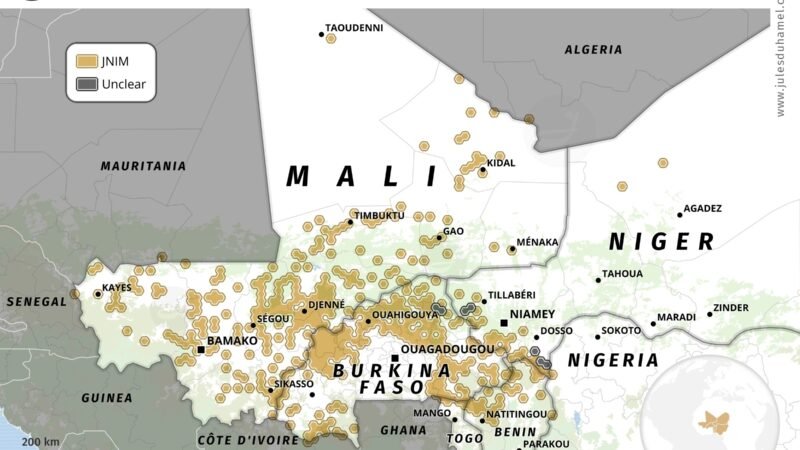
The sovereignty project is not without internal contradictions. While military leaders justify their rule as necessary for security and national reconstruction, elections have been suspended, civil liberties curtailed, and opposition parties sidelined. Jihadist insurgencies continue to threaten civilians and undermine state authority. The Wagner Group’s involvement in Mali, framed as sovereignty-enabling, has brought new forms of dependency and secrecy. Nationalisations, while symbolically potent, risk deterring critical foreign investment if not paired with coherent economic planning. The sovereignty-first model must navigate a treacherous path: asserting autonomy without isolating itself, and consolidating power without tipping into repression.
In Ouagadougou, Bamako, and Niamey, large rallies have greeted coup leaders as liberators, not usurpers. Young people express exhaustion with decades of corruption, elite capture, and donor-scripted policy. The assertion of sovereignty is as much about restoring dignity as it is about shifting alliances.
What the Sahel Reveals About the System
As these states pivot away from France and the West, Russia, China, Turkey, and Iran are stepping into the breach. Moscow, through Wagner-affiliated operations, offers security support with few governance strings attached. China continues expanding its economic footprint. These realignments expose the changing nature of power projection in Africa: where once the West dominated through a mix of aid, military presence, and institutional leverage, today’s global landscape offers alternatives, albeit ones with their own opaque calculations. This multipolar turn reconfigures African agency: states can now bargain rather than beg, play powers off each other, and determine development paths based on perceived interest rather than inherited loyalty.
The multipolar bargain deserves its own audit, because bargaining power depends on the ability to walk away, and that ability is unevenly distributed. A state with functioning institutions, diversified revenue, and internal security can play suitors against each other and pocket the difference. A state at war with insurgents on its own territory, fiscally dependent on a single commodity, negotiates with a weaker hand than the rhetoric of multipolarity implies, because its need is urgent and its alternatives are thin. The new suitors know this. The price of security assistance is set not by the market but by the desperation of the buyer, and desperation in the Sahel is abundant.
Rupture or Cautionary Tale
What is emerging in the Sahel is a full-throated redefinition of sovereignty as territorial control, economic autonomy, institutional independence, and cultural pride. The old post-Cold War script, where democracy was universalised, markets liberalised, and sovereignty diluted in the name of global order, is being rewritten. The test will be whether these states can translate symbolic ruptures into material transformation. Sovereignty, after all, is not just about flags and borders; it is about whether a government can provide security, justice, and opportunity on its own terms. The same forensic standard applied to Paris must be applied to the juntas that replaced it, or the analysis collapses into the grievance it claims to transcend. Expelling a French garrison and inviting a Russian one is a change of landlord, not a deed of ownership; a constitution suspended in the name of sovereignty is still a constitution suspended; and a mine nationalised by a state that cannot secure the road to it has changed the flag on the gate without changing who eats. The Sahel’s rupture is genuine, and its grievances are earned. Whether it becomes a harbinger or a cautionary tale will turn on a single question: whether the doctrine of sovereignty is finally cashed out in security, justice, and opportunity delivered to the citizen, or spent entirely on the symbolism that delivers to the soldier. The script is being rewritten, and that alone is a genuine break with the decades in which the script was written elsewhere. But a script is not a performance, and a declaration is not a delivery. The ending has not been written yet, and it will be authored not in the rallies of the capital but in the villages where the state must finally arrive as something other than a soldier.