Africa’s continental free trade ambition is, at its core, a story about identity, about whether the continent can collectively define itself as an economic actor on its own terms rather than as a collection of commodity exporters servicing external demand. The African Continental Free Trade Area, launched operationally in 2021, represents the most significant institutional attempt in African history to rewrite that definition. But the distance between the framework on paper and the trading continent in practice is filled with tariff schedules, infrastructure gaps, trade finance shortfalls, and political hesitancies that reveal how deeply the old structural logic is embedded in the continent’s economic architecture.
The Old Trade Map
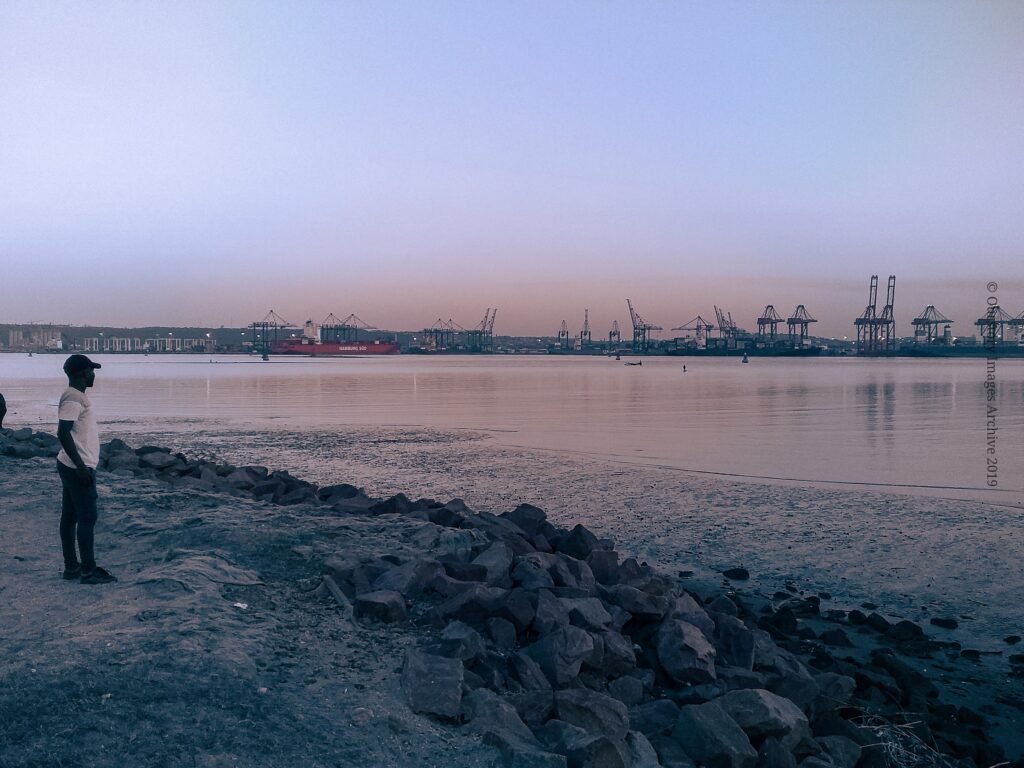
Intra-African trade currently accounts for approximately 15 per cent of the continent’s total trade. This figure compares unfavourably with intra-regional trade shares in Europe (68 per cent), North America (58 per cent), and Asia (59 per cent). The reasons for this disparity are structural, not cultural. Colonial trade architecture was deliberately designed to channel African resources toward metropolitan markets rather than neighbouring territories. The road, rail, and port infrastructure built during that era connected African hinterlands to Atlantic or Indian Ocean export points, not to each other. Trade logistics that should take days across borders can take weeks, delayed by customs procedures, road conditions, border bureaucracy, and the absence of harmonised documentation standards. These are not relics. They are active constraints on intra-African commerce in 2025.
The Tariff Politics
The AfCFTA’s tariff reduction schedule, designed to eliminate duties on 90 per cent of goods across member states, is the mechanism by which this architecture is supposed to be reoriented. Implementation, however, is uneven. Several large economies have been slow to operationalise their tariff commitments. Nigeria, the continent’s largest economy, participated in early AfCFTA negotiations with significant ambivalence, reflecting concerns from domestic manufacturers about exposure to more competitive imports. South Africa has been more engaged but faces its own complexities around sectoral protection. The political economy of tariff reduction is never straightforward; it always creates winners and losers, and the losers are usually more politically organised than the winners are visible.
The Trade Finance Gap
The less-discussed barrier to AfCFTA’s realisation is the trade finance gap. African businesses engaged in cross-border trade face a structural disadvantage in accessing the letters of credit, payment guarantees, and working capital facilities that underpin international commerce. The African Export-Import Bank estimates that the continent’s annual trade finance gap is approximately $81 billion, meaning that commercially viable trade transactions are failing to occur because the financial instruments to support them are unavailable or prohibitively expensive. This gap falls disproportionately on smaller businesses and on economies without deep banking systems. It is, in effect, a tax on African commerce that applies even after tariffs are removed.
The gap persists partly because of how African risk is priced. International correspondent banks, retreating from perceived compliance risk, have withdrawn relationships across the continent, leaving local banks with fewer channels to confirm letters of credit and higher costs for those that remain. The result is a pricing structure in which an African trader pays more to finance a shipment between two African ports than a European competitor pays to finance the same goods over a longer distance. Pan-African financial institutions and payment systems such as PAPSS are built precisely to route around this architecture. Still, scale is the test, and scale requires the large economies to commit their trade to African rails rather than merely endorse them.
Removing tariff barriers is necessary but insufficient. Where African businesses cannot access trade finance at competitive rates, the AfCFTA creates a legal right to trade that most of them cannot afford to exercise.
Corridors as Infrastructure Identity
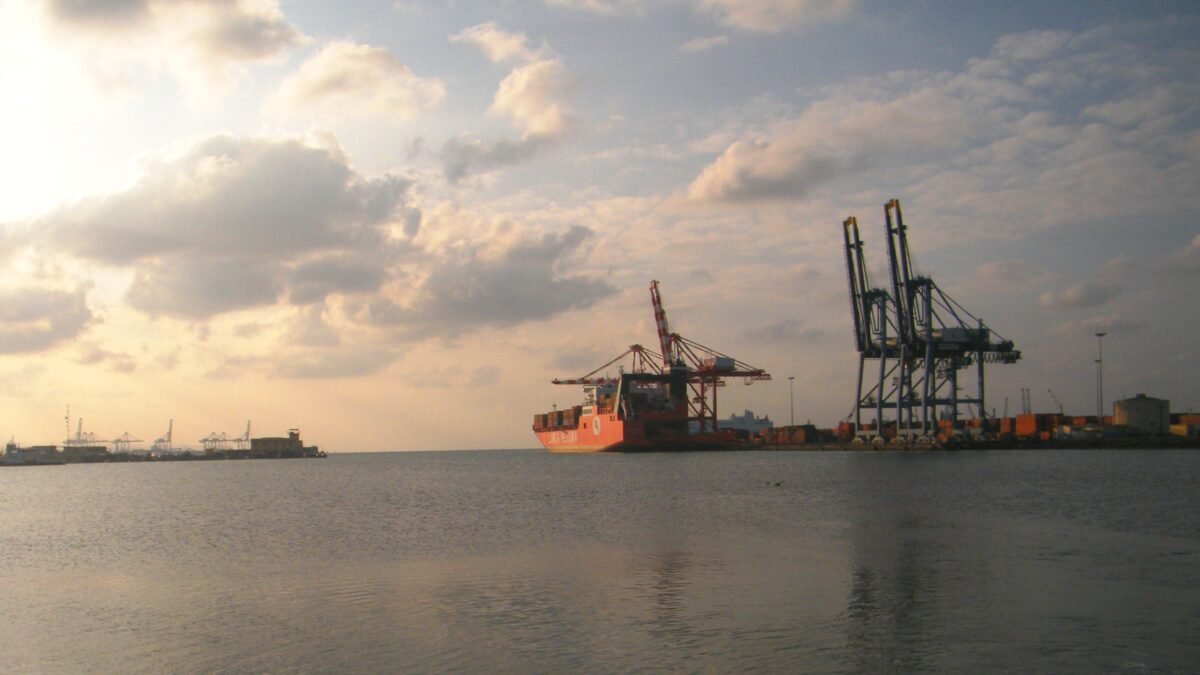
Trade corridors, the physical and institutional arteries through which continental commerce must flow, are becoming the new battleground for Africa’s economic identity. The Lobito Corridor, linking Angola, the DRC, and Zambia, has attracted attention from both American and Chinese investors as a potential axis for mineral and agricultural trade across Central and Southern Africa. The Abidjan-Lagos Corridor offers a similar connective logic for West Africa’s most economically significant coastal markets. These corridors matter not only as logistics solutions but as expressions of continental architecture: who built them, who finances them, who owns the infrastructure, and therefore who extracts the economic value from the trade they enable. Africa’s race to finance its future is not simply a capital-mobilisation challenge. It is an identity question about whether the continent will own the infrastructure through which its own growth flows, or whether, once again, it will find that the essential arteries of its prosperity were constructed and are controlled by outside hands.
The three barriers, the tariff, the corridor, and the finance gap, are usually treated as separate technical problems, but they are one structural inheritance wearing three faces. Each was shaped by the same original design: an economy built to move value outward to a metropole rather than sideways to a neighbour. Removing the tariff without building the road leaves the goods stranded; building the road without closing the finance gap leaves the small trader unable to pay for the journey; and financing all of it with external capital that owns the resulting arteries re-routes the old extraction through a new map. The AfCFTA’s promise is not that Africa will trade more. It is that Africa might, for the first time, trade with itself on infrastructure it owns. That is the whole of the contest, and it will be lost in the gap between the three problems if they continue to be solved one at a time, by different hands, on different terms.