Ethiopia’s athletics heritage stretches from Abebe Bikila’s barefoot Roman triumph in 1960 through six decades of distance running dominance. This record exists not by accident but by structural conditions now under pressure.
Abebe Bikila ran Rome’s midnight streets barefoot in 1960 and crossed the Olympic marathon finish line in world record time, the first sub-Saharan African to win an Olympic gold medal. That image, the barefoot Ethiopian soldier running through the shadows of imperial monuments, defeating the world, carried a symbolic weight that exceeded athletics. It was also a structural signal: Ethiopia had produced an elite distance runner because the conditions for producing elite distance runners existed there. High altitude training grounds, a culture of running as both subsistence activity and community practice, and a military sporting infrastructure that, however imperfect, identified and developed talent. What followed across six decades, through Haile Gebrselassie’s near-unprecedented dominance in the 1990s and 2000s and the generation of marathon champions that came after him, was not an accident. It was the compounding output of conditions that had to be actively maintained.
The Pressures on the Legacy
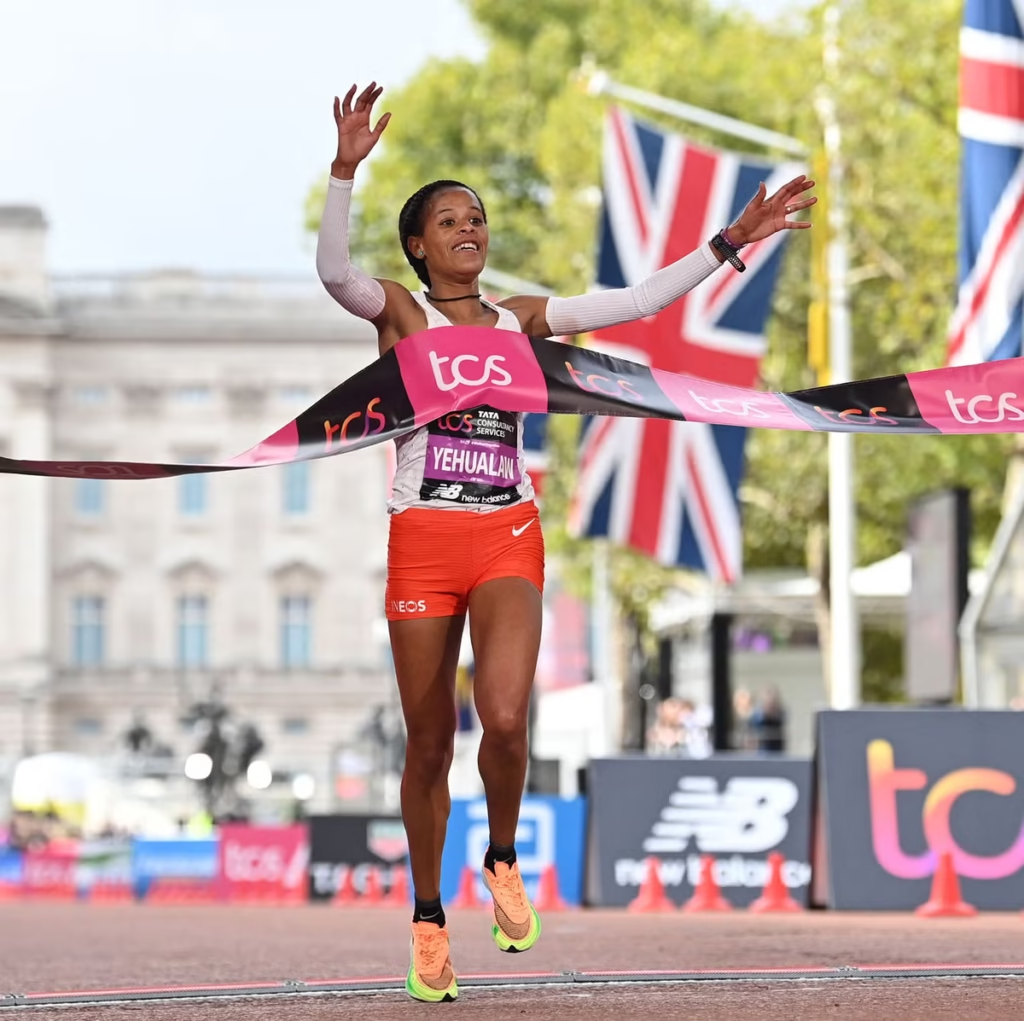
Ethiopia’s athletics legacy is not a heritage asset that generates returns indefinitely without reinvestment. It faces pressures specific to its current moment. Talent drain, the migration of elite Ethiopian runners to represent Gulf states and other nations willing to pay premiums that Ethiopian athletics federation support cannot match, is replicating the athlete defection patterns visible elsewhere on the continent. The economic logic is not complicated: a runner who can compete for Bahrain under a professional contract with guaranteed income, medical support, and post-career stability has rational grounds for that choice regardless of where the training that produced that capability occurred. Ethiopia’s athletics institutions have not built competitive retention conditions for all but the most commercially attractive domestic athletes.
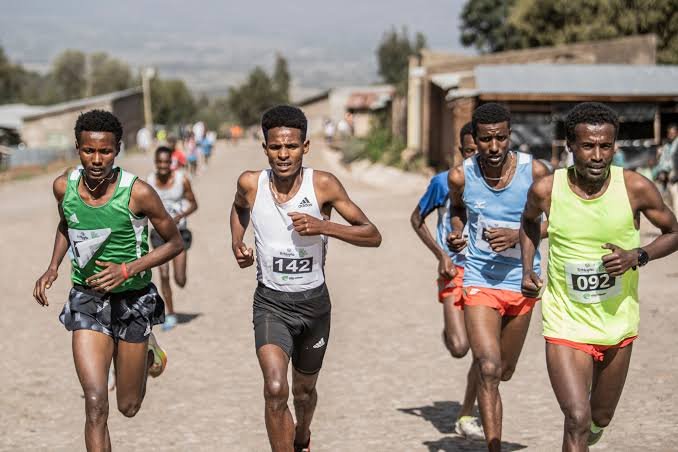
The training environment that Bikila’s era produced and Gebrselassie’s generation refined has been partly preserved in camps around Bekoji, Sendafa, and other high-altitude communities that continue to function as development nurseries. The question for the next decade is whether these environments receive the infrastructure investment required to sustain them, road access that does not require athletes to train around construction hazards, training facilities that operate to international standards, and medical and sports science support that keeps athletes performing across longer career spans. These are not abstract requirements. They are the material differences between a legacy that compounds and one that lives off accumulated reputation while the underlying capability erodes.
Who Captures the Value
Ethiopia’s competitive distance running achievement has generated economic returns primarily captured outside Ethiopia, in international marathon circuits whose prize money flows through agents and contracts whose terms are negotiated in conditions of informational asymmetry, in broadcasting rights for events where Ethiopian athletes are the primary draw but Ethiopian institutions receive minimal structural benefit. The country that produces the runners has not built the commercial architecture to capture the value those runners generate. This is not a unique African problem, but it is a specifically African form of the general problem of producing primary commodities whose value is captured at the processing and distribution stages by parties with more sophisticated commercial infrastructure.
The Informal Pipeline
The youth development pipeline sustaining Ethiopia’s athletics legacy is built substantially on informal community structures, families, local coaches, and peer networks, rather than state institutional design. This is both its resilience and its vulnerability. Informal structures are harder to destroy because they do not depend on state budget cycles. They are also harder to scale because they cannot be systematically replicated without the state investment that converts informal excellence into formal capacity. Ethiopia’s challenge is to formalise enough of this infrastructure to ensure quality and consistency while preserving the cultural conditions, the relationship to running as a communal rather than purely professional activity, that have been central to what the system produces.
Gebrselassie himself has invested in athletic infrastructure, establishing training camps and youth development programmes that represent private capital filling gaps that state institutions have not closed. This pattern, elite athletes whose success generates the capital to invest in the next generation, is a positive feedback loop when it operates. It is not a substitute for public investment in sports infrastructure at the level that a state which considers athletics one of its sovereign competitive advantages ought to provide. Ethiopia’s athletics legacy will not be preserved by reputation alone. It will be preserved by the same combination of conditions that created it: altitude, culture, and deliberate institutional investment in the human infrastructure through which athletic excellence travels from one generation to the next.
The deeper point is that Ethiopia has been treating a renewable resource as if it were a fossil one. A diamond seam, once mined, is gone; a running culture, properly tended, replenishes itself every generation in the children of Bekoji who watch the champions return. But replenishment is not automatic. It depends on the camps staying open, the coaches staying paid, and the young runner being able to see a domestic future that does not require a Gulf passport to be viable. When a nation lets the commercial value of its athletes be captured abroad while underfunding the camps at home, it is quietly converting the renewable resource into a depleting one, spending the inheritance faster than the altitude can rebuild it. The barefoot run through Rome was a beginning that the country chose to build on. Whether the next Bikila represents Ethiopia or the highest bidder is a question the federation, not the mountains, will answer.