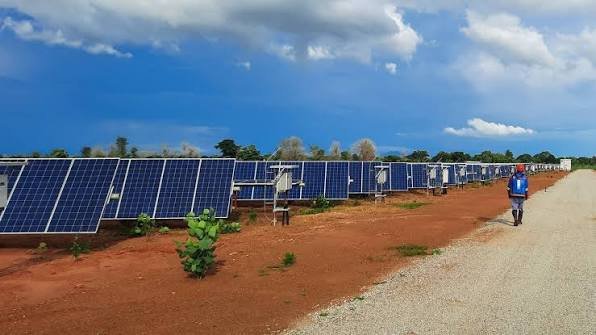
Africa holds the raw material for an energy revolution. It possesses 60 per cent of the world’s best solar resources, significant wind corridors across the Sahel and southern coast, deep geothermal potential in the East African Rift Valley, and vast hydroelectric capacity along its major river systems. The continent is not resource-poor when it comes to clean energy. It is capital-poor, infrastructure-poor, and governance-challenged in ways that have prevented those resources from being converted into reliable electricity for the 600 million people across sub-Saharan Africa who still lack access. The distance between resource and reality defines Africa’s energy paradox, and closing it is now one of the most consequential policy challenges in the world.
The scale of Africa’s energy deficit is not abstract. It is lived daily by households that rely on kerosene lamps and charcoal, by hospitals that cannot maintain reliable cold chains for vaccines, by small businesses that cannot operate equipment, by students who cannot study after dark. These deficits impose measurable economic costs: the African Development Bank estimates that unreliable electricity costs African economies between 2 and 4 per cent of GDP annually in lost productivity, damaged equipment, and forced reliance on expensive backup generation. Solving Africa’s energy deficit is not a development aspiration, it is an economic imperative with compounding returns.
The last decade has produced genuine momentum. Solar costs have fallen by more than 90 per cent since 2010, making utility-scale and distributed solar economically viable across African markets at price points that were inconceivable a generation ago. Off-grid solutions, solar home systems, mini-grids, and pay-as-you-go models, have brought electricity access to tens of millions of households across sub-Saharan Africa who were never going to be served by grid extension within an economically rational timeframe. Kenya Energy Access, the Zola Electric operations across multiple African markets, and M-KOPA’s solar financing model demonstrate that market-led solutions can achieve genuine scale when they are designed for African conditions rather than imported wholesale from different contexts.
The off-grid success carries its own caution. Solar home systems light rooms and charge phones; they do not power a welding shop, a cold-storage depot, or a factory line. Access statistics that count a single lamp as electrification flatter the numbers while deferring the harder question, which is productive power, the kind that creates jobs and industry. A transition measured in connections alone can declare victory while leaving the continent’s economic structure exactly where it found it.
The Flagship Benchmark: Morocco’s Noor
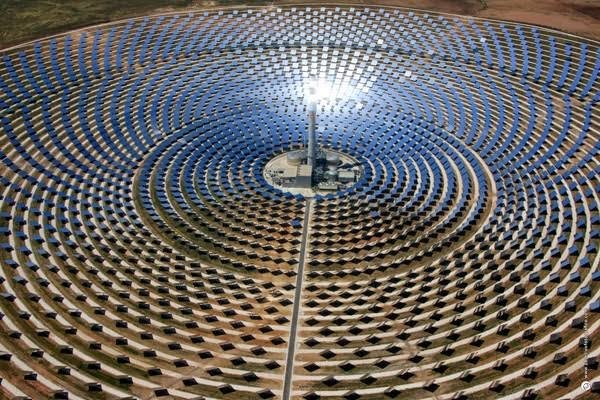
Morocco’s Noor Ouarzazate complex stands as Africa’s most visible proof of concept for large-scale renewable infrastructure. With an installed capacity exceeding 580 megawatts across concentrated solar power and photovoltaic installations, it demonstrates that African nations can plan, finance, build, and operate world-class clean energy infrastructure. Morocco has parlayed this capability into a broader strategic position, now positioning itself as a potential green hydrogen exporter to European markets under the Partnership for Global Infrastructure and Investment framework. The lesson from Noor is not that every African country should build concentrated solar power. It is that strategic investment in renewable infrastructure can generate both domestic energy sovereignty and international economic positioning.
Africa does not need to be saved from energy poverty. It needs investment structures that allow its extraordinary resources to be converted into infrastructure on terms that generate long-term domestic benefit, rather than a fresh export dependency wearing the colour green.
What the Transition Actually Requires
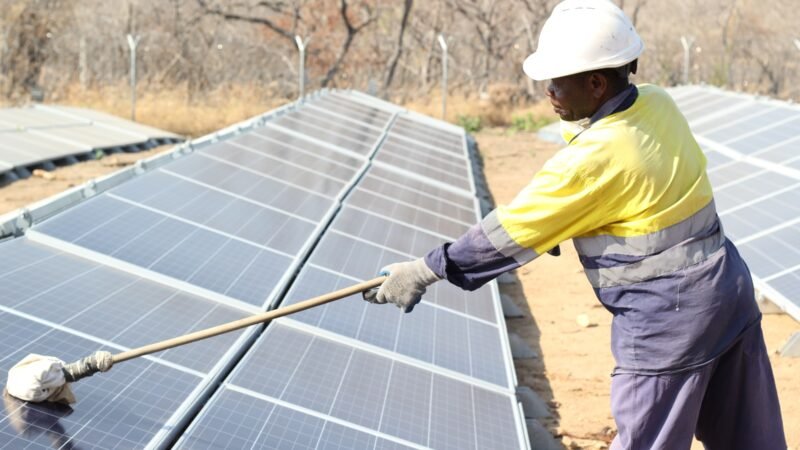
Translating Africa’s renewable resource base into systemic energy access requires simultaneous progress on multiple fronts that international energy transition narratives tend to treat in isolation. Transmission infrastructure must expand: even where generation capacity exists, the grid infrastructure to deliver power from source to consumer is often inadequate or non-existent. Regulatory environments must be strengthened to attract private capital without entrenching the extraction patterns that have characterised earlier waves of foreign investment. Local content requirements must be structured carefully, demanding skills transfer and domestic participation without making projects economically unviable. And the debt architecture of energy finance must be restructured to reduce the sovereign burden on countries that can least afford additional balance-sheet obligations. Africa’s sustainable energy transition will not be delivered by a single flagship project or a triumphant COP announcement. It will be built incrementally, project by project, megawatt by megawatt, across 54 countries with profoundly different resource bases, institutional capacities, and political economies. What it requires most is not more pledges. It is sustained, patient capital, allocated with genuine respect for the complexity of the contexts it is entering.
The Green Export Trap
There is a trap inside the green transition that the sunshine numbers obscure, and Morocco’s hydrogen ambition quietly illustrates it. A continent that builds its solar and wind capacity primarily to export power and green hydrogen to Europe will have rebuilt, in clean energy, the exact arrangement it has spent a century enduring in oil, cocoa, and copper: the raw potential generated in Africa, the value captured at the point of consumption abroad, the host left with the panels and the débris of someone else’s supply chain. The same sixty per cent of the world’s best solar resource that could electrify African homes could just as easily become an export terminal pointed north while the village beside it stays dark. The transition is not automatically a liberation. It becomes one only if the first claim on each new megawatt is the African household, the African clinic, and the African factory, and only if the financing is structured so that Africans own the generation rather than merely host it. Resource to reality is the right slogan. The harder word, the one that decides everything, is sovereignty.