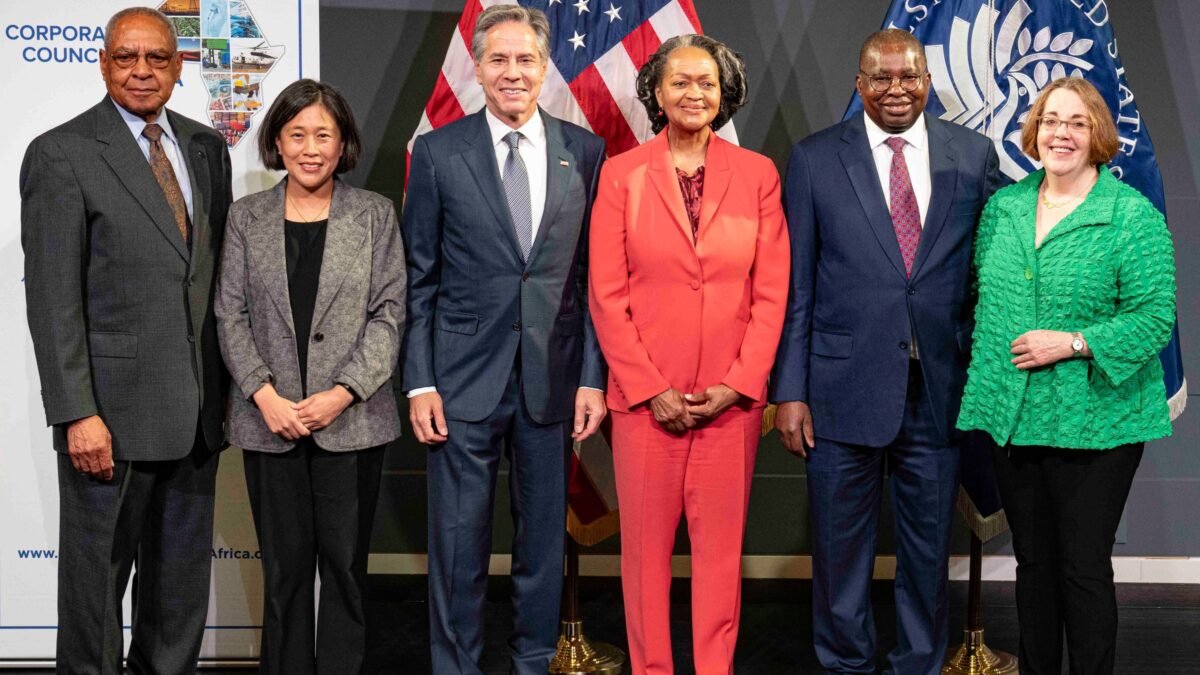
Nearly thirty years ago, five bipartisan Congressional staffers sat down with African trade officials and worked through the granular details of a preferential access arrangement that would become the African Growth and Opportunity Act. The intent was genuine: to create economic linkages between the United States and sub-Saharan African economies that would stimulate manufacturing, reduce poverty, and offer an alternative to raw commodity dependency. The intent has never been the problem. The structure has always been the problem.
AGOA, signed into law in 2000 and renewed multiple times since, grants duty-free access to the US market for eligible goods from qualifying sub-Saharan African countries. At its peak, the programme has supported hundreds of thousands of jobs, particularly in textile and apparel manufacturing in countries like Ethiopia, Kenya, Lesotho, and Madagascar. It created real supply chains and real livelihoods. It also created a structural dependency that AGOA’s architects either did not anticipate or preferred not to confront: an architecture in which the continuation of African economic activity in designated sectors is conditional on annual US eligibility reviews, political compliance assessments, and executive discretion.
Leverage on a Timer
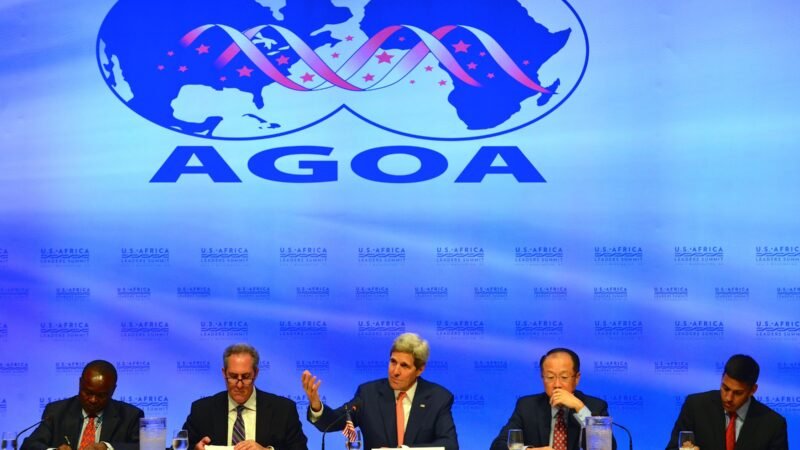
The extension of AGOA through December 2026, secured under pressure from African governments and US business constituencies who stood to lose from disruption, avoided immediate crisis but also confirmed something that had been building for years. Washington’s view of AGOA has shifted. The original framing, that the programme was a development tool, a hand-up rather than a hand-out, has given way to a more transactional calculus in which AGOA eligibility is understood as leverage in a broader set of US strategic interests. African countries that align with Washington’s positions on China, on Russia, on regional governance questions, find the programme’s continuation easier to negotiate. Those that do not face reviews, suspensions, or the kind of rhetorical pressure that makes business investment pause.
The Ethiopian Lesson
Ethiopia’s suspension from AGOA in 2022, triggered by the Tigray conflict, demonstrated the political conditionality with precision. Ethiopian garment factories, which had been among the programme’s most cited success stories, shed tens of thousands of workers when the suspension cut off their market access. Those workers did not lose their jobs because of anything they had done, or because of a change in their productivity or the quality of their output. They lost their jobs because a political determination was made in Washington that their government’s conduct in an internal conflict warranted a trade penalty. Whether or not that determination was correct is a separate question. What it demonstrated is that AGOA’s employment guarantees are inherently conditional on factors that African workers and African factory owners do not control.
Ceiling, Not Floor
The deeper structural problem is that AGOA has not, after twenty-five years, produced the diversified export capacity in beneficiary countries that its advocates originally promised. The programme has deepened concentration rather than diversification; countries that have taken advantage of it have become more dependent on US-preferential access in specific sectors, not more competitive in global markets without preference. Kenya’s apparel sector, one of the success stories, would face significant adjustment pressure if AGOA were not renewed. That is not a development success. That is a reconfigured dependency.
The conversation that African governments have been reluctant to have publicly, but which their trade ministries understand with increasing clarity, is that AGOA is a ceiling as much as it is a floor. It has given African manufacturers access to one major market on conditional terms, and in doing so has substituted for the harder work of building regional trade infrastructure, developing intra-African supply chains under the African Continental Free Trade Area, and creating the domestic market depth that would make external preferential access less existentially significant. The African Continental Free Trade Area represents the structural alternative, a trade architecture built on African sovereign consent rather than US political discretion. Its full implementation would reduce the leverage that AGOA’s conditionality creates. That is precisely why its progress matters as much as any single renewal decision in Washington.
None of this means African governments should walk away from AGOA while it remains available. Preferential access to the world’s largest consumer market is real and valuable, and the workers whose livelihoods depend on it are not served by ideological positions that abstract away their immediate economic reality. What it means is that AGOA should be used as a transitional tool, not a permanent settlement, a bridge toward the structural trade capacity that makes preference less necessary, rather than a destination that substitutes for building that capacity. The question for African trade policy is not how to renew AGOA indefinitely. It is how to build the alternative that makes the renewal question less consequential than it currently is.
The Ethiopian case is the clarifying one, because it stripped the arrangement down to its mechanism. Tens of thousands of garment workers lost their livelihoods not through any failure of their own, not a missed shipment, not a quality lapse, not a fall in demand, but through a determination made in Washington about their government’s conduct in a war they did not fight. That is the definition of dependency: when the thing that sustains you can be switched off by a hand you cannot reach, for reasons you cannot influence, on a timetable you do not set. Preferential access of this kind does not build sovereignty; it rents it, and the lease is renewable at the landlord’s discretion. A factory whose market exists at the pleasure of a foreign legislature is not an industrial base. It is a hostage with a payroll. The lesson is not that AGOA was malicious; it was not, but that access granted as a favour can be withdrawn as a punishment, and an economy built on favours has handed the switch to someone else. The AfCFTA matters because it is the one trade architecture whose switch sits on the continent.