When South Sudan gained independence in July 2011, the world’s youngest nation was celebrated as a beacon of hope. It was a hard-won victory, carved from decades of bloody struggle, and was supposed to mark the dawn of a peaceful era. Fourteen years later, that optimism has curdled into bitter disillusionment. The country teeters once more on the brink of civil war, plagued by ethnic violence, political betrayal, and a humanitarian crisis of staggering scale.
What makes South Sudan’s crisis different from standard state failure is not its depth but its witnesses. The African Union and United Nations, the institutions explicitly designed to prevent this unravelling, have become symbols of institutional helplessness. Despite grand declarations, peace agreements, and the deployment of one of the world’s most expensive peacekeeping operations, both have failed spectacularly. South Sudan’s slide back into chaos is not just a tragedy for its people. It is a damning autopsy of modern diplomacy’s limits.
At the heart of the latest implosion is the Revitalised Agreement on the Resolution of the Conflict in South Sudan, signed in 2018 after a brutal civil war that left nearly 400,000 dead. It was designed to create a unity government between President Salva Kiir and his longtime rival Riek Machar. In March 2025, Machar was placed under house arrest, accused of fomenting rebellion. His detention effectively torpedoed what little remained of the accord, plunging the country back into violent uncertainty.
The Architecture of a Failed Accord
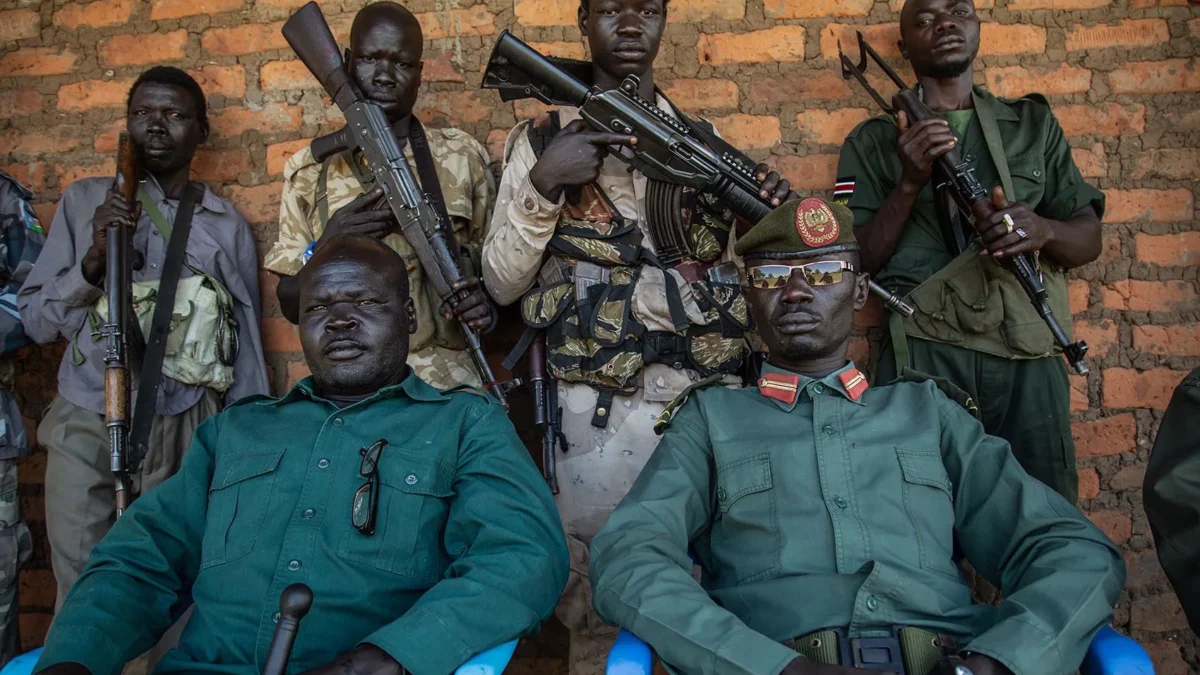
President Kiir, determined to consolidate power, systematically sidelined Machar’s allies from the moment the accord was signed. A key failure lay in the promised integration of armed forces. The Joint Defence Board collapsed. Only about 7 per cent of the promised 83,000 unified forces were ever deployed, a glaring signal that South Sudan’s rival factions remained armed and hostile.
The power-sharing government was a facade, not a functional administration, with deep mistrust running beneath every formal arrangement.
The AU’s Paralysis
The African Union has long presented itself as the guardian of peace on the continent. In South Sudan, its performance has been marked by impotence and indecision. Repeated communiqués condemned Kiir’s breaches of the peace deal, but these pronouncements were empty. Unlike ECOWAS, which imposed biting sanctions on Niger’s junta in 2023, the AU has been paralysed by fear that pressuring Kiir too hard might provoke total collapse. The AU’s High-Level Ad Hoc Committee became a talk shop: mediators shuttling between African capitals, issuing press statements, extracting no concessions.
“The AU remains chronically underfunded and overly reliant on external donors, a dependency that constrains its autonomy, leaving it cautious and reactive rather than bold and decisive.”
UNMISS and the Failure of Protection
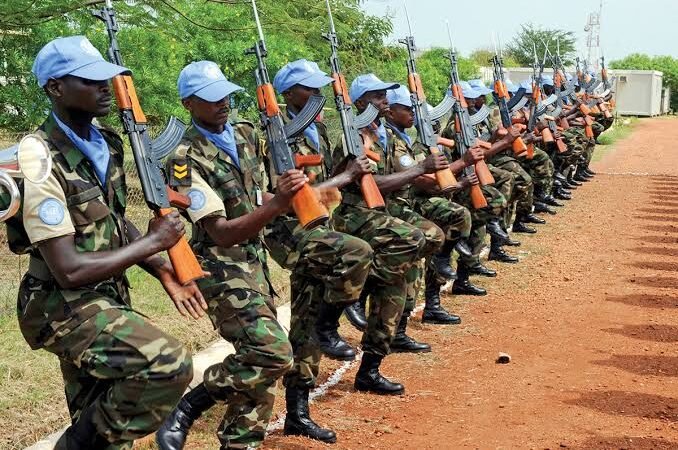
The United Nations Mission in South Sudan, one of the UN’s most significant and costliest peacekeeping operations, has proven incapable of fulfilling its most basic mandate. The March 2025 massacre in Nasir was a watershed. Government-aligned forces, including White Army militias, stormed the town and slaughtered dozens of civilians. Despite the presence of UN peacekeepers, the carnage was unstoppable. Among the dead was a UN staffer. The mission’s $1.2 billion annual budget has become a monument to international failure.
UNMISS has been hamstrung by bureaucratic paralysis and toxic dependence on Kiir’s government for access and security cooperation. Time and again, peacekeepers have been forced to stand down in the face of atrocities. The results are visible: 2.3 million refugees, 2 million internally displaced people, and ethnic clashes showing no signs of abating. The failure is not one of resources. It is one of architecture, a peacekeeping doctrine designed for environments where host governments are partners, applied in an environment where the host government is a belligerent.
The war has an economic engine that the diplomacy rarely names. South Sudan’s government is financed almost entirely by oil, piped north through Sudan and now hostage to Sudan’s own civil war, and the revenue that does arrive is distributed through the patronage networks the peace agreement was supposed to dissolve and instead formalised. A power-sharing deal between armed elites is, in fiscal terms, a revenue-sharing deal, and each faction’s willingness to keep the peace lasts exactly as long as its share of the barrel. When the pipeline falters, as it has repeatedly since Sudan’s war began, the pool shrinks, the arithmetic breaks, and the guns resume. The fighting is not a breakdown of the settlement. It is a renegotiation of it, conducted in the only currency the settlement recognises.
A Test Africa Cannot Afford to Fail.
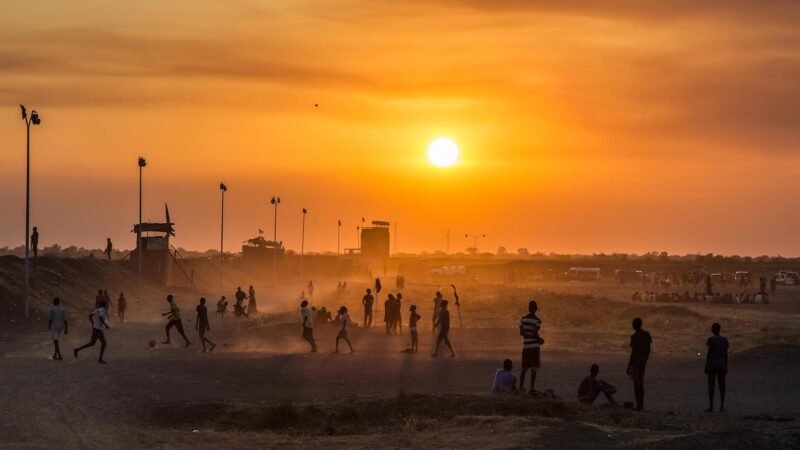
The geopolitical dynamics compounding the crisis are well-documented. Uganda continues to provide military backing to Kiir. The UAE has been accused of funnelling support to Machar-linked factions. Sudan’s civil war has spilt across the border, disrupting vital oil exports and deepening economic turmoil. South Sudan has become a forgotten crisis, the 2024 humanitarian response plan funded at just 40 per cent, donor fatigue setting in as global attention pivots to Ukraine and Gaza.
South Sudan’s agony is a litmus test for whether African and international diplomacy can move beyond rhetoric into decisive, self-directed action. Paths forward exist: the immediate release of Machar, targeted sanctions on hardline spoilers, and an overhauled UNMISS mandate with genuine protection powers, backed by regional mediation through IGAD and states with real leverage over Juba. But they require political will that has not yet materialised. Without it, South Sudan risks remaining not just the world’s youngest nation, but its most comprehensively broken one, and the institutions that were supposed to prevent that outcome will have authored their own indictment.