The Great Green Wall is among the most ambitious acts of collective ecological imagination that post-independence Africa has produced. Spanning 8,000 kilometres from Senegal on the Atlantic coast to Djibouti on the Horn, the initiative envisions a mosaic of restored land, reforested zones, and sustainably managed landscapes that collectively halt the Sahara’s southward expansion, restore agricultural viability to degraded soils, create rural livelihoods for the communities most exposed to climate stress, and sequester carbon at a scale that registers in global climate accounting. The vision is real, the ecological science is sound, and the communities along its path are in urgent need of exactly what it promises. The implementation reality, as of 2025’s independent assessments, is a more complicated reckoning.
The Gap Between Report and Reality
Official figures suggest the initiative is approximately 15 per cent complete. Independent analysts using remote sensing data, satellite imagery that measures actual land cover changes rather than reported programme outputs, put the true figure closer to 4 per cent.
The gap between those numbers is not primarily a measurement dispute. It is a governance problem. Overoptimistic reporting, patchy monitoring systems, and the political incentive to demonstrate progress to international funders on timelines that do not match the ecological pace of land restoration have produced an official narrative that diverges from the ground truth. That divergence matters because it shapes funding decisions, programme design, and the credibility of the initiative as a template for climate adaptation at scale across the continent. Progress that is recorded but not verified is, from a planning perspective, progress that does not exist.
The Funding Shortfall
The financing picture compounds the implementation challenge. Of the roughly $33 billion estimated as necessary to complete the Wall by 2030, only a fraction has been committed by international donors and governments combined, and an even smaller fraction has actually been disbursed in the project-level, community-accessible form that land restoration requires.
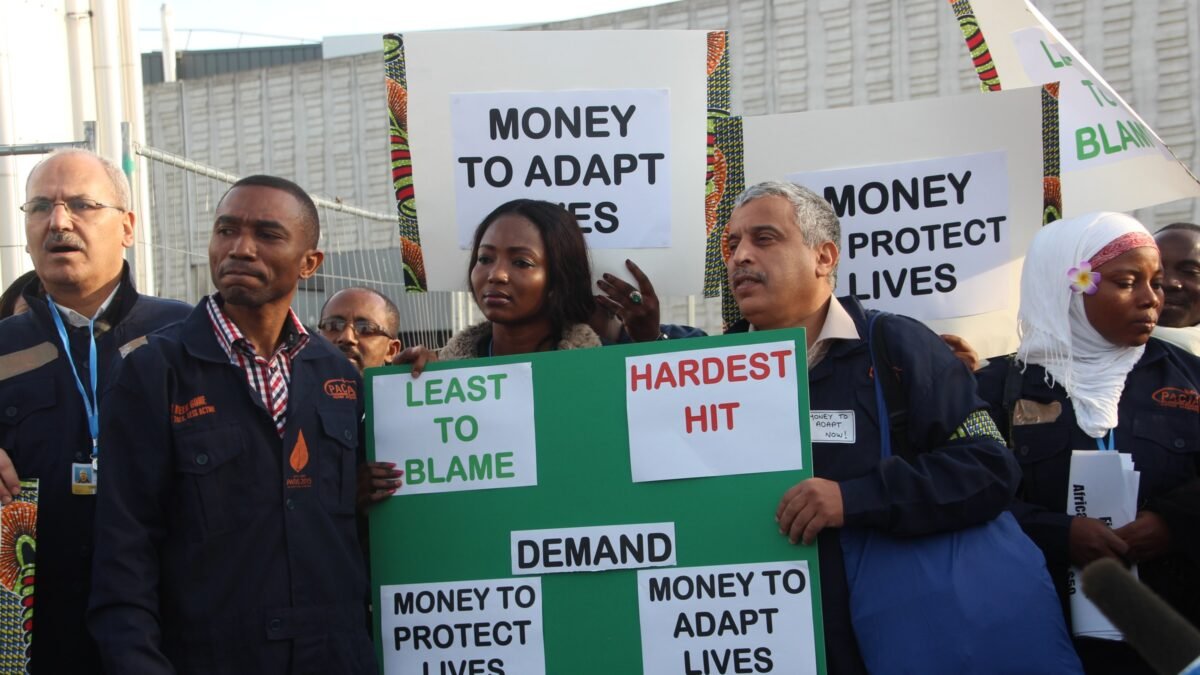
The gap between pledged and disbursed climate adaptation finance is a systemic failure of the international climate finance architecture, not a problem specific to the Great Green Wall. But the Wall’s high profile makes its funding shortfall particularly visible. Multilateral pledges made at COP convenings, African Development Bank commitments, and bilateral donor agreements collectively describe a funded initiative. The reality on the ground- communities without the seedlings, the technical support, or the follow-up maintenance funding to sustain what early restoration efforts established- describes something considerably less certain.
The Great Green Wall is not failing because the vision is wrong. It is struggling because the international climate finance architecture pledges at summits and disburses at a fraction of the committed pace, leaving communities to adapt with resources that arrive too slowly and too conditionally to match the urgency that climate change imposes.
Where It Works, and Why
Where the Wall is working, the evidence is unambiguous and instructive. In Senegal’s Casamance region and in Ethiopia’s highland restoration zones, community-led tree planting and traditional soil-water harvesting techniques, methods that predate international climate programming by generations, have produced measurable improvements in soil health, crop yield consistency, and groundwater recharge. These successes share a common feature: local ownership. Communities that understand the ecological goals, that have participated in the design of restoration interventions rather than receiving them as externally designed prescriptions, and that have a direct material stake in the survival of what they have planted tend to protect and maintain restoration investments. Communities that receive trees from outside programmes without the agronomic support to establish them in local conditions, and without the economic incentives to maintain them against competing land use pressures, do not. The ecological preconditions for success exist. The governance preconditions require more deliberate construction.
The Wall also runs through the most insecure belt on the continent, and the initiative’s fortunes are now inseparable from the Sahel’s politics. Restoration requires presence, seasons of planting, guarding, and maintenance, and presence is precisely what jihadist insurgency, displacement, and coup-driven aid suspensions deny. Several of the member states now govern under juntas whose relations with the donors funding the Wall have ruptured, and land restoration in territory a state cannot secure becomes another casualty of the same governance vacuum that feeds the insurgency. The ecological project and the security project are usually run by different ministries and funded by different instruments. On the ground, they are the same project, because a tree needs what a citizen needs: someone able to stay.
The Great Green Wall’s mixed progress carries an analytical lesson that extends beyond the Sahel. Africa’s climate adaptation challenge is not primarily a technology problem. The practices, techniques, and ecological knowledge required to restore degraded land and build resilient food systems exist across the continent, in the indigenous farming systems that predate the Green Revolution, in the water harvesting traditions of dryland communities, and in the integrated agroforestry practices that research institutions from Nairobi to Dakar have been refining for decades. The binding constraint is not knowledge. It is the financial, institutional, and governance infrastructure required to deploy that knowledge at the scale and pace that climate urgency demands. Closing the gap between what the Great Green Wall represents as an aspiration and what it has achieved as a reality is, ultimately, a test of whether the international community’s climate adaptation commitments are genuine, and whether African governments have the institutional capacity to hold those commitments to account. Both remain open questions, and the soil of the Sahel is waiting for answers that arrive with the reliability of rain.