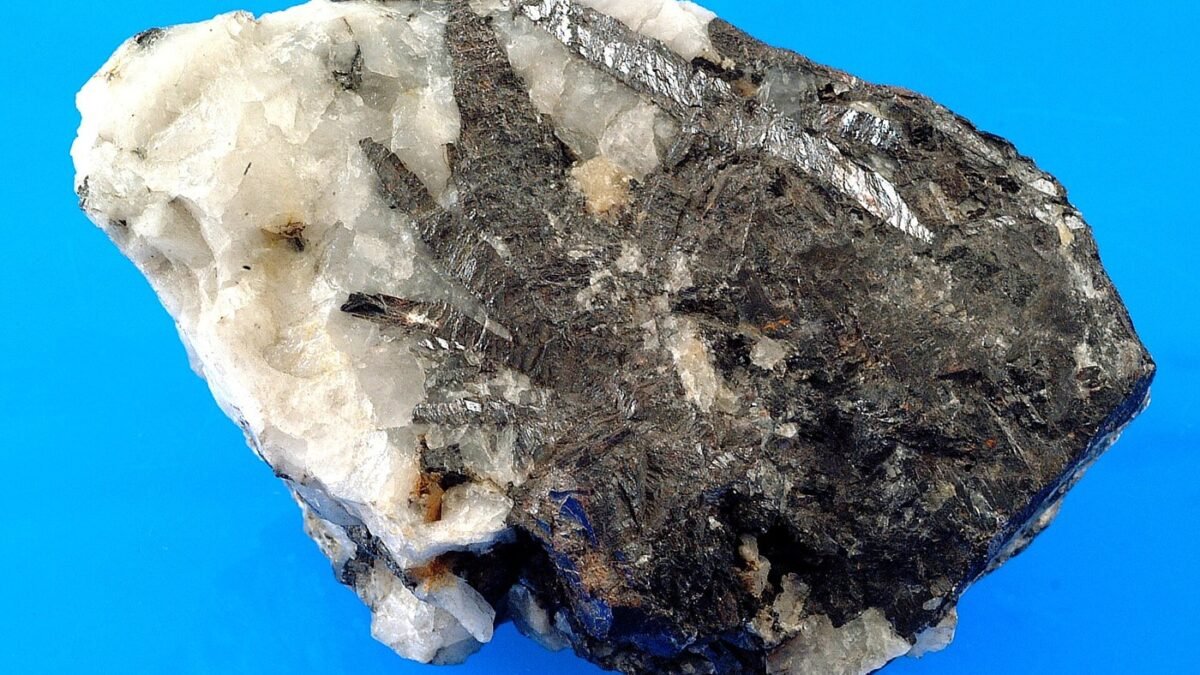
Wars are not won where they are fought. They are won where they are supplied. Beneath the noise of missiles and diplomacy, a quieter contest is unfolding over a metal few citizens could name, but every modern arsenal depends on. Tungsten, dense, heat-resistant, and irreplaceable under pressure, is emerging as one of the defining strategic materials of the current era of great-power competition. It hardens armour-piercing rounds, reinforces high-temperature weapons components, and anchors the precision munitions that Western military planners have consumed at rates that their industrial production capacity is now struggling to replenish. The escalating pace of global military demand, driven by conflict in Eastern Europe, rising tensions across the Indo-Pacific, and a general acceleration of defence procurement across NATO and its partners, is repricing Africa’s most undervalued strategic asset class. Africa holds significant tungsten reserves. The question is whether African governments understand what that means and are governing accordingly.
The critical minerals conversation in African policy circles has, until recently, focused primarily on the energy transition dimension, the cobalt, lithium, and manganese that electric vehicle batteries and renewable energy storage systems require. That focus is legitimate, and the leverage it implies is real. But the military-industrial demand side of the critical minerals equation has been underweighted in African strategic thinking, in part because the discourse around African mineral wealth has been shaped predominantly by the climate and development finance communities rather than the defence and security communities. The result is a negotiating posture that has captured some of the green transition leverage while leaving the defence supply chain leverage largely unclaimed. As Western governments accelerate domestic defence industrial production and discover that their supply chains for tungsten, tantalum, and several rare earth elements route through African territories, that oversight is becoming expensive.
Rwanda’s position in the tantalum supply chain- the country processes coltan from the Democratic Republic of Congo and exports processed tantalum that routes into electronics and military components globally- illustrates both the opportunity and the structural limitation. Rwanda earns processing revenues and maintains geopolitical relevance far beyond its size through its position in this supply chain. But value capture remains concentrated in the processing and intermediary stages rather than in the manufactured end product, and questions about Congo’s mining conditions continue to create reputational and legal exposure for downstream purchasers. The pattern is recognisable: African land and labour provide the raw material input for supply chains whose most valuable nodes- processing, manufacturing, intellectual property- are controlled elsewhere. The defence sector iteration of this pattern differs from the green technology iteration only in its strategic sensitivity.
Western arsenals are being depleted faster than they can be replenished. The minerals required to refill them are disproportionately located in African territories. That is not a coincidence. It is a structural leverage point that African governments are only beginning to price correctly.
The strategic logic that African governments should apply to this moment is similar to the logic that oil-producing states applied in the 1970s when they recognised that control over an essential industrial input conferred negotiating power that bare commodity export did not. The difference is that African critical mineral producers are operating in an era when international rules on resource nationalism are better established, when African institutional architecture, the African Union, the African Development Bank, the AfCFTA framework, provides multilateral vehicles for coordinated positioning, and when the combination of green transition demand and defence supply chain demand creates simultaneous leverage across multiple domains that no previous generation of African resource governments has possessed. The OPEC analogy is imperfect but instructive: coordinated production and pricing decisions by producers of an essential material can change the terms on which buyers negotiate.
The governance infrastructure required to convert this leverage into policy outcomes is the constraining variable. Bilateral deals struck under time pressure by individual African governments negotiating with better-resourced counterparts from major powers tend to produce terms that favour the buyer. The Lobito Corridor, the TAZARA rehabilitation, and the suite of mineral agreements being concluded between African governments and Western partners as part of US and EU critical mineral security strategies represent genuine infrastructure investment opportunities. They also represent an information and negotiating asymmetry that, unless corrected by stronger African institutional positioning, will reproduce the historical pattern in which Africa’s resources capitalise other nations’ industrial futures. The material is present. The leverage is real. The governance to convert leverage into sovereignty is still being built, and the pace of that construction must match the pace of the deals being struck.
There is a particular danger in the defence iteration of this leverage that the green-transition version does not carry, and African governments should weigh it before they celebrate the new attention. A buyer who needs your cobalt for a battery wants a market; a buyer who needs your tungsten for a munition wants a guarantee, and guarantees, in a war economy, are extracted by means that markets do not use. Strategic dependence on an African mineral can just as easily produce a security arrangement, a quiet basing concession, a side-agreement on alignment, as a fair processing deal, because the same urgency that lifts the price also lowers the buyer’s tolerance for being told no. The leverage is real, but it is double-edged: a continent that holds what the world’s arsenals require can name its terms, or it can find those arsenals’ owners naming theirs. Which of the two occurs will be decided not by the size of the reserve but by whether African states negotiate as a bloc with a floor or one at a time under pressure, and that choice is being made, deal by deal, right now.