
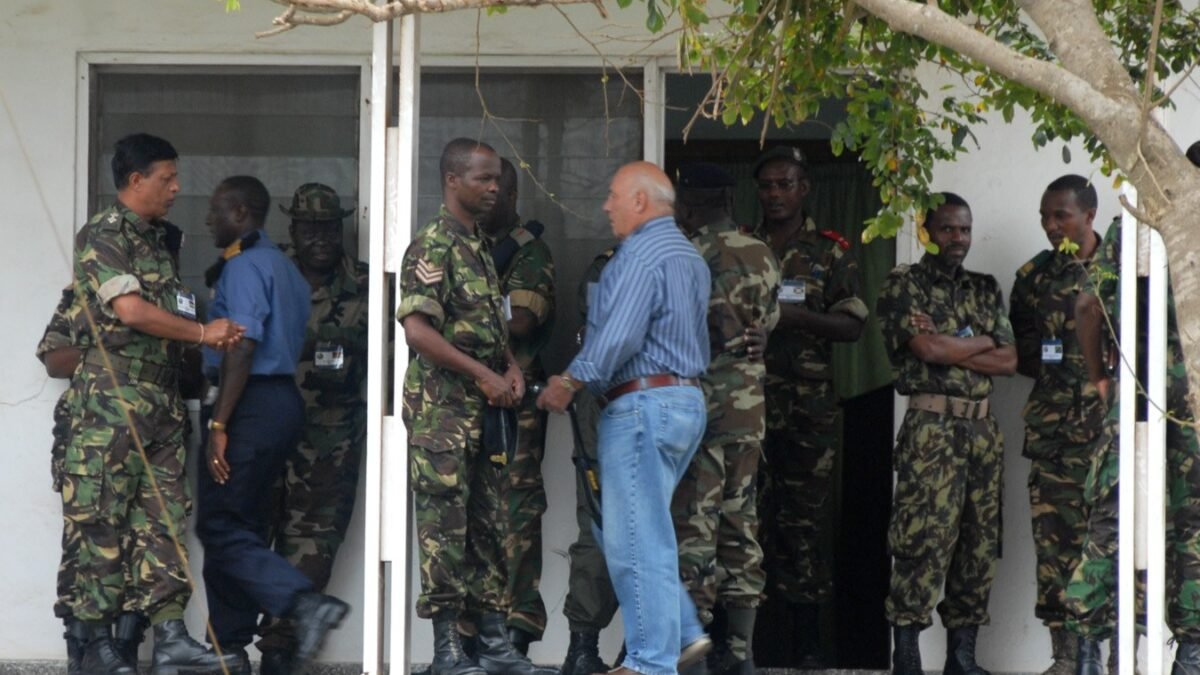
When treason charges arrive in a Nigerian courtroom, they carry two separate weights simultaneously: the legal question of what the accused actually did, and the political question of what the state is trying to achieve by prosecuting it. Nigeria’s history of treason proceedings, from the post-civil war tribunals to the Abacha-era trials to the more recent security-adjacent prosecutions that have wound through the federal court system, establishes a pattern that makes the separation of those two questions more than merely academic. The charges currently moving through the court system following the alleged coup plot represent both a test of legal process and a test of institutional confidence.
The alleged plot, as presented by state security agencies, involves a network of military and civilian actors accused of conspiring to remove the Tinubu administration through unconstitutional means. The state’s narrative positions the arrests and charges as a demonstration of institutional vigilance, the security architecture working as designed, identifying and neutralising a threat to democratic governance before it could be executed. That narrative is not automatically false. Coup plots do occur. Nigeria’s democratic consolidation, while real, has not eliminated the conditions- economic frustration, elite factional competition, security sector grievances- that have historically provided the context for unconstitutional power seizures.
What the courtroom will test is the evidentiary substance of that narrative. Treason is the most serious charge a state can bring against its own citizens, carrying the potential of capital punishment in Nigerian law. Its prosecution therefore demands a higher standard of evidence and procedural integrity than any other criminal category. The history of treason proceedings in Nigeria provides reason for institutional vigilance in both directions, vigilance about genuine threats to constitutional order, and vigilance about the deployment of treason charges as a tool of political management. Both concerns are historically warranted.
A government confident in the quality of its evidence does not need to compress the procedural rights of the accused. The measure of due process is taken most accurately under the pressure of maximum political stakes.
The due process questions are specific to whether the accused have had timely access to legal representation of their choosing. Whether the evidence against them has been disclosed with sufficient time for meaningful challenge. Whether bail applications have been considered on their legal merits rather than on security grounds that effectively deny bail as a matter of prosecutorial preference. Whether the presiding courts have the structural independence to rule against the prosecution without institutional consequence. These are not questions that impugn the legitimacy of the charges; they are the tests that any credible legal system should apply to any prosecution of this gravity, and they are questions that Nigerian civil society, the legal profession, and the international community are within their rights to ask loudly.
The security context within which these proceedings are taking place matters for how they will be read both domestically and internationally. Nigeria’s security environment in 2025-2026 is under sustained pressure across multiple theatres: the northwest banditry crisis, the continuing Boko Haram and ISWAP insurgency in the northeast, the Benue and Plateau state farmer-herder conflicts, and the southeast security deterioration. An administration managing multiple security fronts simultaneously has institutional reasons to demonstrate control, and the risk, in that context, is that the treason prosecution serves the function of a control demonstration regardless of its evidentiary merit. The conflation of genuine security threats and political management is precisely the dynamic that the independence of the judiciary exists to prevent.
Nigeria’s judiciary has, in recent years, demonstrated moments of genuine independence alongside moments of institutional deference that have compromised public confidence. The Supreme Court’s handling of the 2023 presidential election petition produced a judgment that many constitutional lawyers found procedurally and substantively problematic, raising questions about the court’s willingness to adjudicate against the sitting executive on high-stakes political questions. Those questions travel with the treason prosecution. If the court system is perceived as unlikely to rule against the prosecution on questions of evidence or procedure, the trial becomes a performance of justice rather than an exercise of it, and its outcome, conviction or acquittal, cannot be treated as legally settled.
The regional dimension adds further complexity. West Africa’s coup belt has demonstrated repeatedly that military interventions find public legitimacy where economic conditions are deteriorating and where the civilian government is perceived as unresponsive to popular grievance. Nigeria’s current economic environment, characterised by high inflation, currency instability, subsidy removal pain, and urban unemployment, creates precisely the conditions of popular frustration that have preceded coups elsewhere in the region. Prosecuting an alleged coup plot forcefully and visibly is rational governance, given that context. Doing so with insufficient procedural integrity undermines the democratic norm it is supposed to defend.
This prosecution will measure Nigeria’s democratic institutions in ways that extend beyond its immediate outcome. A visibly fair trial that produces acquittals where evidence is insufficient, allows vigorous legal challenge, and demonstrates judicial independence under executive pressure would strengthen the institutional case for constitutional order more effectively than a conviction achieved through procedural compression. Due process is not a concession to the accused. It is the mechanism by which the state demonstrates that its power is disciplined by law, and in that demonstration, the legitimacy of the order being defended.