
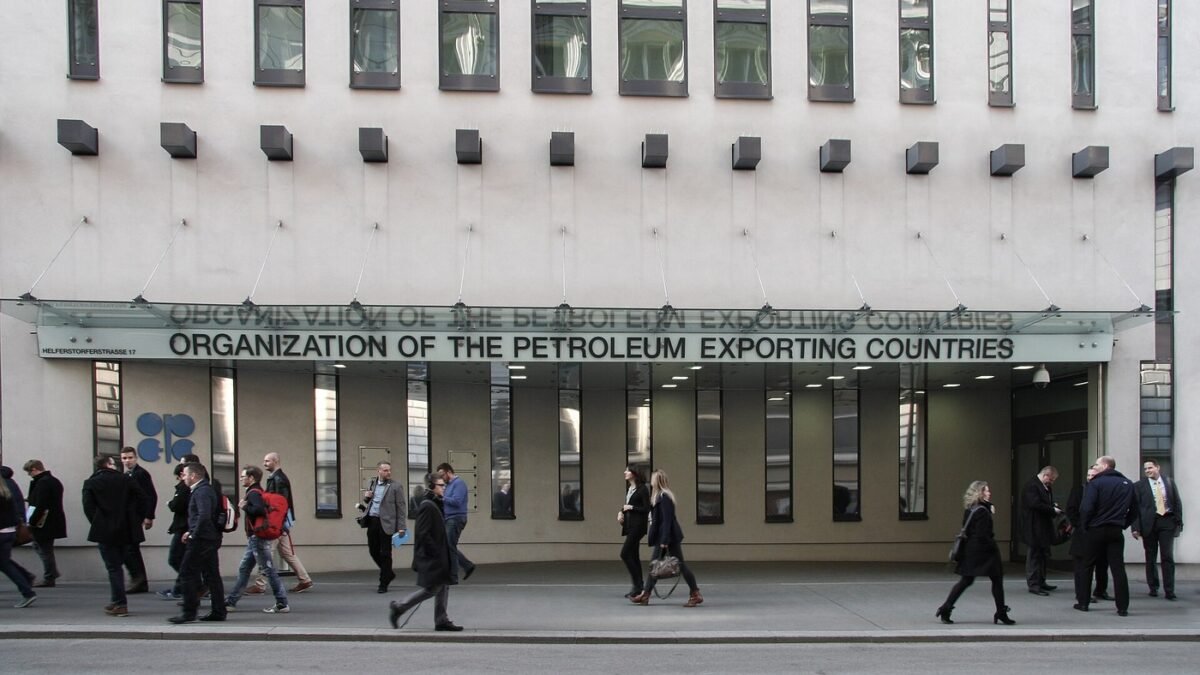
OPEC+’s decision to agree in principle to a modest production increase arrives in a market that has stopped responding to policy signals with the predictability those signals assumed. Prices have held at elevated levels despite the promise of additional barrels, and markets have responded with the caution appropriate to a system whose underlying architecture is under more strain than the headline announcement suggests. The gap between announced capacity and deliverable supply is widening, and with it, the limits of coordinated producer responses are becoming visible in ways that prior cycles managed to obscure.
Supply disruptions tied to ongoing conflicts continue to constrain global oil flows beyond what incremental output adjustments can quickly offset. Conflicts affecting key transit routes and production zones have introduced a layer of volatility that no production committee resolution can easily override. This is where the nature of the current strain becomes distinct: it is not a demand problem that supply expansion can resolve. It is a structural problem- fragmented infrastructure, disrupted corridors, and a global energy system entering a phase transition- that coordination mechanisms built for a different era are increasingly unable to address.
For consumers, the transmission is immediate. Elevated oil prices continue to move through transport costs, manufacturing inputs, and household expenditure in ways that compound already persistent inflationary pressures. The feedback loop has tightened: higher prices constrain demand, but disruptions constrain supply further, leaving markets caught between competing forces that resist simple correction. Governments are managing the visible symptoms- subsidy regimes, currency interventions, public communication- while the structural conditions generating those symptoms continue to deepen.
For African economies, the transmission mechanism operates with a particular asymmetry. Some countries gain through higher export revenues when prices rise. Most, however, encounter the shock not through the headline price of oil but through its downstream effects, elevated transport costs, food price inflation, fiscal pressure, and currency stress absorbed through subsidies or exchange-rate adjustment. The shock lands less on producers’ balance sheets and more in the daily arithmetic of household survival. That distinction matters because it means the very price level that improves the export ledger can simultaneously destabilise the domestic economy behind it.
This asymmetry reveals a structural condition that price movements alone cannot resolve. Even resource-rich states frequently lack the refining capacity, distribution networks, and fiscal buffers needed to translate higher export prices into genuine insulation from global volatility. Access to natural resources does not automatically produce leverage over the system that prices them. Value is captured at the refining, processing, and trading stages, stages where African presence remains limited. The same cycle of extraction that generates revenue also reproduces dependency.
The deeper lesson is that being a producer is not the same as holding power over the thing produced. Price is determined where the barrel is refined, hedged, insured, and cleared, on trading floors and in processing complexes that sit overwhelmingly outside the continent. An African exporter therefore experiences even a favourable price as something that happens to it rather than something it commands, a weather system rather than a lever it controls. The barrel leaves African soil as a raw input and returns, when it returns at all, as refined product priced in another economy’s margin. Owning the well while renting the refinery is the precise shape of structural dependence, and no production quota negotiated in Vienna can amend it.
The OPEC+ signal, then, operates at two levels simultaneously. At the surface, it is an attempt to reassure markets that producers remain responsive and coordinated. At the structural level, it reflects the constraints under which that coordination now operates. The global energy system has become more complex, with geopolitical risks, infrastructure degradation, and shifting demand patterns all interacting in ways that reduce the effectiveness of traditional levers. A production agreement communicates intent. Whether that intent translates into market stability depends on conditions that the agreement itself cannot control.
The energy transition compounds this further. As economies move, unevenly and often reluctantly, toward alternative energy sources, investment in traditional oil infrastructure becomes more cautious. Producers face the challenge of sustaining short-term supply while navigating uncertain long-term demand. The result is a system that is simultaneously less flexible, more sensitive to disruption, and slower to absorb shocks. The tolerance for the kind of managed volatility that characterised previous cycles is narrowing on both sides of the market.
For Africa, the challenge is to move from being a receiver of global energy shocks toward becoming a structural participant capable of shaping its own exposure. That requires investment in refining and processing capacity, in storage infrastructure, and in regional energy diversification, the kind of structural work that cannot be achieved through market participation alone. The continent’s energy future cannot be negotiated through export revenue management while global conditions determine the terms. Stability, in this environment, is not something the market will deliver. It is something that must be built deliberately, at the structural level, by states that decide to build it. The producers who emerge from the coming volatility with leverage rather than exposure will be those that used the revenue of the high-price years to buy down their dependence on it, financing the refineries, the storage, and the regional grids that convert a windfall into a foundation. The window for that conversion is open while prices are elevated, and it closes the moment they are not.