Airtel Africa delayed the planned IPO of its Airtel Money business this week, pushing the anticipated listing into the second half of 2026 despite reporting stronger-than-expected annual financial results. The company cited unfavourable market conditions and continued external volatility. That framing is precise in its implication: the delay was not a consequence of Airtel Money’s operational performance, which remained solid, but of conditions operating at the level of global capital markets, conditions that Airtel Africa, like most African firms seeking international listings, cannot determine or meaningfully influence.
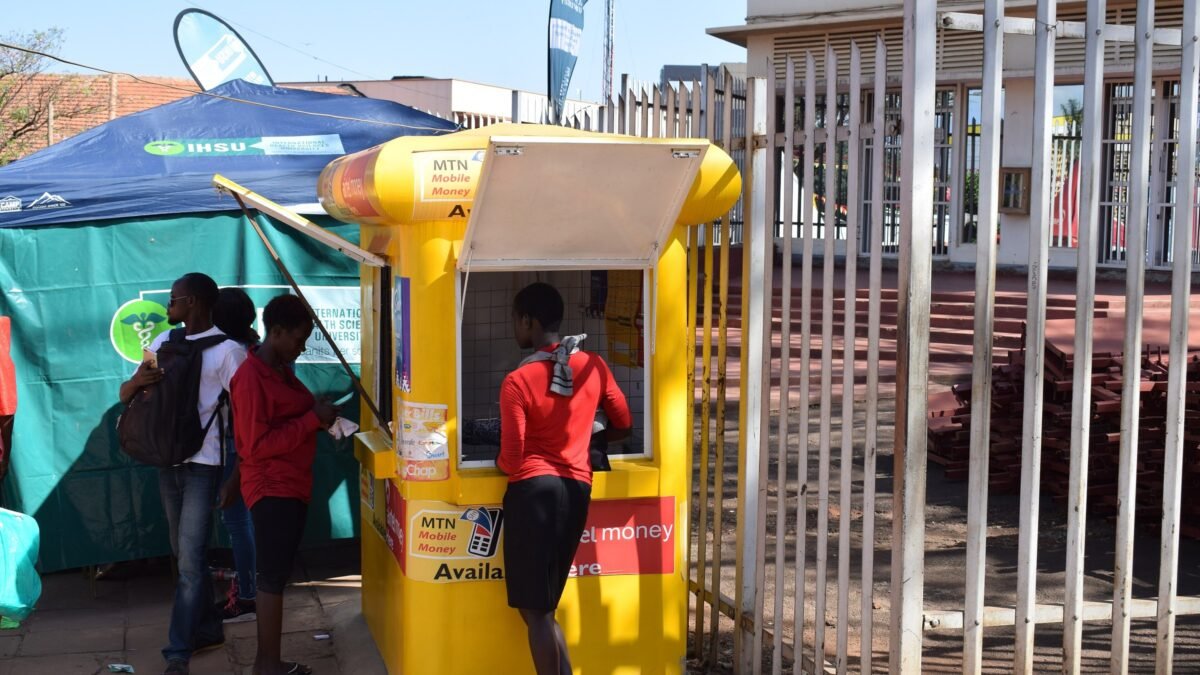
The Airtel Money IPO delay carries significance beyond a single company’s listing timeline. Mobile money is not a peripheral product inside Africa’s digital economy. It has become one of the continent’s most important engines of financial inclusion, connecting millions of users across banking, payments, remittances, and informal commerce in markets where traditional banking infrastructure has consistently failed to extend. The planned listing had been closely watched as a signal of investor appetite for African fintech and digital infrastructure assets at scale. Instead, the postponement offers a different signal: that even Africa’s strongest digital growth narratives are subject to a capital-market logic they do not author.
The underlying business remained relatively strong. Mobile money continued to contribute significantly to Airtel Africa’s group revenue, and operational metrics showed the kind of growth trajectory that, during an earlier investment cycle, would have generated substantial listing momentum. Strong operational numbers, however, were not sufficient to outweigh concerns around market timing, capital costs, and broader investor sentiment. The distinction between the two is the central fact of the story: African fintech growth remains real, but access to the capital markets that could fund its next phase of scaling depends on conditions far removed from African demand.
This exposure reflects a structural condition that the Airtel Money delay has made newly legible. African digital-finance growth is substantial. Yet access to favourable listing environments depends on global liquidity cycles, interest-rate conditions, and external investor confidence that African firms themselves cannot control. Local adoption can remain high even as external financing conditions deteriorate, and the distance between the two can widen rapidly during periods of market uncertainty. That gap is where the contradiction in Africa’s technology growth story lives most uncomfortably.
The episode also reflects the changed environment facing African technology companies after years of aggressive fintech optimism. During earlier investment cycles, mobile money and digital-finance businesses were treated as near-automatic growth stories capable of attracting rapid capital at attractive valuations. Today, investors appear focused on profitability, risk exposure, regulatory environment, and macroeconomic resilience rather than growth narratives alone. The shift is not irrational. But its consequence for African firms is that the cost of accessing international capital has risen precisely at the moment when scaling digital infrastructure requires it most.
For African capital markets more broadly, the delay carries signalling weight beyond Airtel. IPOs are confidence indicators, tied to perceptions of market depth, regional stability, and long-term growth expectations. When major listings slow, it signals how international investors are reading the African technology investment landscape, regardless of whether that reading accurately captures the operational reality beneath it. The gap between how Africa’s digital economy functions and how it is valued in international capital markets has been a persistent feature of the sector’s development. That gap is being extended, not narrowed, by the current environment.
The structural contradiction defining Africa’s technology sector is now more visible than at any recent point. Usage growth continues across digital payments, mobile connectivity, and financial services. Scaling those systems to the next level of reach and infrastructure depth requires capital at a scale that internal African markets, for now, cannot easily provide. Expansion therefore depends on international capital ecosystems that fluctuate in response to pressures entirely removed from African consumer demand. The result is a sector where operational success and capital-market access are increasingly decoupled, and where others will determine the terms of reconnection.
The broader question the Airtel delay poses is not whether African digital finance will continue to grow. It will. The question is on whose terms that growth gets financed, at what cost, and with what structural consequences for the ownership and governance of the infrastructure that results. Access to users and access to capital are no longer moving at the same speed, and the divergence between them is becoming one of the defining tensions of Africa’s technology development story.
The ownership question is the one the celebratory fintech narrative has always deferred, and the delay drags it into the open. If the capital that funds the next phase of African digital infrastructure must come from London, New York, or the Gulf, then the rails of African financial inclusion will be owned where that capital sits, and the data they generate- who pays whom, when, and for what- becomes an asset booked on someone else’s balance sheet. Mobile money solved the problem of the unbanked African. It has not solved the problem of who owns the system that banked them. A listing postponed for market conditions is a footnote. A continent that scales its most important financial infrastructure entirely on terms set by external capital is a structure, and the structure is the story the postponement quietly tells.