The crossroads metaphor does Africa a disservice. It positions the continent as a passive junction where external powers arrive, diverge, and compete, with African states as bystanders selecting which direction to follow. The reality operating beneath the visible story is more precise and more consequential: Africa is not at a crossroads. Africa is the stress test on which the architecture of the 21st century’s power order is being evaluated, negotiated, and in key moments broken.
The shift from a unipolar to a multipolar global order has not happened uniformly across geographies. It has happened most visibly in Africa, where the assumptions that undergirded Western post-Cold War supremacy- that liberal democratic governance would converge as the universal model, that international financial institutions would act as neutral arbiters, that security relationships with former colonial powers would remain stable- have all been challenged simultaneously and in some cases overturned. The Sahel’s cascade of coups since 2020, the renegotiation of French military basing rights, the arrival of Russian private military contractors in Mali, Burkina Faso, and the CAR, and the deepening of Chinese infrastructure finance across East and West Africa are not isolated events. They are readings from the same instrument, measuring the same seismic shift.
The Powers and Their Models
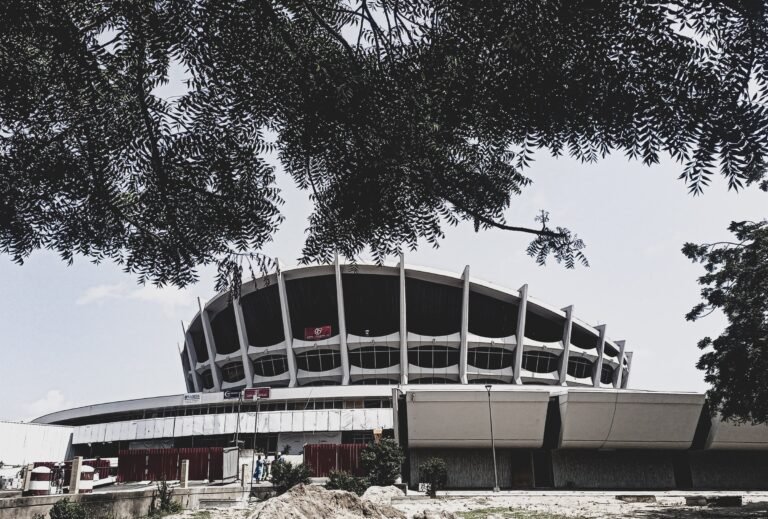
China’s position on the continent has been built over two decades of patient, infrastructure-led engagement. The Forum on China-Africa Cooperation, the Belt and Road Initiative, the Export-Import Bank of China’s concessional lending, and Beijing’s consistent non-interference doctrine have collectively assembled a relationship that African governments find materially useful and politically navigable. China does not attach governance conditionalities to its loans. It does not pass resolutions in the African Union condemning member states’ internal affairs. It builds ports, railways, and stadiums, and it asks for access to resources and markets in return. The transaction is transparent in structure if not always in detail. For governments navigating the complex conditionalities of Western financial institutions while managing domestic political pressures, Beijing’s model has represented a genuinely competitive alternative.
Russia’s re-engagement with Africa is different in character and more volatile in implication. The Wagner Group, subsequently reorganised as the Africa Corps following Yevgeny Prigozhin’s death in August 2023, has offered military security to fragile states in exchange for mining concessions and political positioning. In the Central African Republic, Mali, Burkina Faso, and Sudan, Russian private military presence has provided ruling governments with an alternative to Western security partnerships that came with human rights conditionalities and accountability expectations. The relationship has been transactional rather than developmental, and the evidence from CAR and Mali suggests that Russian military presence stabilises ruling regimes without stabilising the states those regimes govern. The violence continues—the concessions flow.
The Western Response
The United States has responded to these dynamics with a combination of strategic articulation and structural underfunding. The Biden administration’s Lobito Corridor project, a railway and trade corridor connecting Angola’s Atlantic coast to the DRC’s copper belt and Zambia’s mineral regions, represented a serious attempt to offer Africa the kind of infrastructure engagement that Chinese financing had pioneered. The announcement in 2022 signalled a conceptual shift: the recognition that competing with China in Africa required the same playbook, not simply a better democracy narrative. Whether that shift translates into sustained financing commitments beyond a single administration remains the open question.
The European Union’s posture is complicated by the Sahel ruptures, which have effectively ended French-led security architecture in the region and created a political environment in which EU partnerships face explicit hostility from governments that have made anti-French positioning central to their domestic legitimacy. The EU Global Gateway initiative, designed to mobilise €300 billion in investment by 2027, competes with Belt and Road financing but moves through institutional channels that are slower, more conditional, and less adapted to the speed at which African governments need to make decisions about major infrastructure investments.
What Africa Captures
What this competition produces for Africa is not straightforwardly positive. The rhetoric of African agency has expanded significantly, the African Union’s seat at the G20, the reform debates around the UN Security Council, and the push for permanent African representation in international financial institutions all signal a continent asserting its place in global governance. But the practical capacity to translate that assertiveness into binding structural change remains constrained. African states are managing their relationships with major powers from a position that is improving but still structurally dependent on external capital, external security frameworks, and external markets for commodities whose value is largely set elsewhere.
The African Continental Free Trade Area is the most significant structural project aimed at changing that dependence. If AfCFTA achieves meaningful intra-African trade integration, reducing the proportion of African exports that flow through commodity channels to major powers and increasing the share traded within the continent, it would shift the economic geography of Africa’s power relationships in ways that no bilateral partnership with China, the United States, or Europe can replicate. The challenge is implementation: the tariff reduction schedules, rules of origin negotiations, and cross-border infrastructure investments required to make AfCFTA functional are moving at a pace that reflects the political difficulty of asking African states to accept domestic economic disruption for continental long-term gain.
Africa is not choosing between great powers. Africa is choosing the terms on which it engages all of them simultaneously, and in doing so, is revealing something important about the limits of the post-Cold War international order. A continent that once absorbed the decisions of others is now, in its own uneven and contested way, making them. The architecture of how that is done, through what institutions, on what terms, with what protections for African sovereignty, is the defining diplomatic project of the next generation. The crossroads metaphor misses this entirely. Africa is not choosing a road. It is determining whether the road will be built on its own terms.