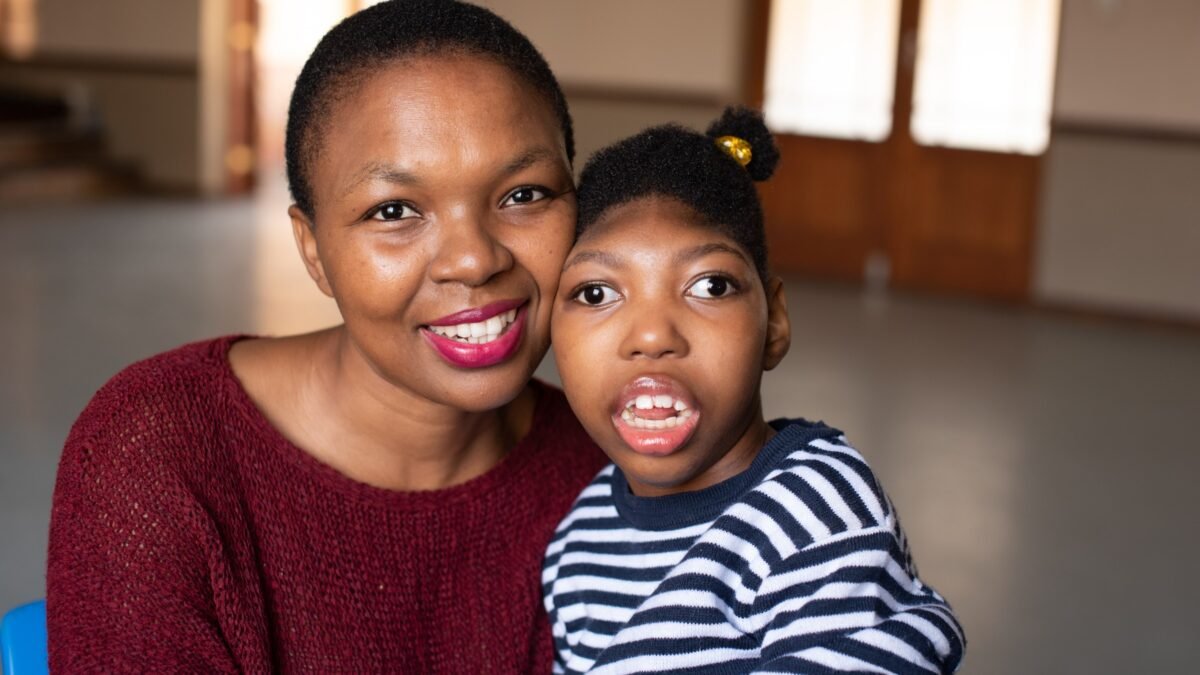
When the UN adopted the Convention on the Rights of Persons with Disabilities, it promised a global push toward dignity and inclusion. Yet in Africa, that promise often fades into silence. In Nigeria, South Africa, Kenya and beyond, children with disabilities remain invisible to educational systems and policymakers alike, trapped between crumbling infrastructure, outdated beliefs, and political inertia that has never been forced to confront its cost.
The Scale of the Exclusion
The numbers are precise enough to be damning. Recent UNESCO data shows that less than nine per cent of children with disabilities in Sub-Saharan Africa attend primary school. That gap widens in secondary and tertiary education, where dropout rates exceed 80 per cent for learners with special needs. According to the World Bank, the economic cost of excluding persons with disabilities from education and employment could be as high as seven per cent of national GDP. Yet policies remain underfunded, teachers are undertrained, and systems are unequipped to offer tailored, inclusive education. The argument that disability inclusion is charity work has been used for decades to justify inaction. The argument that it is an economic necessity and a rights issue simultaneously has not yet broken through.
In 2019, Nigeria enacted the Discrimination Against Persons with Disabilities (Prohibition) Act, providing a legal framework for accessibility and inclusion with a five-year compliance period. As that deadline expired in 2024, most public buildings, including schools, remained non-compliant. South Africa, often touted for its progressive constitution, faces its own paradox. Despite the White Paper 6 policy promoting inclusive education, a 2022 Human Rights Watch report found that over 600,000 children with disabilities remain out of school, many stuck on long waiting lists or in underfunded special schools. Kenya’s Education Sector Plan promised to mainstream inclusive practices; only two per cent of teachers have received formal training in special needs education, and just one in four schools reports having any assistive devices. The pattern is continental: laws that sit in drawers without funding, data, or urgency.
Stigma and the Missing Data
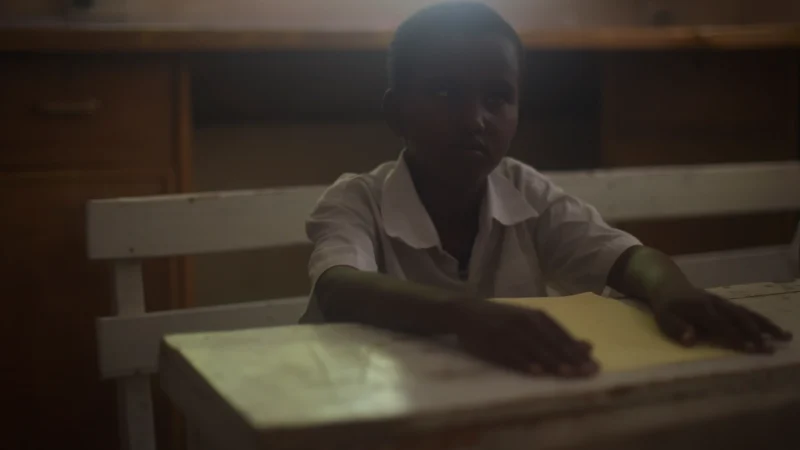
In many parts of Africa, disability is still cloaked in mysticism. Deafness is whispered as divine punishment. Intellectual disability is mislabelled as witchcraft. In Igbo culture, a child born with a visible impairment may be referred to as an ogbanje, a spirit child destined to return to the spirit world. In parts of Ethiopia, disability is seen as the consequence of parental wrongdoing. While these beliefs do not represent modern Africa, their residue lingers in policymaking and parental attitudes, causing children to be kept hidden from public view or institutional care, effectively ghosting them from national data. Without disaggregated data on disability and education, planning becomes guesswork and budgeting becomes a political football. A 2023 UNICEF evaluation across 12 African countries found that 67 per cent of teachers had no training on inclusive techniques and only 14 per cent of mainstream schools had accessible toilets or ramps.
Africa has made strides at the continental level. The African Charter on the Rights and Welfare of the Child and the Protocol on the Rights of Persons with Disabilities together create one of the most progressive legal frameworks on paper. In practice, compliance remains largely voluntary, reporting is sporadic, and enforcement mechanisms are nearly nonexistent. Only 17 African states have submitted disability compliance reports to the African Union over the past five years. The African Commission on Human and Peoples’ Rights lacks the power to compel reform or penalise governments for non-compliance. A right without remedy is no right at all. Africa’s disability laws are less like shields and more like cloaks, draped in the delicate fabric of human rights language, but hiding the threadbare reality of implementation. They conceal more than they protect.
The Cost of Invisibility
Disability is not just a health issue; it is an economic multiplier. Excluding people with disabilities from education leads to lifelong unemployment, poverty, and dependency. The International Labour Organisation estimates that African countries lose between three and seven per cent of GDP annually due to disability-related exclusion. In Nigeria alone, the lost potential from undereducated disabled populations is estimated at over $4 billion annually. Investment in inclusive education yields dividends not just morally but also financially. What does true inclusion look like? It means Universal Design in schools, teacher training, assistive technologies, and local languages for sign and Braille. It means budgeting not just for buildings but for belonging. The African Union’s Agenda 2063 pledges an Africa where development is people-driven, unleashing the potential of its youth. But if children with disabilities are still waiting outside the school gate, that promise rings hollow. The deeper mechanism behind the inaction is one of measured invisibility, and it is worth naming because it is deliberate in its effect if not always in its intent. A child kept home by stigma never enters the enrolment data; a school built without a ramp records no complaint from the student who could not reach the door; a ministry that does not disaggregate disability statistics cannot be held to a number it never collected. Exclusion that leaves no trace generates no political cost, and a cost no one is forced to pay is a cost no budget will ever fund. The legal frameworks were the easy part precisely because a law without a remedy threatens no one. What the children outside the gate are waiting for is not another charter but the one thing the system has been structured to withhold: a count that makes their absence expensive enough to end.
In African folklore, a popular proverb warns: the child who is not embraced by the village will burn it down to feel its warmth. In education, that fire can be prevented, but only with effective policies, teachers who care, and a society that chooses to see.