The Red Sea is not calm. It has not been calm for some time. But it is no longer merely a shipping lane under pressure, it has become a ledger on which competing powers are inscribing their ambitions. The escalating confrontation involving the United States, Israel, and Iran is reordering the logic of global alliances, and Africa, running the length of that contested maritime corridor, positioned at the intersection of Gulf capital, Chinese infrastructure, and Western financial architecture, finds itself, once again, structurally central and strategically voiceless. The question is not whether this realignment will reach the continent. It already has.
When military operations against Iranian assets escalated in early 2026, the first-order effects were predictable: oil markets convulsed, shipping insurance premiums spiked, and Bab-el-Mandeb, the narrow strait through which an estimated 12 to 15 per cent of global trade passes, became a pressure point with direct consequences for East African import costs and Horn of Africa food security. Yet the silence from Addis Ababa, Nairobi, Cairo, and Lagos was instructive. African states issued calibrated diplomatic statements sufficient to register their presence but insufficient to constitute a position. This is the inherited posture: non-alignment repackaged as neutrality, abstention dressed as sovereignty.
Who Is Competing
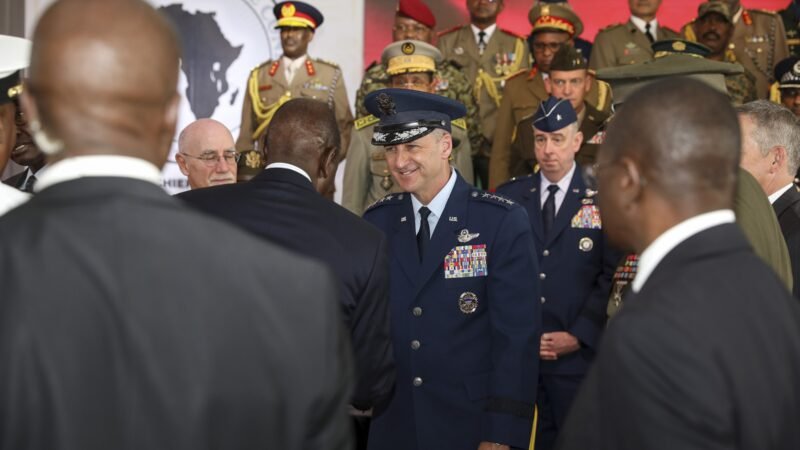
Understanding the current moment requires disaggregating the actors. The UAE’s footprint is infrastructural and commercial, DP World now operates or holds significant positions in port facilities across Djibouti, Somaliland, Mozambique, Angola, and Egypt. These are not charity investments. Ports are chokepoints. Whoever manages the logistics corridor controls the cost of trade, the routing of goods, and, in moments of geopolitical stress, the ability to apply pressure without firing a single round. Saudi Arabia’s engagement is quieter but no less consequential, its positioning in the Horn reflects a Red Sea doctrine built on proximity, agricultural dependency, and ideological soft power distributed through religious networks that predate the current conflict by decades. Russia’s model is blunter: arrive during a security crisis, offer regime protection, extract resources, insulate the government from Western pressure. The Sahel has become the primary laboratory. China operates at a different scale and time horizon, the Belt and Road Initiative has left rail lines, ports, and digital infrastructure across the continent, and Africa’s external debt stock reached approximately $1.8 trillion by 2024, with Chinese creditors holding significant bilateral exposure in Angola, Zambia, Kenya, and Ethiopia.
The Books They Kept
The former colonial powers did not retreat from Africa. They adapted, shedding their flags, keeping their architecture, and learning to operate through financial systems rather than garrison towns. Britain and France retain their most enduring influence through financial architecture: offshore centres such as the Cayman Islands, the British Virgin Islands, and the City of London remain among the most significant channels through which African capital, licit and illicit, flows into the global financial system. The continent loses more than $89 billion annually to illicit financial flows alone, an amount that exceeds the foreign direct investment received by many sub-Saharan economies. In net terms, Africa exports more capital than it receives. It is, paradoxically, a creditor to the world it is routinely described as dependent upon. The Sahel expelled French forces. France kept its books: the CFA franc, the monetary architecture tying fourteen West and Central African economies to the French Treasury’s guarantee, remains largely intact.
Central but Voiceless
Africa has 54 votes in the United Nations General Assembly. It holds disproportionate reserves of critical minerals on which the global energy transition depends. It sits at the intersection of the world’s most contested maritime routes. And it is, structurally, a rule-taker in every multilateral forum that matters. The Ezulwini Consensus, calling for two permanent Security Council seats for Africa, has stalled amid resistance from exactly the powers whose veto authority it would dilute. The AfCFTA holds genuine structural promise but remains undercapitalised and under-implemented. The Middle East escalation has not created Africa’s vulnerability, it has clarified it. The continent’s exposure to oil price volatility, food-import dependency, Red Sea disruptions, and great-power alignment pressures is the cumulative result of decades of undiversified economies, fragmented governance, and strategic decisions deferred in the name of stability.
The preconditions for genuine African agency are not mysterious. They are industrial diversification, intra-African trade, a security architecture accountable to African populations rather than to external patrons, and financial systems designed to retain African capital rather than to facilitate its departure. None of this is achievable through diplomatic communiqués. The continent that holds the minerals for the energy transition, the demographic weight for the next century’s economic expansion, and the geographic centrality to three of the world’s most contested maritime corridors is not powerless. It is unorganised. The distinction matters enormously because the unorganised can be changed. But it requires African leaders, civil society, academic communities, and diaspora networks to stop exercising sovereignty and start building it. The distinction between powerless and unorganised is the whole argument, and it cuts against the comfortable grievance as sharply as against the external interference. A powerless continent has an alibi; an unorganised one has only a choice it keeps declining to make. The same fifty-four states that are picked off individually at every negotiating table could set a common floor on debt terms, mineral pricing, and corridor ownership, and the powers that court them one by one understand precisely why they prefer to keep the meetings bilateral. The capital that leaks north through the City of London and the offshore centres is not stolen at gunpoint; it is exported through arrangements African elites help write and benefit from. To name the external architecture without naming that complicity is to tell half the story, and the half left out is the only half Africans can act on without anyone’s permission. The inflexion point is not approaching. It is already here, and the window in which the terms of the next global order can be influenced, rather than merely absorbed, will not remain open indefinitely.