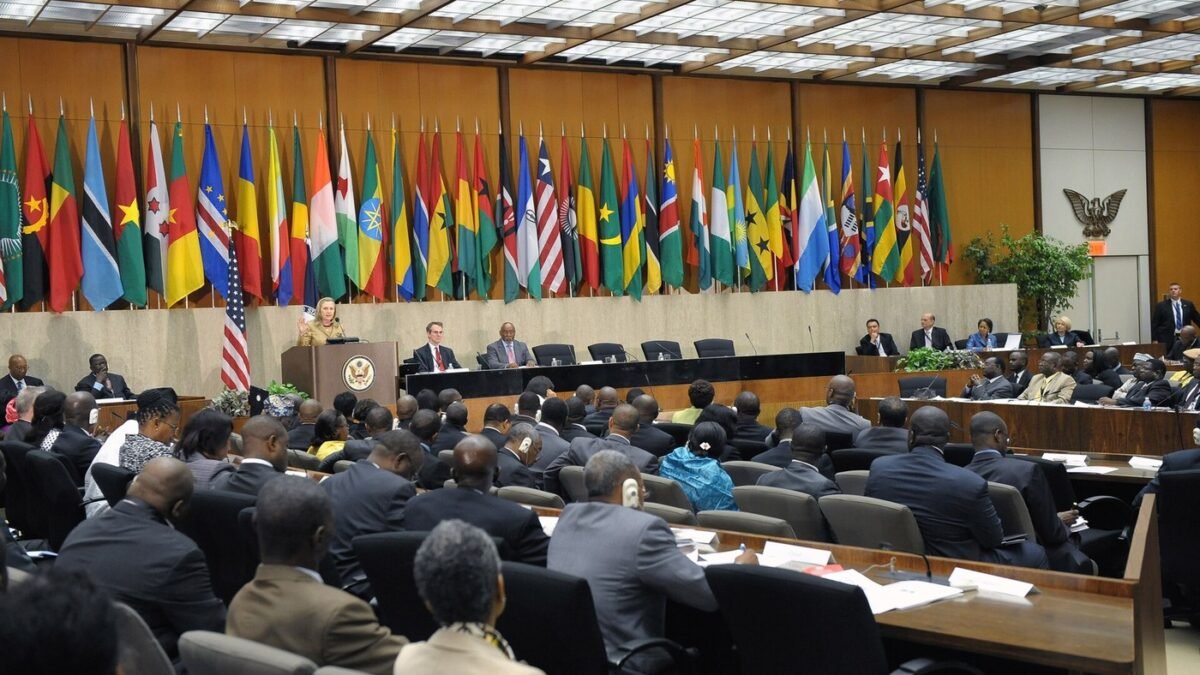
AGOA survived, but the uncertainty surrounding its extension may be more important than the extension itself. Washington’s decision to prolong the African Growth and Opportunity Act through December 2026 preserved short-term export continuity for eligible African economies that rely on preferential access to the U.S. market. Yet the temporary nature of that survival has exposed something more consequential: the centre of gravity in Washington’s approach to Africa is shifting away from broad market integration and toward strategic resource security. The trade framework endured. The strategic logic beneath it has changed.
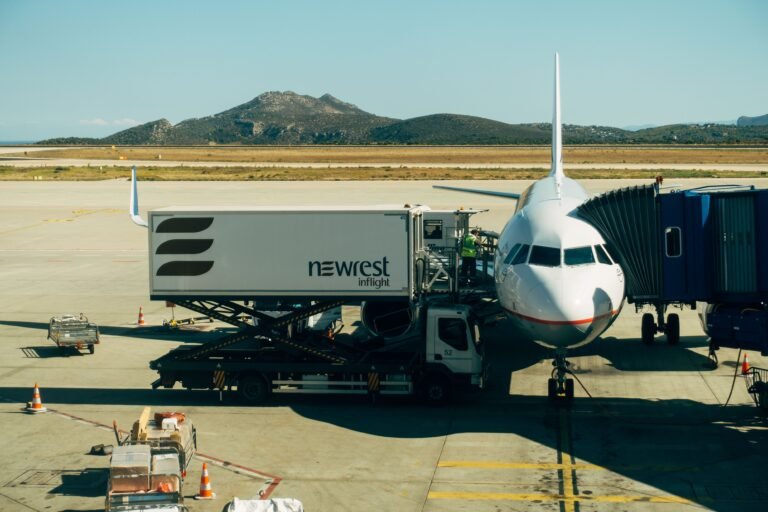
AGOA was originally framed around integration into global markets through export growth and manufacturing expansion. The current policy environment increasingly prioritises infrastructure routes linked to copper, cobalt, lithium, and other transition minerals essential to electric vehicles, battery systems, and advanced industrial production. The conversation has moved from broad commercial partnership toward selective strategic alignment. That shift is visible across several African corridors now attracting intense diplomatic and financial attention. The Lobito Corridor through Angola, linking Atlantic export routes to Zambia and the DRC’s copper-producing regions, exemplifies the direction of Washington’s evolving focus; U.S.-backed financing and governance support tied to the corridor reflect a strategy centred less on continent-wide trade integration and more on securing resilient mineral supply systems connected to industrial-security concerns.
At the same time, China continues expanding its own infrastructure and logistics positioning across the continent, including renewed momentum around the TAZARA railway linking Tanzania and Zambia. The result is that Africa increasingly sits inside a global competition over movement, movement of minerals, movement of industrial inputs, movement of strategic dependency. Trade frameworks alone no longer define the relationship between Washington and Africa’s governments. What sits beneath the trade architecture matters more than ever before. That substructure is being shaped primarily by the mineral corridor contest rather than by the commercial preferences that produced AGOA a quarter century ago.
The continent increasingly appears positioned within U.S. strategy as a source of strategic inputs and logistics relevance rather than as a broad industrial trade partner. AGOA’s survival preserved the architecture. It did not restore the ambition.
For countries benefiting from AGOA access, the extension offers temporary stability at a moment of broader global uncertainty. Exporters dependent on preferential entry into U.S. markets avoided the immediate shock that would have accompanied expiration. But the limited duration complicates long-term planning, investment confidence, and industrial strategy for sectors requiring policy predictability to scale. Manufacturing ecosystems depend on long investment horizons, supply-chain coordination, and confidence that market access will endure beyond short political cycles. Temporary continuity can preserve activity, but it does not encourage transformation. The structural uncertainty that AGOA’s short extension preserves is precisely what industrial investors most want resolved.
The extension avoided rupture, but it did not provide a durable framework capable of clarifying how the United States intends to engage economically with Africa over the long term. Resource-rich states tied to critical-mineral corridors may continue attracting geopolitical attention and infrastructure financing regardless of AGOA’s fate. But broader export diversification and industrial expansion require something more stable than corridor politics alone. Strategic interest can generate infrastructure quickly while still leaving wider trade architecture unresolved, and that is precisely the gap that AGOA’s temporary extension neither closes nor addresses.
AGOA’s temporary extension therefore reveals more than a trade-policy decision. It reflects a wider transition in how power is being organised around Africa’s place in the world economy. The continent remains strategically important, but the basis of that importance is shifting from market integration toward control over the systems, resources, and corridors shaping the next industrial era. The challenge for African policymakers is whether the continent can use renewed global competition to negotiate beyond extraction and transit roles into deeper manufacturing, processing, and technological participation, or whether strategic interest produces sophisticated pipelines while leaving the underlying industrial hierarchy unchanged. AGOA’s survival has not answered that question. It has been made more urgent by it.
The distinction buried in the policy shift is the one African capitals should read most carefully, because it changes what kind of relationship is on offer. A market-integration partner wants you to make things; a resource-security partner wants you to ship things. The first implies factories, skills, and an interest in your industrial success, because the partner profits when you climb the value chain. The second implies pipelines, ports, and an interest in your stability only up to the point where the cobalt keeps moving, because the partner profits when you stay exactly where you are. AGOA, for all its limits, belonged to the first logic. The corridor financing now replacing it belongs to the second. A continent courted for its inputs rather than its industry is being valued for what can be taken out of it, not for what might be built within it, and the warmth of the new attention should not be mistaken for a change in that arithmetic. The terms are still unwritten, which is the one piece of leverage African negotiators still hold, and the moment to use it is now, while the suitors are still competing.