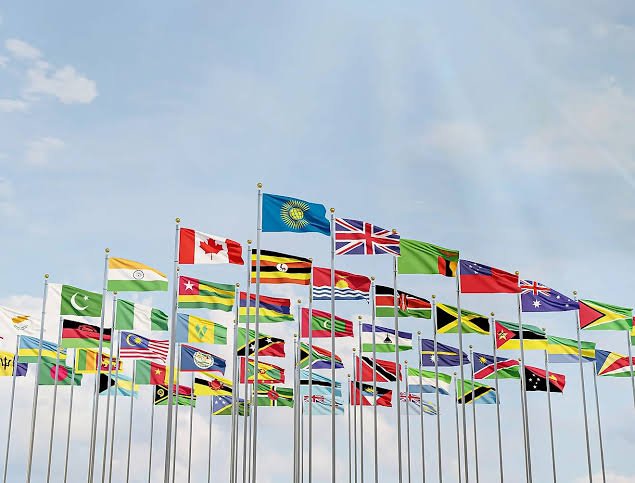
Africa did not inherit its alliances. It fought for the right to choose them, only to find the architecture of choice had already been built by others. The Commonwealth arrived dressed as cooperation. Françafrique arrived dressed as proximity. Both arrived dressed as partnership. But the scaffolding beneath each had been constructed before the ink on any independence agreement dried, designed not around the strategic interests of newly sovereign states, but around the continuity of the interests that liberation had been meant to displace.
The struggle was real. The sovereignty, when it came, was real. What was not real was the assumption that winning political independence automatically transferred economic and structural power. Those remained embedded in treaty frameworks, currency arrangements, military basing agreements, and trade dependencies that predated independence and, in most cases, outlasted the generation that had fought to end it. This is the architecture that still holds, not always visibly, not always with the crudeness of earlier decades, but with the quiet persistence of systems that have never needed to announce themselves because they have never needed to be dismantled.
Soft and Hard Instruments
The Commonwealth’s genius was always its softness. Language, legal inheritance, professional networks, educational pathways, trade familiarity, none of these required enforcement. They required only that the post-colonial state continue operating through the institutional grammar of the colonial one. Courts modelled on English common law. Bureaucracies oriented toward London. Diplomatic reflexes that turned westward first. This is not a conspiracy. It is architecture, and architecture persists not because anyone defends it, but because it is what the building is made of. Françafrique operated through harder instruments. The CFA franc, shared by 14 African countries across two monetary unions, preserved the post-colonial monetary relationship, reserves held in France, exchange rates pegged to the euro, capital mobility structured to preserve French visibility into member economies. The arrangement offered something genuinely valuable: monetary stability and a backstop against inflation spirals. The cost of that stability was denominated in sovereignty.
Control is most durable when it is denominated, not declared. The CFA franc did not require a garrison to enforce dependency; it required a central bank located in Paris. Beyond the franc zone, the offshore infrastructure of the old Commonwealth, London as a financial centre, the web of overseas territories serving as conduits for capital, created a different but equally durable form of financial proximity. African sovereign wealth, commodity revenues, and private capital frequently route through these systems not because of political loyalty, but because the infrastructure, legal familiarity, and professional networks are there. London did not need to maintain Africa’s allegiance. It simply maintained Africa’s financial grammar.
The Military Inheritance
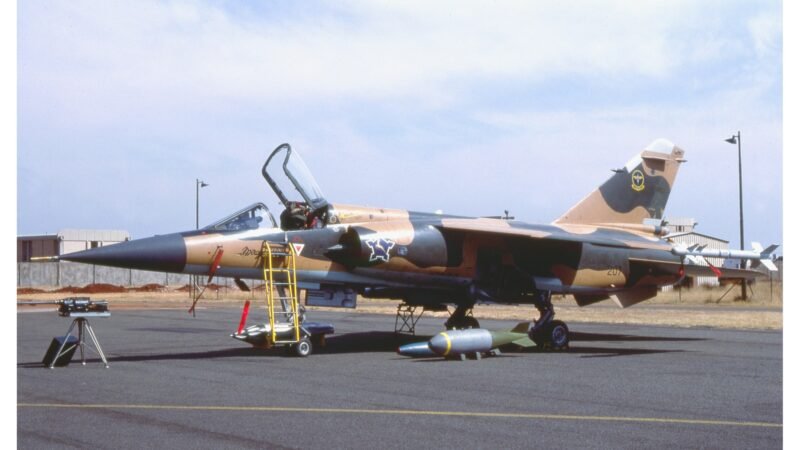
Military relationships are among the most durable instruments of post-colonial continuity because their effects compound over generations. Officers trained in French academies return home fluent in French strategic doctrine and French institutional relationships. Officers trained in British or American programmes carry their own inherited orientations. This is not indoctrination; it is professional development. But professional formation shapes institutional culture, and institutional culture shapes political outcomes. Foreign military presence has been justified consistently through a stability framework: the argument that external forces provide order that nascent militaries cannot yet sustain. This argument carries real weight in fragile security environments. But it also carries a structural consequence: governments that depend on external military backstops are, by definition, sovereign in a contingent way. Borrowed legitimacy, like borrowed capital, comes with terms.
The Sahel Reads the Terms

The divergence now visible between ECOWAS and the Sahel states that have departed from it is the most instructive internal rupture in contemporary African geopolitics. It is not, at its core, a dispute about coups. It is a dispute about the legitimacy of inherited frameworks and about who gets to determine when those frameworks have failed. ECOWAS represents institutional continuity, the argument that regional order, however imperfect, is preferable to fragmentation. The Sahel’s coup governments have made a different calculation: the institutional scaffolding is not supporting a building; it is the building. The withdrawal of French forces, the expulsion of French ambassadors, the turn toward Russia, China, and bilateral arrangements- these are operational rejections of the stability-for-sovereignty bargain. A continent once bound by shared history now reveals different appetites for its future. The Sahel’s rupture is not chaos; it is a sovereignty claim expressed through the only instrument available to those who have run out of patience for diplomacy.
What the moment requires is neither exit nor acceptance. It requires the construction of African-led frameworks in monetary, security, trade, and diplomatic areas, with sufficient internal coherence and institutional depth so that the choice of external partnerships becomes genuinely voluntary. That construction is the work of decades. The AfCFTA offers one instrument: building an internal market whose scale creates genuine bargaining weight. The AU’s institutional deepening offers another. But it cannot begin until the question is asked with full clarity: are these the alliances Africa would choose, if it were choosing today? The answer, increasingly, is being provided not by declarations but by behaviour, by the quiet multiplication of bilateral alternatives, by the turn toward continental institutions, by the nervousness in Paris and London that signals their recognition of what is shifting. Africa is not yet choosing freely. But for the first time since independence, it is beginning to understand the terms of the choice. That understanding, once arrived at, does not reverse.
The deepest lesson of the alliance architecture is that the most effective forms of control are the ones that never had to be defended, because they were never experienced as control at all. A garrison provokes resistance; a currency does not. A treaty of subordination is torn up; a legal system, a reserve account, a professional reflex that turns westward first, is inhabited, generation after generation, as the natural order of things. This is why the Sahel’s noisy rupture, the expelled ambassadors, the torn-up basing agreements, is less significant for what it ends than for what it reveals: that the quieter architecture, the franc, the offshore conduit, the inherited grammar of governance, was a structure and not a fact of nature, and that a structure can be seen, named, and eventually rebuilt. The alliances never ended because they never had to. The question Africa is finally learning to ask is not how to leave them, but how to build the alternatives that would make staying in them, at last, a genuine choice.