The war ended in 1970. The question it asked has never been answered. Fifty-four years after Nigeria’s federal forces declared victory over the secessionist Republic of Biafra, the grievances that ignited the conflict remain embedded in the architecture of a state that has never fully reckoned with what it did, or what was done in its name.
Between one and three million people died. The precise figure has never been established, because establishing it would require the kind of institutional honesty that no Nigerian government has demonstrated the will to undertake. Children starved to death on camera. The images circled the world. Biafra became a noun for humanitarian catastrophe before humanitarian catastrophe became a category. And then, on the official record, it became a matter considered closed.
It was not closed. It was buried. And buried things, as every farmer in the Niger Delta knows, do not stay buried. They seep.
The voices that this account is concerned with are not the voices of generals or politicians. They are the voices of the Biafran civilian. This teacher fled Enugu, the market woman who crossed the Niger with her children wrapped against her back, the child who survived and spent the next five decades being told that survival was sufficient. That gratitude for survival was the correct response to a war in which their nation became a killing field. The forgotten voices of Biafra are not silent because they have nothing to say. They are silent because the Nigerian state has never built a framework in which those things could be said without consequence.
“No Victor, No Vanquished” was never a doctrine of healing. It was a doctrine of erasure, calibrated to ensure the vanquished never named what had been done to them.
The Architecture of Erasure
Nigeria’s post-war reintegration policy, framed under Gowon’s famous slogan, operated on a logic that was structurally convenient for the federal side: move forward, build Nigeria, do not litigate the past. Banks were recapitalised. Properties were seized under the Abandoned Property edict. Businesses that had been Igbo-owned and Igbo-run were redistributed. The economic decimation of the southeast was not an accident of war; it was a deliberate post-war architecture. Twenty pounds was what the federal government offered Biafrans for any amount they had held in their pre-war accounts. Twenty pounds. The symbolic cruelty of that figure has never been formally acknowledged.
What persists now is not simply the IPOB movement, the annual sit-at-home orders, or the security operations in Imo and Anambra states. Those are symptoms. The disease is a failure of the Nigerian state to build a genuine framework for post-war transitional justice. This framework acknowledges that something happened, that identifies what it was, that creates space for the testimony of those who lived through it, and that produces a structural accounting sufficient to anchor reconciliation on something more solid than time and official silence.
What Reckoning Looks Like Elsewhere
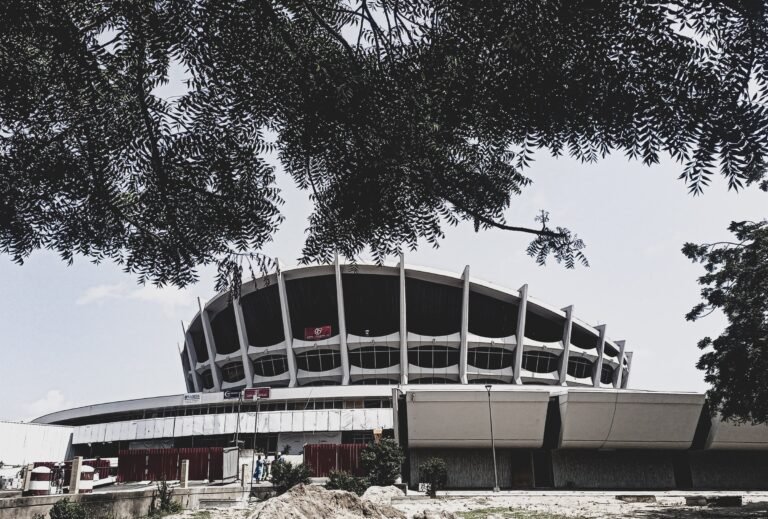
The global precedents are unambiguous. Rwanda built the Gacaca courts, imperfect, contested, but deliberate. South Africa built the Truth and Reconciliation Commission, flawed, emotionally exhausting, occasionally manipulated, but architecturally serious. Germany institutionalised remembrance as a civic obligation that extends across generations. Nigeria built nothing. It built a road, named a stadium, and called the past healed.
The cost of this refusal is visible in everything the federal government misidentifies as a security problem in the southeast. The IPOB movement, whatever its methods and however contested its tactics, draws its emotional fuel from an unresolved historical wound. The young men in Imo and Enugu and Abia who respond to the sit-at-home call, sometimes out of genuine conviction, sometimes out of fear, are responding to something that the Nigerian state has never given them language to process through any other channel. You cannot treat a wound that you have refused to examine. You can only apply force to keep it from surfacing. Force applied repeatedly to an unresolved wound does not heal the wound. It deepens it.
Forgotten in London Too
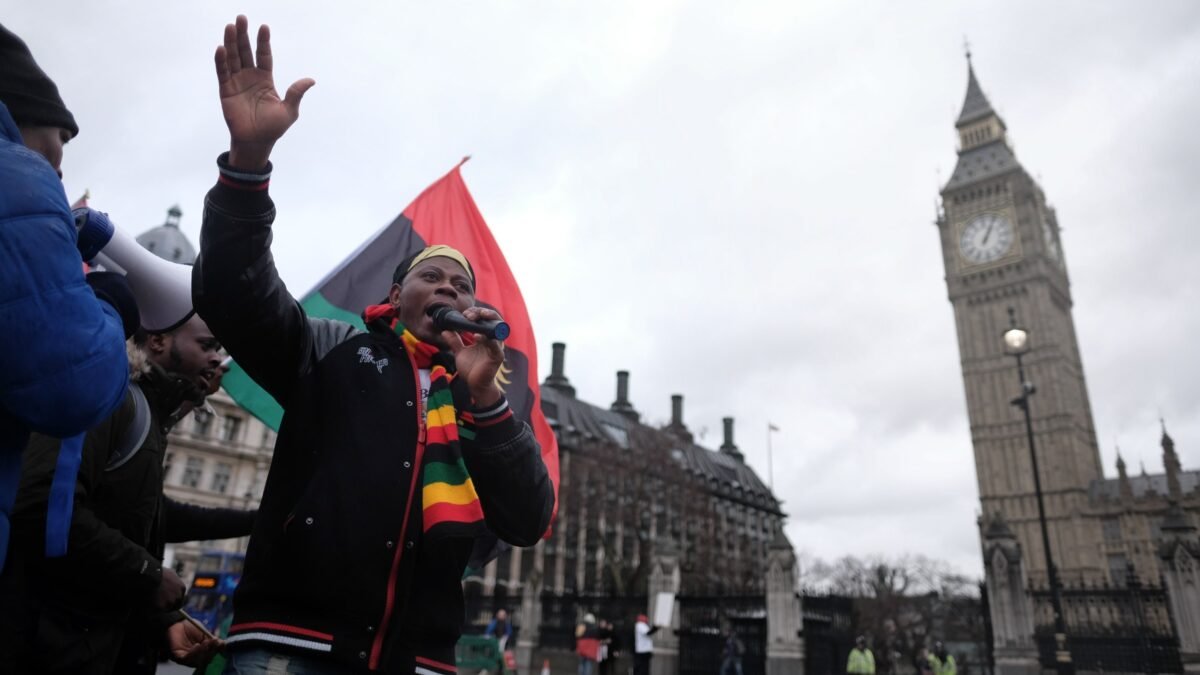
There is another dimension that rarely enters the conversation, because it requires Nigeria to look at itself from the outside. The Biafra war was not a purely domestic event. Britain supplied arms and diplomatic cover to the federal side. The oil calculus was never far from the surface. The international community, with a handful of exceptions, most notably France and several African states, chose the territorial integrity of Nigeria over the protection of a civilian population that was, by multiple documented accounts, being starved as a deliberate military strategy. Those external actors have also never been held to account. The forgotten voices of Biafra are not only forgotten in Abuja. They are forgotten in London.
What a genuine reckoning would require is not the dismemberment of Nigeria. Most of the Igbo people arguing for recognition of Biafran suffering are not, if honestly surveyed, arguing for secession; they are arguing for acknowledgement. For a commission with teeth. For a process in which their grandmothers’ testimonies are treated as historical evidence rather than political inconvenience. For the word “genocide” to be considered rather than reflexively dismissed. For the twenty-pound theft to be named. For the Abandoned Property edicts to be part of the national curriculum.
Nigeria at sixty-three cannot afford to carry this wound into its next phase. Not because the Igbo vote will swing an election, though it might, and not because international pressure requires it, though it should. But because a state that cannot account for its own history of mass violence against its own citizens has not yet fully become a state. It remains, in that unresolved wound, something incomplete. Something that has declared victory without yet earning peace.
The smoke from Biafra has not cleared. It has only become invisible to those who have decided not to see it. The voices have not gone quiet. They have been denied a room in which to speak. Building that room, not as a concession to separatism, but as the basic civic obligation of a state serious about its own coherence, is the work that remains. It has always been the work that remains.