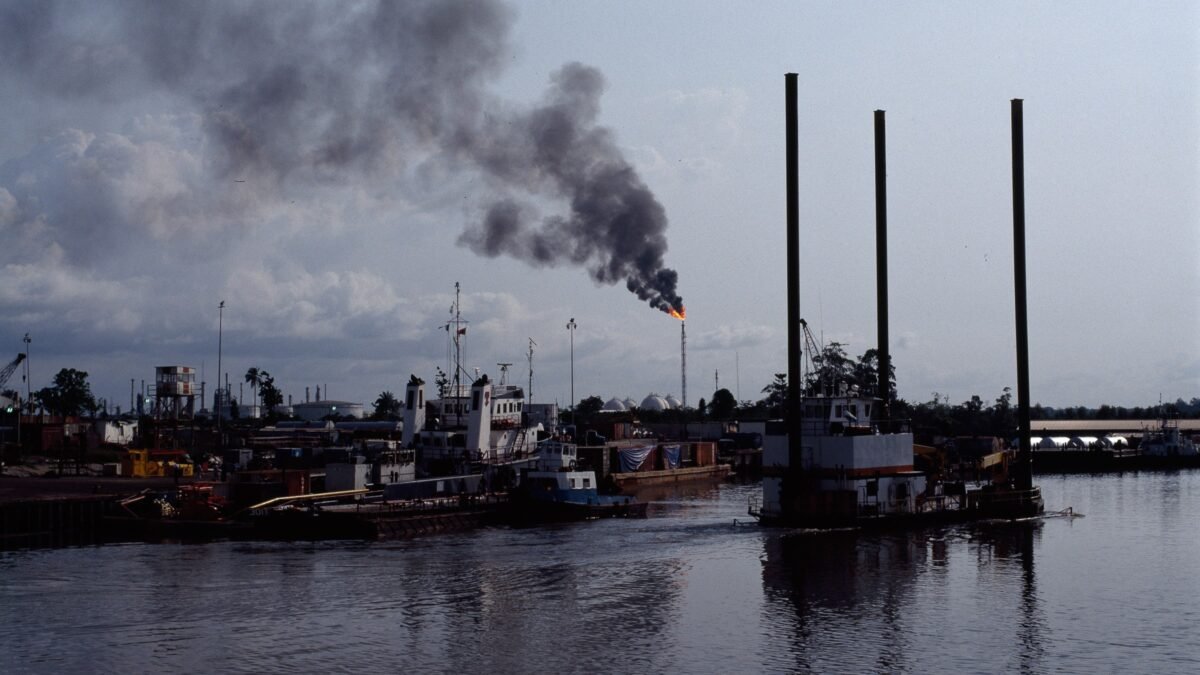
In November 2016, residents of Port Harcourt woke to find fine black particles coating their cars, darkening their windows, and settling into every crevice of their homes. They called it soot. What appeared an anomaly in those first bewildered days has not left. Nearly a decade later, the black veil persists over a city once known as the Garden City for its lush greenery. This slow-moving catastrophe has transformed from emergency into normalcy without ever being resolved.
Soot is the toxic residue of incomplete combustion, fine black particles composed mostly of carbon but laced with hazardous chemicals, metals, and dust. Measuring just 2.5 micrometres in diameter, far smaller than a strand of human hair, these particles slip past the body’s natural defences and burrow deep into lung tissue and the bloodstream. The United States Environmental Protection Agency links prolonged exposure to such particulate matter to respiratory disease, heart attacks, strokes, cancer, and premature death. In February 2017, the Vanguard reported that as many as six million residents of Rivers State risked developing cancer from sustained soot exposure. The government responded with initial crackdowns on a handful of companies, a bandage on a wound that required surgery.
The primary sources are not obscure. Illegal oil refining, locally known as bunkering, continues to operate across the region largely unchecked, spewing pollutants that turn the sky into a permanent haze. Gas flaring, a long-standing menace throughout the Niger Delta, compounds the contamination. The federal government, which grants operating licences to many of the industries at the heart of the pollution, frequently leaves state authorities without the enforcement power to act. Meanwhile, the Rivers State government and the federal government remain locked in political discord that prioritises jurisdictional leverage over public health outcomes. Two captains refusing to steer the same sinking ship.
Port Harcourt’s soot crisis is the Niger Delta’s governance failure made visible and permanent. The region has long been Nigeria’s economic engine. Its people continue to pay the full environmental cost of powering a country that rarely extends accountability in return.
The soot crisis is a microcosm of a pattern that runs through the entire Niger Delta. This region has borne the environmental consequences of oil extraction for decades while capturing minimal downstream benefit. Gas flaring, oil spills, and industrial pollution have transformed once-fertile land and water into scarred territory. Contaminated seafood from Rivers State waters is already threatening the livelihoods of fishing communities whose economic survival depends on the integrity of waterways the state has failed to protect. Healthcare facilities in the region buckle under respiratory and cardiovascular disease loads directly attributable to air pollution. Tourism has effectively collapsed. Investment interest recedes with each soot-blackened morning.
Civil society has tried to fill the institutional void. In April 2018, thousands of Port Harcourt residents, including media personalities and advocacy groups, took to the streets demanding accountability and urgent action. That march generated headlines. It did not generate policy. The absence of a coordinated strategy at either state or federal level, one that unites environmental agencies, regulatory bodies, and local communities around enforceable standards, means the crisis continues to deepen by default rather than by design.
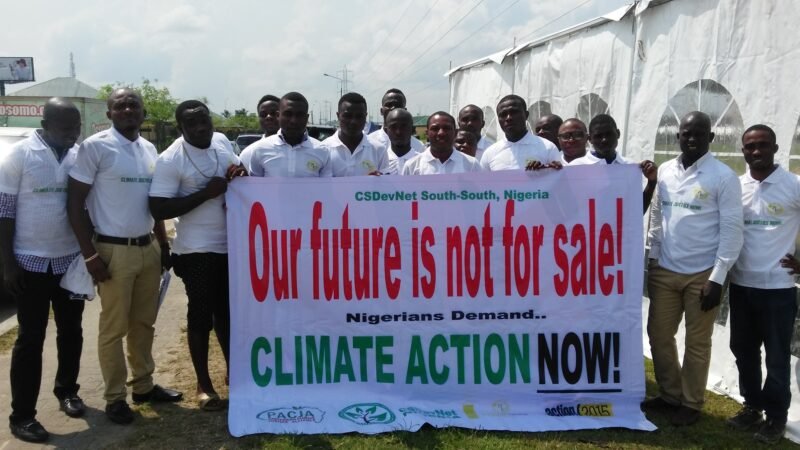
Addressing the soot crisis requires something Nigeria has not yet demonstrated in the Niger Delta: the political will to treat environmental harm as a governance failure rather than an inconvenience. Stricter enforcement of environmental regulations, investment in cleaner technologies, and a decisive crackdown on illegal refining are the technical requirements. The political requirement is harder: the recognition that a region cannot continue to be extracted from without being governed for. Port Harcourt’s black veil is not a natural disaster. It is the cumulative result of choices made by institutions that have not yet decided its people are worth the cost of clean air. That verdict, more than any pollutant, is what chokes the city’s future.