France’s departure from Mali, Burkina Faso, and Niger was not an orderly withdrawal, it was an expulsion conducted through the grammar of diplomacy. The distinction matters. The Sahel juntas did not request France’s departure; they demanded it. And France left, taking with it the fiction that Françafrique could survive African populations who had decided, visibly and at volume, that the arrangement no longer served them.
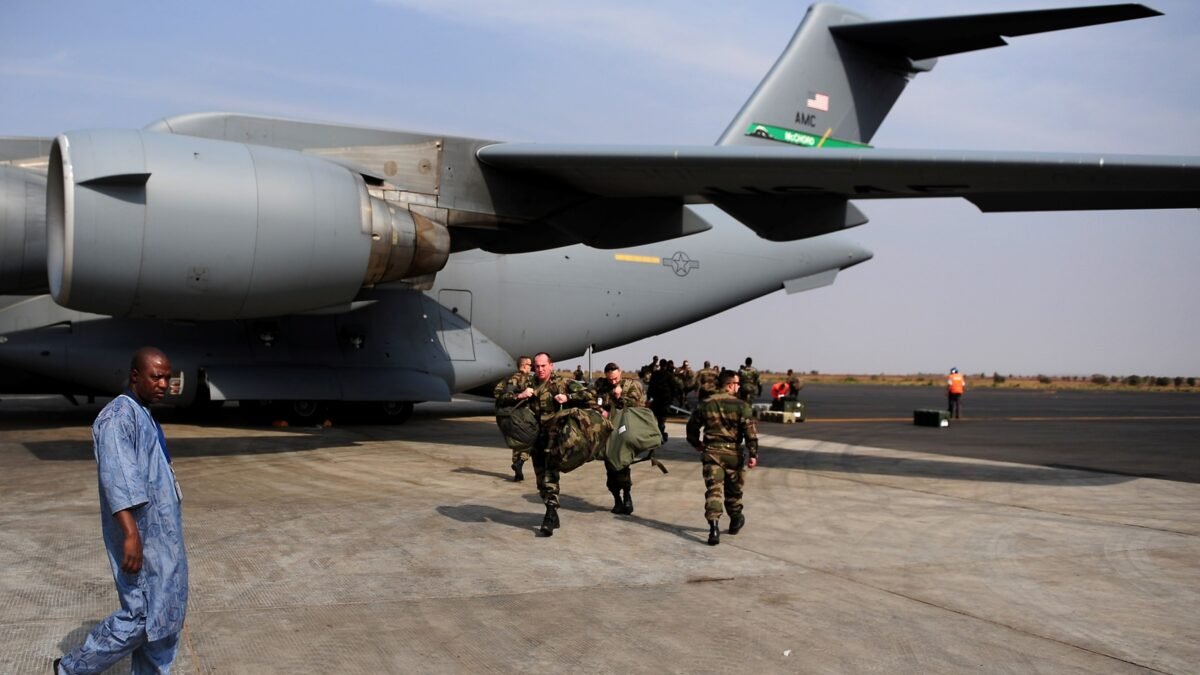
Operation Barkhane, France’s sweeping counter-insurgency mission across the Sahel, ended not because it succeeded but because the governments it was nominally supporting chose to end it. Mali ordered French forces out in January 2022, months after the country’s second coup in nine months. Burkina Faso followed in February 2023. Niger, following its July 2023 coup against President Mohamed Bazoum, expelled the French ambassador and demanded French military departure. Three successive governments, across three successive crises, made the same calculation: France’s military presence was a political liability that outweighed whatever security contribution it made.
The security situation in all three countries has not improved since French withdrawal. Insurgent violence linked to JNIM and ISGS affiliates has continued, and in some areas intensified, since French troops departed. This is the legitimate critique. But its deployment as an argument for France’s indispensability misses what was actually driving the expulsions: not a calculation that France was militarily useless, but a determination that the political cost of French presence, what it signified about sovereignty, dependency, and the persistence of colonial frameworks, had become unacceptable regardless of the tactical situation.
The Architecture of French Influence
To understand what is being rejected in the Sahel, one must understand what France built and maintained across Francophone Africa over six decades of formal independence. The CFA franc, pegged to the euro and under French monetary oversight, tied fourteen African economies to French monetary policy decisions made without African input. French military bases across the region enabled rapid intervention to protect French interests and, more often than formal accounts acknowledge, to stabilise governments whose removal France wished to prevent. French corporations maintained preferential access to resource extraction in arrangements whose terms were set in Paris.
Why Containment Failed
This architecture operated relatively smoothly as long as African populations could be contained by the governments it supported. What changed in the Sahel, and what makes the current moment structurally different from earlier episodes of anti-French sentiment, is the combination of youth demographics, social media penetration, and governance failures that made maintaining that containment increasingly difficult. Anti-French protests are not manufactured by Russian disinformation alone, however convenient that attribution is for Paris. They reflect genuine and longstanding grievances about what the French relationship has actually cost African sovereignty.
The Sahel juntas did not request France’s departure. They demanded it. And France left, taking with it the fiction that Françafrique could survive African populations who had decided the arrangement no longer served them.
Russia’s Opportunism and Its Limits
Russia’s rapid consolidation of security partnerships across Mali, Burkina Faso, and the Central African Republic has been interpreted, in much Western analysis, as the primary explanation for French expulsion. This inversion of causality protects a false premise. France was not expelled because Russia offered an alternative; France was expelled because its continued presence had become politically untenable, and Russia was available as a replacement. The sequence matters.
Russian involvement through Wagner Group, now operating under the Africa Corps designation following Prigozhin’s death, has delivered tactical security capacity and political legitimation to junta governments. It has not delivered governance improvement, civilian protection at scale, or the structural transformation of security sector capacity that would reduce long-term insurgent risk. The juntas that invited Russian presence are operating with a shorter time horizon than the security problems they face require. Whether Russia’s commitment to the Sahel is durable beyond its immediate geopolitical utility is a question that its current partners will eventually be forced to answer.
The Continental Reset France Cannot Control
France is attempting to recalibrate its African engagement, shifting rhetoric toward “partnership,” reducing military footprint in Senegal and Ivory Coast under political pressure, and promising a reformed relationship that respects African sovereignty. These moves are real but insufficient, because they address France’s communication problem rather than its structural problem. African populations are not rejecting France because they misunderstand the relationship. They are rejecting it because they understand it precisely.
The continental reset underway across Francophone Africa represents something more durable than a geopolitical moment. It is a generational renegotiation of the terms on which African states relate to external powers, French, Russian, Chinese, American, or otherwise. The Sahel has been the most visible site of this renegotiation because it combined the highest security dependency with the most acute governance failure. But the impulse driving it, toward African agency in determining the terms of external engagement, is not confined to the Sahel. It is the dominant current of the continental political moment, and France, along with every other external power that has treated African partnerships as instruments of its own strategic management, will be navigating its consequences for the next generation.