
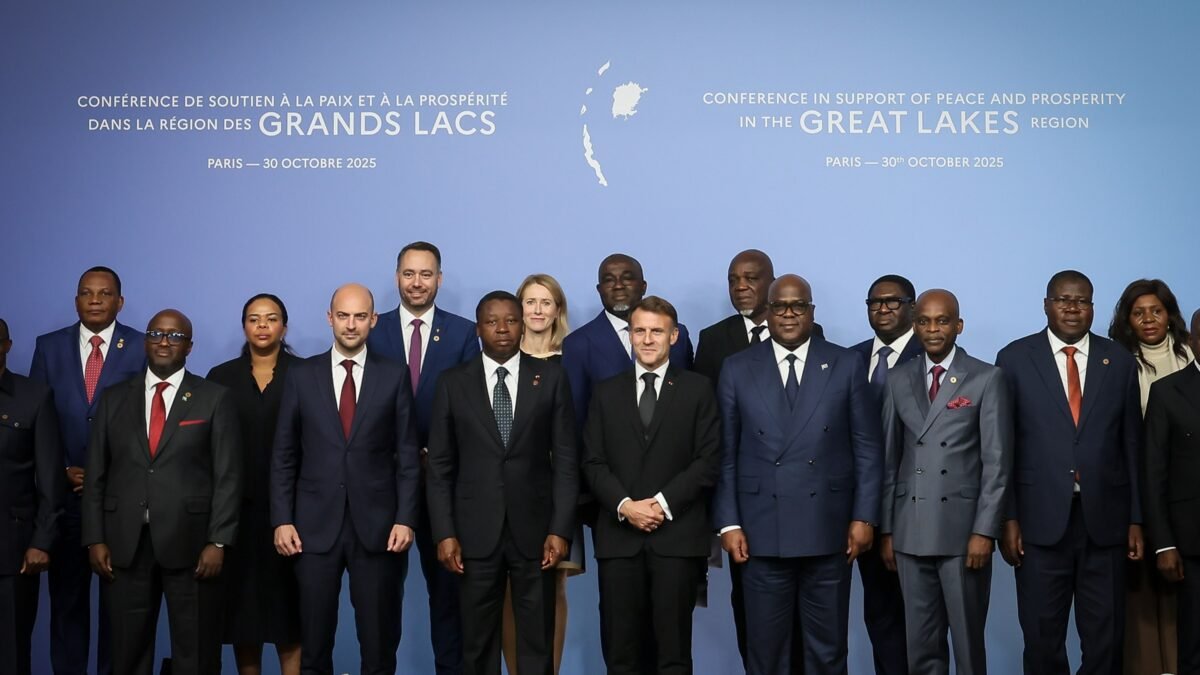
What looks like a withdrawal from the Sahel is, in practice, a redistribution of influence away from visible military dominance and toward quieter, more embedded forms of power. Across Mali, Burkina Faso, and Niger, the collapse of long-standing arrangements has forced Paris into strategic humility. Whether that humility becomes strategic recalibration, or merely a temporary retrenchment before reassertion, is the question that will define France’s position in Africa for the next decade.
Why France Was Expelled
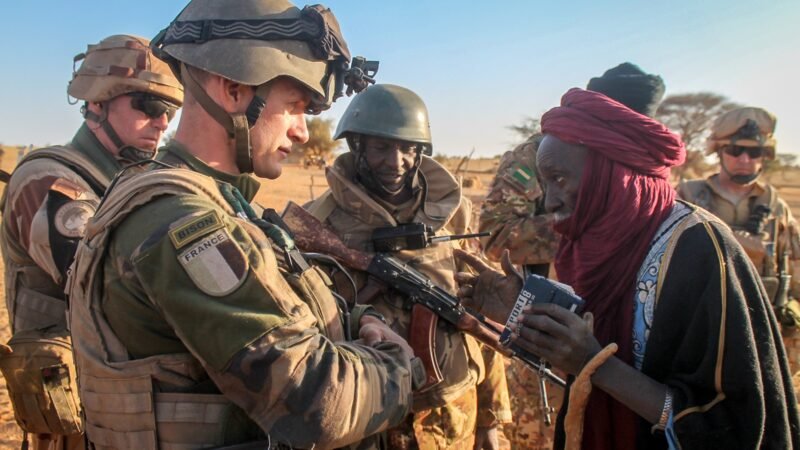
The expulsions were sequential and, in retrospect, structurally inevitable. France’s military footprint in the Sahel, Operation Serval from 2013, Operation Barkhane from 2014, was always premised on a political logic that the populations it was nominally protecting did not fully share. The security it provided was real in narrow terms: French forces repeatedly degraded jihadist operational capacity. But the political arrangement within which that security operated, which included support for governments seen by their own citizens as corrupt, dependent, and insufficiently sovereign, made the French presence itself a variable in the instability it was trying to suppress. The coups in Mali (2020, 2021), Burkina Faso (2022), and Niger (2023) were not simply Russian-engineered events, though Russian strategic communication amplified each one expertly. They were expressions of a genuine popular frustration with an arrangement that had lasted decades without producing security, prosperity, or dignity at the level that mattered: the village, the town, the ordinary life.
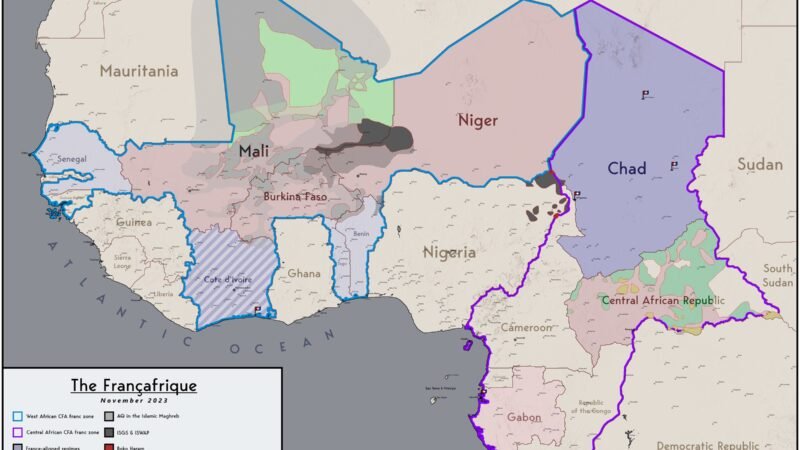
France read this as an information war it was losing. The correct read was an interests war it had been losing for much longer. The anti-French sentiment in the Sahel did not require Russian amplification to exist; it required only the conditions of six decades of Françafrique: the currency arrangements, the elite networks, the resource concession structures, the intelligence relationships with presidential palaces. Russia and China did not create the grievance. They arrived when the grievance was already fully formed and offered an alternative patronage without the accumulated resentment attached to the French one.
France is not losing Africa. It is losing a particular form of Africa, the one calibrated to French interests under the architecture of post-colonial accommodation. That architecture has broken down. What replaces it is not yet clear.
Macron’s Africa policy since 2017 has been a study in the gap between rhetoric and reality. The speech at the University of Ouagadougou in 2017, promising to abandon paternalism, treat Africa as a partner, and end the old ways, was eloquent and well-received. The structural relationships it promised to reform were largely intact when the coups came. The CFA franc, the monetary arrangement that ties eight West African and six Central African countries to the French treasury, requiring them to deposit 50 per cent (since revised) of their foreign reserves in Paris, survived Macron’s first term with cosmetic adjustments rather than fundamental restructuring.
The Eco currency project, intended to replace the CFA in the ECOWAS zone, remains stalled. The symbolism changed. The architecture did not.
From Presence to Influence
What France is now attempting is a shift from presence to influence, from the visible apparatus of bases, troops, and ambassadors who operated as governors to a more diffuse network of cultural, educational, economic, and intelligence relationships. The French language system, the Instituts Français, the Alliance Française network, and the francophone university relationships are being reinvested as a soft power platform. French development finance through the Agence Française de Développement (AFD) has been repackaged with stronger equity investment dimensions. French corporations, in energy, telecommunications, logistics, and banking, remain deeply embedded across francophone Africa in ways that persist regardless of which flag flies over the presidential palace.
This pivot is real and should not be dismissed. But it operates against a changed backdrop. The African states that France is attempting to maintain relationships with are themselves changing, their civil societies more assertive, their publics more informed, their elites more diversified in their international networks. A Senegalese government that feels Chinese investment pressure from one side and Gulf sovereign wealth interest from another is in a structurally different negotiating position from its 1990s predecessor. The quiet influence France is pivoting toward requires interlocutors who find French partnership genuinely useful, not interlocutors who accept it because the alternatives are limited. The alternatives are no longer limited.
The Russia and China variables are real but often analytically overstated in Western commentary. Wagner Group, now operating under Russian state structures following Prigozhin’s death, has established a security presence in Mali and Burkina Faso that, by credible local accounts, is producing human rights abuses that parallel or exceed what it replaced. The enthusiasm for Russian partnership in some Sahelian capitals is partly genuine anti-French sentiment, partly elite calculation, and partly a gamble on Russian staying power that the evidence of Russian performance in sub-Saharan Africa does not fully support. China’s infrastructure investment, more disciplined, more commercially structured, and less politically theatrical, represents a more durable competitor to French economic presence than Russian security arrangements do.
The Space It Vacated
For Africa, the significance of France’s recalibration lies less in what Paris does next and more in what the space it has vacated makes possible. The Sahel coups, whatever their democratic deficits, have demonstrated that the post-colonial architecture of external patronage is not immovable. It can be refused. It can be renegotiated. The countries that expelled French forces are paying a real security price for that refusal, and the civilian populations in those countries are paying it most heavily. The principle, however, that African states can set terms for external presence rather than accept them, is one that will outlast the current junta governments.
France’s quiet power shift, if it is to produce a relationship with Africa worthy of the word partnership, requires something that has not yet been offered: a genuine acknowledgement of the structural character of what Françafrique was, and a redesign of the economic and monetary arrangements that sustained it. Without that, the quieter French presence will be the louder French presence with better public relations, and Africa, which has grown considerably better at reading the difference, will notice.