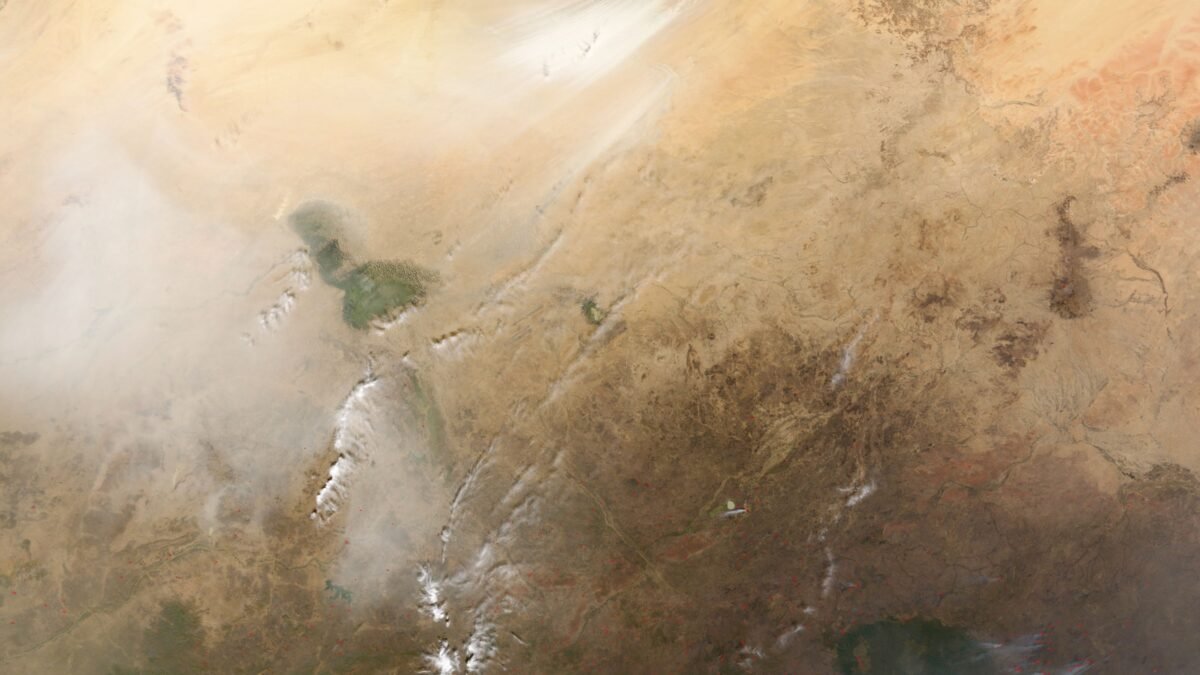
In the shimmering heat of the Sahel, where the land has been ceding ground to the desert for decades, an audacious idea took root: a wall of trees stretching 8,000 kilometres across the width of Africa, from Dakar on the Atlantic to Djibouti on the Red Sea, that would hold the line against desertification, restore degraded landscapes, and remake the economic prospects of a region that climate change has made increasingly difficult to inhabit. The Great Green Wall was announced in 2005, formally launched under the African Union in 2007, and given a $14.3 billion financing pledge at the One Planet Summit in Paris in 2021. Fifteen years after its formal inception, it has restored approximately 18 million hectares of degraded land. The target is 100 million hectares by 2030. The mathematics are unforgiving.
The gap between ambition and delivery is not primarily a story of African institutional failure, though that element is present. It is a story about the distance between global climate pledges and the on-the-ground funding and governance capacity required to make them real, a distance that Africa has consistently been asked to close without the resources adequate to the task. The Sahel is ground zero for climate vulnerability: rainfall patterns are shifting, soil degradation is accelerating, and the populations of the eleven countries the Wall traverses- Senegal, Mauritania, Mali, Burkina Faso, Niger, Nigeria, Chad, Sudan, Ethiopia, Eritrea, and Djibouti- are among the world’s most exposed to climate-driven food insecurity, displacement, and conflict.
What Restoration Has Achieved
What the Great Green Wall has accomplished deserves genuine recognition before the gap is examined. Senegal has been the project’s most consistent success story. The country has reforested more than 12 million hectares through a combination of farmer-managed natural regeneration, community land governance reform, and sustained government commitment over more than a decade. The approach in Senegal has been instructive: rather than planting trees in industrial monocultures that foreign funders could photograph and claim credit for, the most successful reforestation work has protected and managed naturally regenerating trees and shrubs, working with the landscape’s existing biological intelligence rather than overwriting it. Ethiopia’s farmer-managed natural regeneration programme has similarly restored millions of hectares of degraded land, demonstrating that community-led approaches consistently outperform top-down planting schemes.
The Niger Lesson
Niger provides the most striking single case. Over the past three decades, Nigerien farmers working largely without external funding have protected and regenerated an estimated 5 million hectares of trees across degraded agricultural land through a practice called Farmer Managed Natural Regeneration (FMNR). This has improved crop yields, reduced soil erosion, increased water retention, and created shade that reduces temperatures at the ground level, all without the carbon credit mechanisms, international NGO infrastructure, or satellite monitoring systems that formal climate finance tends to require. The lesson is significant: the most effective Sahel restoration has often been driven by necessity, not philanthropy, and by communities with knowledge of their landscapes that no external programme can replicate.
Where It Is Losing Time
The funding architecture remains the Wall’s most dangerous vulnerability. Of the $14.3 billion pledged at Paris in 2021, delivery has been fragmented, slow, and filtered through intermediaries, international financial institutions, development banks, and NGO delivery mechanisms that absorb significant portions of available funding in overhead before any reaches the communities doing the restoration work. The gap between pledged and disbursed climate finance for Africa is a structural feature of the global climate funding architecture, not an exception. At the COP27 summit in 2022, African negotiators pushed aggressively for the Loss and Damage mechanism. This fund would compensate countries already experiencing the costs of climate change they did not primarily cause. The mechanism was agreed in principle, but its capitalisation remains contested. The global community has been more willing to set targets than to fund them.
The security dimension adds a layer of operational complexity that no amount of restoration funding can resolve independently. Mali, Burkina Faso, and Niger, three of the Sahel’s most environmentally degraded countries, are also three of the most conflict-affected, hosting overlapping insurgencies, coup governments, and the withdrawal of the very international security and development partnerships that provided some of the logistical infrastructure for Great Green Wall programming. Reforestation cannot happen at scale in active conflict zones. The Wall’s most ambitious sections pass directly through areas where the state’s presence is contested and where community land rights, the foundational requirement for sustainable restoration, cannot be reliably enforced.
The question Africa’s policymakers must press is not whether the Great Green Wall can succeed; the evidence from Senegal, Niger, and Ethiopia demonstrates that restoration at scale is achievable. The question is whether the global climate finance system can be reformed quickly enough to deliver adequate, accessible, and community-accountable funding in time to make the 2030 targets meaningful. That requires African governments negotiating the capitalisation of climate funds with the same assertiveness they have brought to debt restructuring discussions. It requires reforming the project approval and disbursement processes at institutions like the Green Climate Fund to reduce the transaction costs that currently make climate finance inaccessible to the community organisations doing the actual work. And it requires recognising that the Sahel’s ecological crisis and its security crisis are the same crisis, addressed through the same integrated investment logic or not effectively addressed at all.
The Great Green Wall is not a project. It is a declaration that Africa will not accept the degradation of its land as an inevitable consequence of a climate system it did not primarily design. Whether that declaration is backed by the global resources it requires, or whether the Sahel’s communities are left to fight the desert on their own terms as they always have, is a question whose answer will define whether the climate justice language of international summits translates into anything Sahelian farmers can plant.