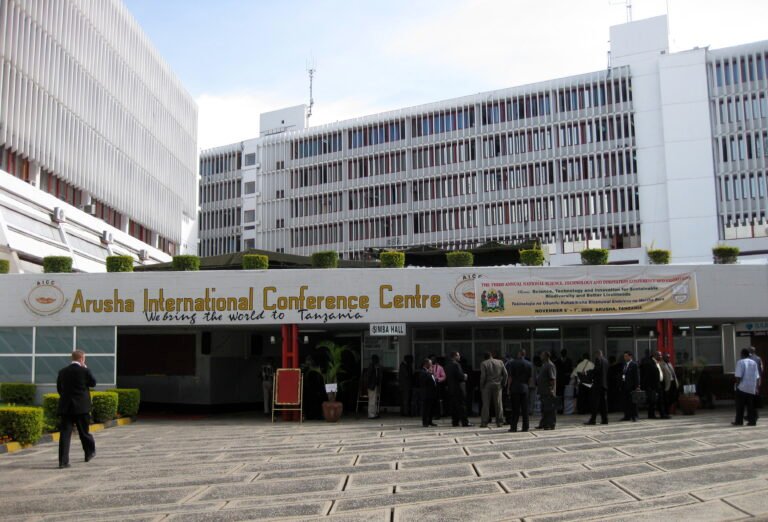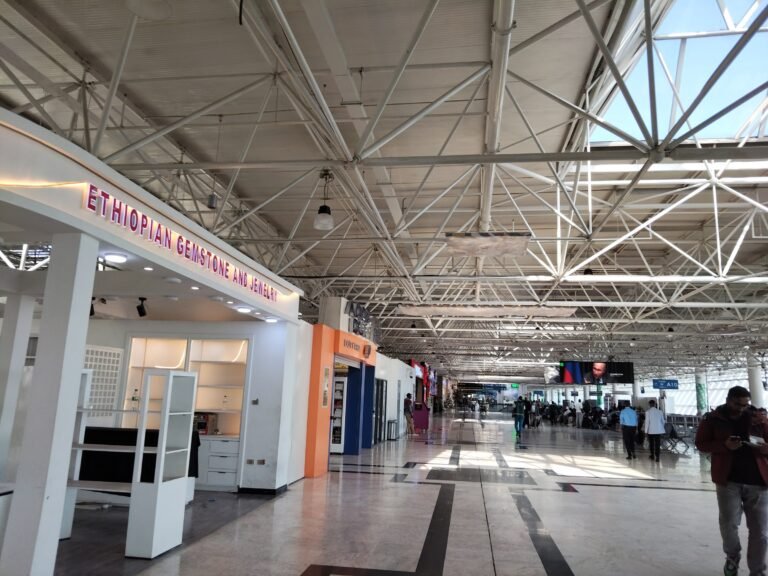
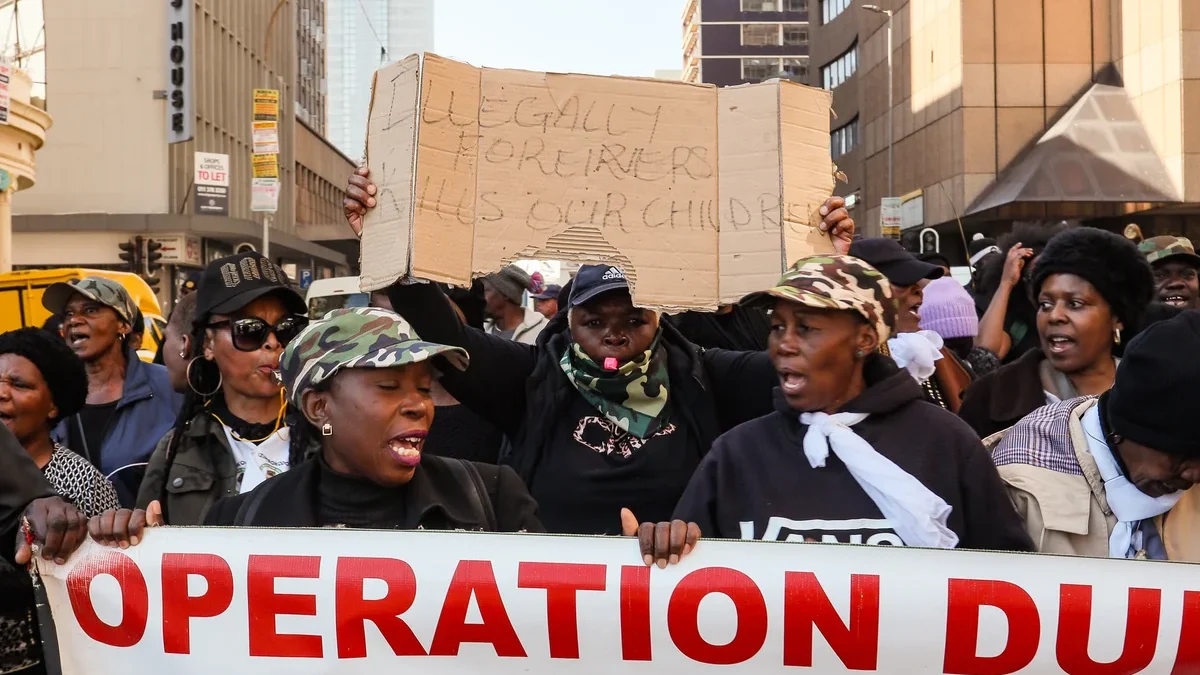
The dominant image of African migration, the overcrowded vessel, the desperate crossing, the European coastguard, captures a fraction of the reality and distorts the whole. The majority of Africans who move stay within Africa. They cross into neighbouring states for seasonal work, follow trade corridors established over generations, care for relatives in expanding cities, and return home with skills, savings, and wider networks. Intra-African migration is the continent’s largest and most underestimated economic force, and the policy frameworks meant to govern it have consistently treated it as a problem to be managed rather than infrastructure to be built.
The scale is not marginal. According to the United Nations Department of Economic and Social Affairs, the majority of African migrants remain within the continent, strengthening city corridors and knitting border towns into living supply chains [UN DESA, 2024]. West Africa is the most legible example. ECOWAS protocols have created the formal architecture for free movement across fifteen states, and the human reality has outrun the paperwork, artisans, traders, nurses, and students move between Lagos and Accra, Dakar and Abidjan, Bamako and Ouagadougou, following labour demand and kinship networks with a fluency that no customs checkpoint fully interrupts [ECOWAS Commission, 2022]. In East Africa, tea harvests draw workers down from highland farms. Southern African mining corridors pull labour across southern borders with a gravitational force that predates the independent states through which those borders now run.
The Hidden Economy
What this movement produces economically is consistently undervalued in national accounts. Remittances flowing within Africa do not appear in the headline figures that track flows from diaspora communities in London, Houston, or Paris. But the aunt who moves to Nairobi and sends money home to a rural county is performing the same function as the brother in Amsterdam, she is transferring capital, reducing household risk, and funding consumption and investment that would otherwise not occur. When World Bank remittance data [World Bank Remittance Brief, 2025] is examined at granular level, the intra-continental flows contribute meaningfully to household resilience in ways that aggregate statistics miss. Mobile money has made these flows faster and cheaper, and where regulators have encouraged competition among transfer providers, the efficiency gains have been substantial.
Climate Redraws the Routes
Climate stress is now redesigning intra-African migration patterns in ways that existing governance frameworks are not equipped to absorb. Rainfall arrives later and departs earlier across the Sahel. Coastal erosion displaces fishing communities. Pastoralist routes that have functioned for centuries are squeezed between desertification from the north and agricultural encroachment from the south. The movements that result are not panics, they are adaptations, often sequential and reversible. But their scale is increasing, and the cities and border zones receiving these movements are carrying costs, for water, sanitation, housing, and public services, that were not budgeted for and are not being reimbursed by the structural dynamics driving the migration [IPCC Africa, 2022]. Policy that treats climate-driven intra-African migration as a security matter rather than a development challenge will spend money in the wrong places and achieve the wrong outcomes.
Building the Framework
The African Union Free Movement Protocol, adopted in principle in 2018, represents the institutional architecture that could transform intra-African migration from a patchwork of bilateral arrangements into a coherent continental framework [AU Free Movement Protocol, 2018]. But ratifications have moved slowly, and the gap between treaty text and border post reality remains wide. Customs officers who supplement inadequate salaries with informal levies from traders are not aberrations in a functional system, they are symptoms of a system that has not been resourced to function. Border digitisation, one-stop clearance posts, and public accountability dashboards would address this directly. They require capital investment and political will in roughly equal measure.
Trade corridor economics illustrate what intra-African migration makes possible when it is supported rather than tolerated. The Lagos-Abidjan corridor, the Northern Corridor linking Mombasa to Kigali and beyond, the Maputo Development Corridor, these are not lines on maps. They are the living architecture of intra-regional commerce, dense with warehouses, repair shops, restaurants, bus stations, and the accumulated economic activity of millions of crossings. The AfCFTA’s potential to deepen this integration depends substantially on reducing the non-tariff barriers, informal fees, inconsistent standards enforcement, port delays, that add cost at every link in the chain [AfCFTA Secretariat, 2024]. Those costs fall disproportionately on the small traders who move goods in buses rather than containers, and who are disproportionately women.
Intra-African migration will not be stopped by tighter borders, and the attempt to stop it will produce worse outcomes than the alternatives. What governance can do is make mobility safer, more productive, and more formally recognised. Mutual skills recognition frameworks, so the electrician from Kumasi does not start from zero in Abidjan, are tractable policy problems with clear technical solutions [IOM Africa Migration Report, 2023]. Portable social protections, so that the construction worker who crosses a border does not lose access to health coverage, are administratively complex but not conceptually impossible. The continent that gets these systems right before its peers does not just manage migration better, it becomes a more attractive destination for the regional talent that will build its next decade.
The deepest cost of the boat-and-coastguard image is not that it is incomplete but that it sets African policy against African interest. When governments absorb a narrative written for European audiences, in which migration is a flow to be stopped at a Mediterranean edge, they build their own borders to interdict the very movement that knits their economies together, spending scarce capacity policing the trader from Kumasi as though she were a threat rather than the circulatory system of the regional market. The European framing exports a fear; African budgets then pay to act on it, at the expense of the one-stop posts and skills-recognition systems that would turn the same movement into growth. To see intra-African migration clearly is therefore not a humanitarian preference but a strategic correction: the continent has been managing its largest economic asset as if it were its gravest security risk, on the authority of a picture taken on someone else’s shore.