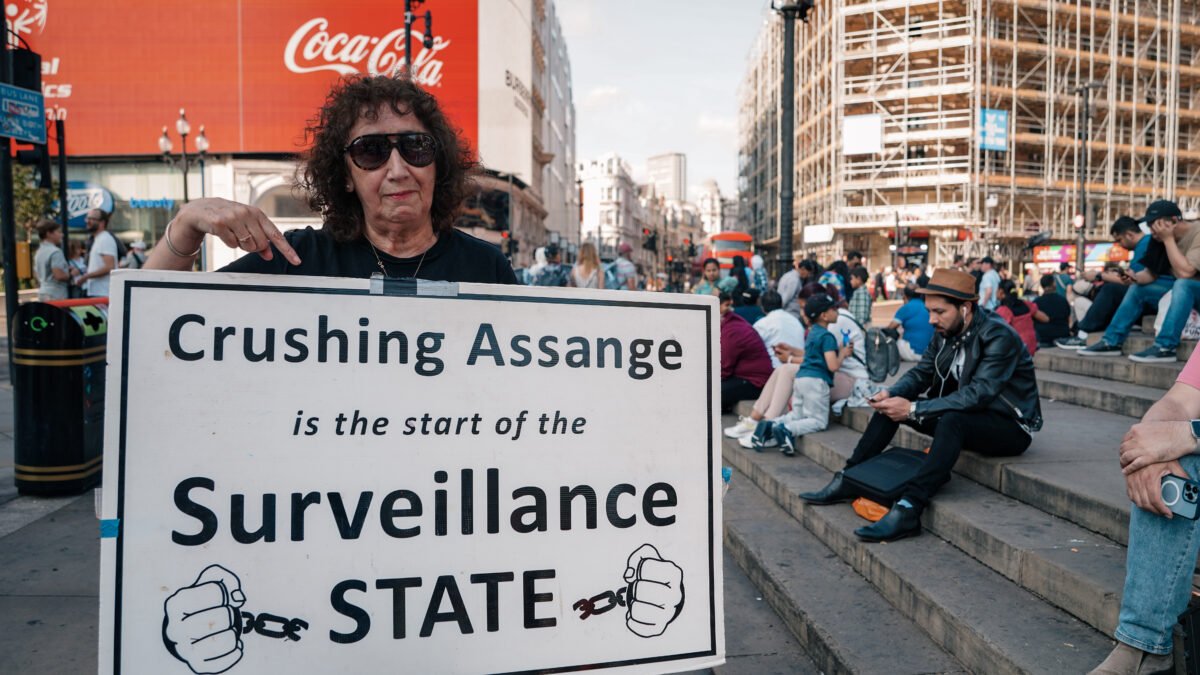
In June 2024, after over a decade of legal warfare, Julian Assange walked free. The WikiLeaks founder entered a plea deal with the United States, avoiding further imprisonment by accepting one count under the Espionage Act in exchange for time served. But far from closing the chapter, his release opened a more uncomfortable question, not about Assange himself, whose individual case is now formally resolved, but about what his prosecution established as precedent, and what that precedent costs every journalist, editor, and publisher who works in the global public interest.
The Precedent, Not the Man
The legal architecture of the Assange case was, from the beginning, an innovation. The United States government charged a foreign national, an Australian citizen, under the Espionage Act of 1917 for publishing classified information that was provided to him by a US source. The act of receiving and publishing classified material from a whistleblower is precisely what journalists at the New York Times, the Washington Post, Der Spiegel, the Guardian, and scores of other publications have done throughout the history of investigative reporting. If the legal theory underlying the Assange prosecution is sound, it is applicable to every one of those cases. That is not a rhetorical observation. It is the stated legal reasoning of the prosecution, which explicitly declined to argue that Assange’s case was unique to his methods or to WikiLeaks as an organisation.
The Western world has long crafted a narrative of itself as a bastion of democracy, morality, and press freedom. Beneath that carefully curated facade lies a pattern that the Assange case makes visible: the selective application of press freedom principles based on whether the journalism in question serves or threatens state power. When investigative journalism exposes the abuses of adversary governments, Western governments celebrate it as essential to democracy. When it exposes the abuses of Western governments themselves, the conduct of the Iraq and Afghanistan wars, the surveillance architecture of the NSA, the diplomatic communications that reveal the gap between public statements and private calculations, the celebration ends and the prosecution apparatus begins.
The Assange case did not threaten press freedom as an abstraction. It excavated the foundations of how press freedom is actually structured, revealing that it has always been conditional, always been managed, and always been most robustly protected when the journalism it covers does not point at those doing the protecting.
What Africa Is Reading
The Africa dimension of this argument is not peripheral. It is central to what makes the Western press freedom narrative structurally incoherent. African journalists face imprisonment, violence, and death for publishing information that Western governments would classify as routine accountability reporting. Ethiopia, Eritrea, Rwanda, Egypt, and Cameroon consistently rank among the world’s most dangerous countries for journalists [RSF Press Freedom Index]. Western governments, which provide development assistance, security cooperation, and diplomatic support to many of these same governments, rarely allow press freedom concerns to interrupt those relationships in any consequential way. The selectivity is the signal: press freedom is enforced through diplomatic pressure against adversaries; it is managed through quiet accommodation with partners. This is not hypocrisy in the casual sense. It is policy, consistent, rational, and revealed most clearly by the cases that break the rhetorical frame.
Punishment by Process
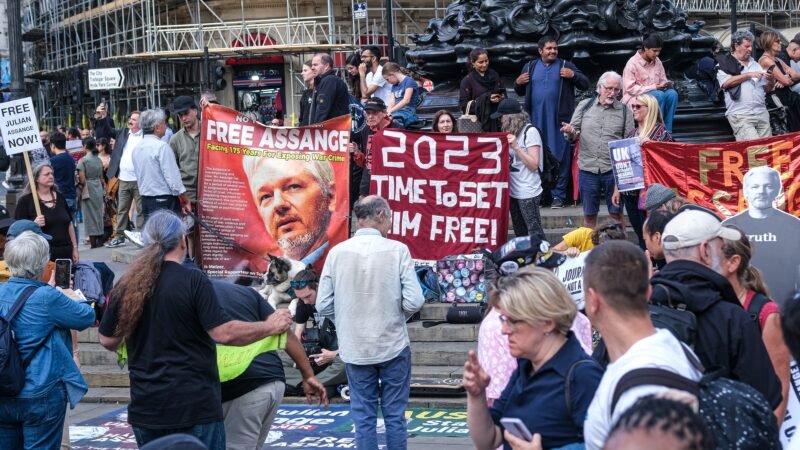
The fourteen years of legal proceedings against Assange produced an archaeological record of how states manage the boundary between permissible and impermissible journalism. In the early years, the case was framed primarily around the sexual assault allegations in Sweden, which collapsed without prosecution in 2019 but served to keep Assange legally entangled and unable to travel. When the Swedish case lapsed, the US extradition request moved to the foreground, and the legal argument shifted to the espionage framing. During the years in which Assange remained in Belmarsh Prison in London, the British courts processed multiple extradition hearings, appeals, and procedural challenges in a process that lasted longer than many criminal sentences for offences carrying comparable penalties. The architecture of the proceedings, not any single ruling but the aggregate of delay, complexity, and attrition, operated as the punishment before any verdict was reached.
What Assange published was real. The Collateral Murder video, showing US Apache helicopters killing civilians including journalists in Baghdad in 2007, was not fabricated. The Iraq War Logs, the Afghanistan War Diary, the diplomatic cables, these were authentic documents from authentic systems, and they documented authentic conduct. The question of whether the publication of this material caused harm to individuals whose identities were exposed is legitimate and was contested by press freedom organisations, who argued that WikiLeaks took reasonable steps to redact identifying information in its major releases. The US prosecution did not primarily turn on that harm question. It turned on the act of publication itself, on the proposition that publishing classified information about government conduct, obtained through a source, is criminal under US law when the publisher is not a citizen and the publication is not conducted through established media institutions.
The plea deal resolved Assange’s individual case without resolving the legal precedent the prosecution sought to establish. The US government obtained a conviction, Assange pleaded guilty to one espionage count, while allowing him to avoid further imprisonment. From the prosecution’s strategic perspective, this may be the optimal outcome: a legal precedent established through guilty plea, without the risk of appellate courts ruling on the constitutional questions that a contested prosecution would have required the courts to address. The precedent of a publisher pleading guilty to espionage for publishing classified government documents sits in American legal history without a definitive court ruling on whether that theory is constitutional. It can be referenced in future cases while its constitutional status remains unadjudicated.
For African journalists operating under governments that watch how Western states manage their own dissenters, and they do watch, with the close attention of those whose own survival depends on the consistency of the rules, the Assange case communicates a specific message. The message is not that press freedom is absolute. The message is that press freedom is managed, and that the managing is done by states, not principles. States that imprison journalists can point to the Assange prosecution as evidence that the societies preaching press freedom also prosecute it when their own interests are threatened. That argument is not sound jurisprudence. It is devastating as political rhetoric, and it lands with the force of demonstrated hypocrisy on every journalist across the African continent who hoped that the rules applied equally.
The global war on journalism is not fought with a single weapon. It is fought through legal attrition, through strategic lawsuits against public participation, through surveillance of sources, through the economic destruction of independent media outlets, through physical violence in conflict zones, and through the normalisation of prosecutorial theories that treat the publication of uncomfortable truths as a security threat. Assange’s case is one front of that war. It is not an isolated prosecution. It is a signal, and the signal has been received with perfect clarity by every government that needed permission to be bolder in managing its own journalists, and by every journalist who needed to know how much courage their work actually required.