What began as a regional transport rehabilitation project linking Angola to Zambia and the Democratic Republic of Congo has quietly crossed a threshold. The Lobito Corridor is no longer being discussed as infrastructure. It is increasingly being treated as strategic architecture, the kind that global powers build when they need to secure the movement of resources they cannot afford to lose.
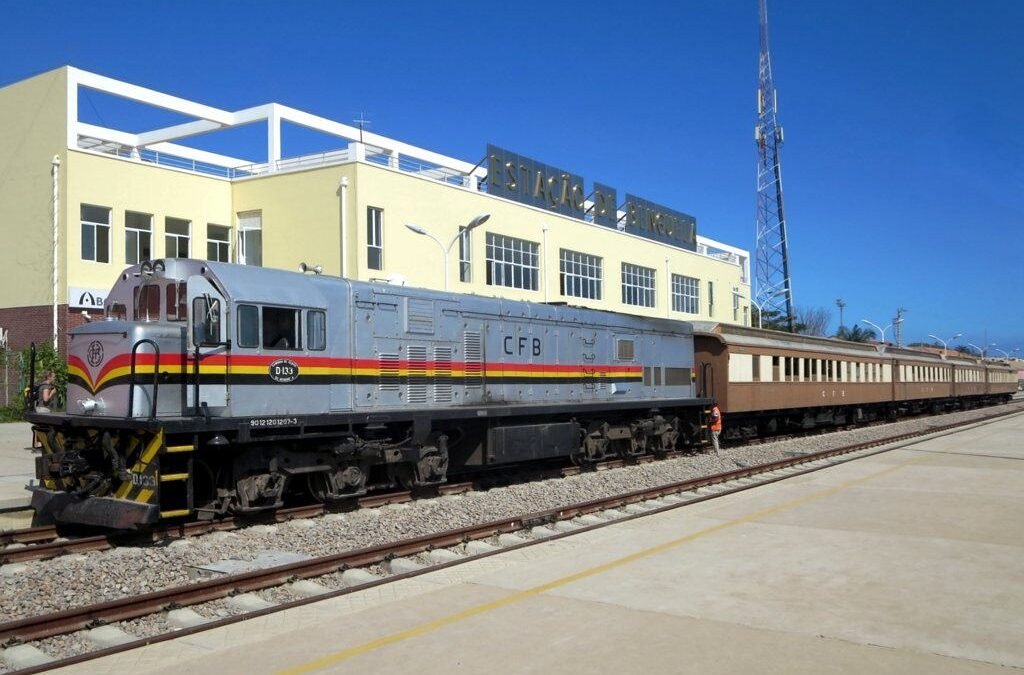
Stretching from Angola’s Atlantic coastline through the copper-rich regions of Central Africa, the corridor has moved in recent months from diplomatic ambition toward operational execution. U.S.-backed financing, governance reforms, and renewed commercial positioning have accelerated efforts to rehabilitate roughly 1,300 kilometres of railway infrastructure connecting Lobito Port to inland mining regions associated with copper and cobalt production. The timing is not coincidental. Demand for transition-critical minerals continues to intensify as major economies push deeper into electric vehicles, battery manufacturing, and energy storage systems. The route minerals take has become nearly as important as the minerals themselves.
That shift explains why the corridor now attracts attention far beyond Angola, Zambia, or the DRC. It sits within a broader effort by Washington and its partners to develop alternative logistics systems that reduce dependence on Chinese-dominated infrastructure and processing networks. Washington’s strategy has become more focused than in previous cycles, concentrating on commercially viable transport systems directly tied to strategic minerals and export security rather than broad development assistance.
China enters the conversation with structural advantages accumulated over decades. Chinese companies remain embedded across mining operations, financing arrangements, construction ecosystems, and mineral-processing relationships throughout Central and Southern Africa. The competition unfolding around Lobito is not a contest between equals starting from the same line. It is an attempt to build alternative leverage inside a landscape where Beijing already holds operational scale. That imbalance quietly shapes everything: where financing goes, which governance conditions are attached, and which processing systems get built alongside the rails.
Railways are becoming instruments of industrial policy, diplomatic influence, and long-term strategic alignment. Infrastructure, once framed mainly as development assistance, is increasingly functioning as geopolitical positioning.
That reality has changed the language surrounding the corridor itself. Discussions now extend beyond train capacity and cargo volumes into industrial zones, energy systems, customs harmonisation, digital logistics, and export reliability. The corridor is increasingly marketed not as a railway but as a logistics ecosystem capable of reshaping regional trade flows and attracting manufacturing investment linked to mineral processing. For Angola, this carries particular significance. Long defined internationally by oil exports and post-war reconstruction, the country is positioning itself as a strategic Atlantic gateway into Central Africa’s mineral economy. Lobito Port’s geography offers direct maritime access to European and North American markets at a moment when global powers are actively seeking alternatives to vulnerable supply routes.
Zambia stands to gain from shorter export timelines and expanded logistical options for copper shipments. Yet the broader significance lies less in transport efficiency than in political meaning. Access without industrial depth rarely converts into durable leverage. The continent has historically occupied a familiar position inside global commodity systems: rich in strategic resources, limited in downstream industrial capture. Corridors can move minerals more efficiently without fundamentally changing who controls processing, financing, pricing, or technological integration around them.
This is where the geometry of the corridor matters more than its engineering. A railway optimised to carry unprocessed ore to a port is, in structural terms, a faster drain rather than a deeper economy. It shortens the distance between the African pit and the foreign smelter without placing a single stage of value-addition on African soil. The copper and cobalt that leave Lobito as concentrate return to the world as cathodes, batteries, and vehicles whose margins are booked in Shanghai, Rotterdam, and Detroit. If the rails are laid only to evacuate raw material, the corridor will have modernised extraction without disturbing the division of labour that keeps the value offshore. The track can run in two directions, but the value, so far, is being engineered to flow in one.
The more important question therefore lies beyond construction timelines and financing announcements. It is whether African states connected to the Lobito system can use the renewed global interest to strengthen domestic manufacturing, energy reliability, skills development, and regional bargaining power, rather than simply accelerating raw-material extraction for external markets. That tension remains unresolved. The corridor’s success will not ultimately be measured by the volume of minerals moving westward to Atlantic ports. It will be measured by whether infrastructure designed around Africa’s resources also deepens Africa’s own industrial position inside the systems now being built around them. One feeds export volume. The other builds sovereign weight. The difference between the two is everything, and it will be decided not in Washington or Beijing but in whether the governments along the line write processing, local content, and value-addition into the terms before the first train runs, while their leverage is still at its peak.