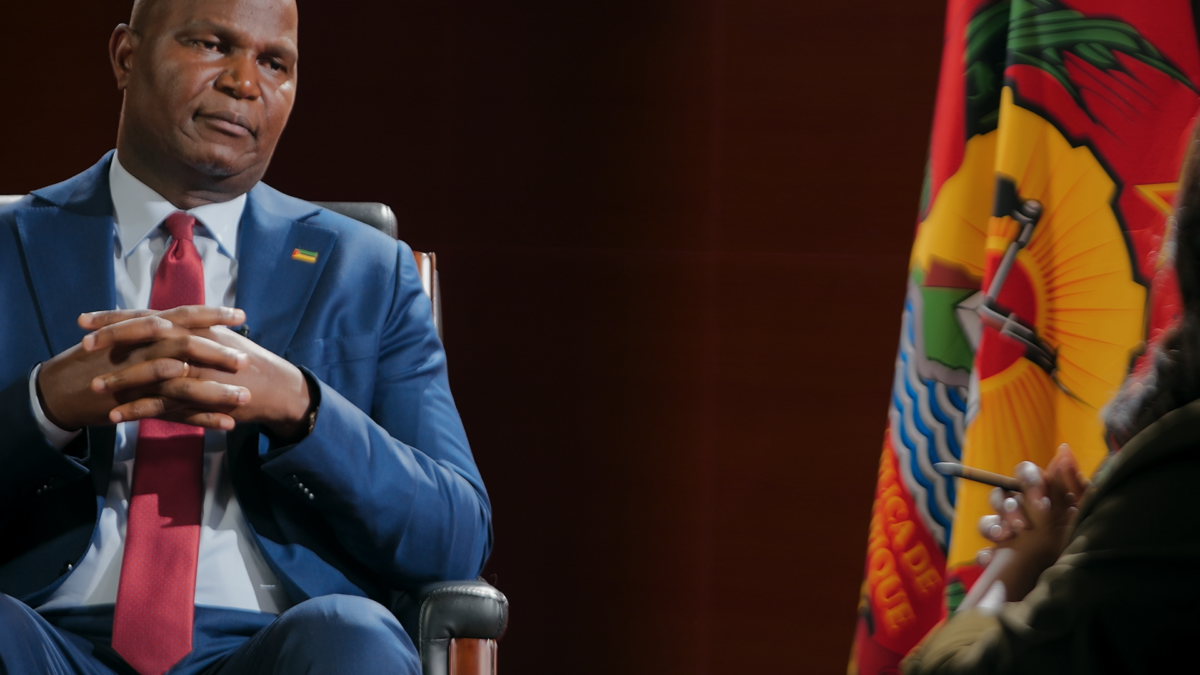
When Frelimo nominated Daniel Francisco Chapo as its presidential candidate for Mozambique’s 2024 elections, the party was making a wager that its most visible asset, a younger face, could resolve its most structural liability: decades of governance failure that had eroded its popular legitimacy across precisely the generations it most needed to retain.
Chapo, in his mid-forties and a former provincial governor of Inhambane, represented a departure from the ageing cohort that had led Frelimo through a succession crisis following Filipe Nyusi’s final term. His candidacy was presented as generational renewal, evidence that the party that has governed Mozambique since independence in 1975 could adapt its leadership without abandoning the institutional continuity that its national construction project required. The opposition, led by Venâncio Mondlane and RENAMO under Ossufo Momade, read the same candidacy as cosmetic renovation: a new face on a structure whose foundations remained unchanged.
The 2024 election, and the contested, violence-marked period that followed its disputed results, demonstrated that Mozambique’s political crisis is not primarily a leadership personality problem. It is a legitimacy crisis produced by the accumulation of governance failures, resource wealth mismanagement, and the specific devastation of the Cabo Delgado insurgency, which has displaced hundreds of thousands and strained the state’s capacity and credibility in the country’s natural-gas-rich north.
The Hidden Debt Legacy
Mozambique’s political landscape cannot be understood without the shadow of the hidden debt scandal, the $2.2 billion in undisclosed government-guaranteed loans for maritime security and tuna fishing projects that, when revealed in 2016, triggered a donor aid suspension, IMF programme collapse, and the sharpest economic contraction the country had experienced since the civil war’s end. The scandal implicated senior Frelimo officials and the broader system of politically connected capital accumulation that had grown alongside Mozambique’s donor-dependent development model.
Chapo did not cause the hidden debt crisis. He does not emerge from the generation that designed it. But he inherits it, along with the fiscal constraints, the reputational damage, and the popular association between Frelimo governance and elite enrichment at public expense that the scandal crystallised. A generational leadership change that does not produce structural accountability for the hidden debt era will be read by Mozambican voters as exactly what Mondlane’s opposition charged: renovation of personnel without reform of the system.
Mozambican voters will read a generational leadership change that does not produce structural accountability as renovation of personnel without reform of the system.
Cabo Delgado and the Gas Revenue Question
The Cabo Delgado insurgency, which erupted in 2017 and has since been linked to ISGS-affiliated networks, local grievances, and the failures of central government engagement with the region’s predominantly Muslim north, represents the most severe security and humanitarian crisis Mozambique has faced since its civil war. International partners, including Rwandan forces and the SADC Mission in Mozambique, have provided security assistance that has allowed some stabilisation in coastal areas. The insurgency’s root conditions, poverty, exclusion, and the disconnection between natural resource wealth and local benefit, remain inadequately addressed.
The Rovuma Prize
Mozambique holds some of the largest natural gas reserves in sub-Saharan Africa, concentrated in the Rovuma Basin off Cabo Delgado’s coast. TotalEnergies, ENI, and their partners have invested billions in LNG development that, when production reaches full capacity, will generate revenues that dwarf Mozambique’s current GDP. The central governance question for Chapo’s administration is whether those revenues, whose collection timeline depends on the security situation’s trajectory, will be managed transparently, distributed in ways that address Cabo Delgado’s structural grievances, and insulated from the elite capture that characterised the hidden debt era.
The sequencing is unforgiving. The revenue rules are being written now, in sovereign-fund legislation and production agreements negotiated while the province they concern is still under military guard. Once the gas flows through terms set in this window, the window closes, and Mozambique will live inside whatever was signed during it.
What Mozambique’s Election Revealed About Southern African Democracy
The post-election violence that followed the 2024 results, in which opposition supporters contested the announced outcome and security forces responded with force, exposed the fragility of Mozambique’s democratic consolidation. Frelimo has governed without electoral interruption since independence. That continuity is simultaneously its institutional claim and its democratic vulnerability: a system that has never experienced opposition electoral victory has not developed the political culture, institutional norms, or opposition capacity that robust democratic alternation requires.
Chapo’s administration begins under conditions of contested legitimacy that generational renewal alone cannot resolve. What Mozambique requires is not merely a younger Frelimo president but a Frelimo administration willing to govern with the transparency, electoral accountability, and resource management discipline that would transform the party’s relationship with the populations it has governed for half a century. Whether Chapo represents the beginning of that transformation or a skilled performance of its aesthetics is the question Mozambique’s next decade will answer.
The deeper structure to watch is the one where the gas, the debt, and the insurgency meet, because they are not three problems but one. Cabo Delgado’s grievance is that the wealth beneath its waters has never reached the people above them; the hidden-debt scandal proved that politically connected capital can extract billions before a single benefit is distributed; and the insurgency feeds on exactly the exclusion those two facts describe. A Frelimo that manages the coming LNG revenue the way it managed the tuna bonds will not merely repeat a financial scandal. It will refinance the war. The test of Chapo’s presidency is therefore not whether he looks like change, but whether the first cargo of gas wealth is metabolised by the state or by the network, and the north is watching the answer more closely than the markets are.