A $990 million UK-backed port deal reveals the architecture of a dependency model that has no colonial flag, only a term sheet. Nigeria’s debt is not simply a financing decision. It is a structural confession.
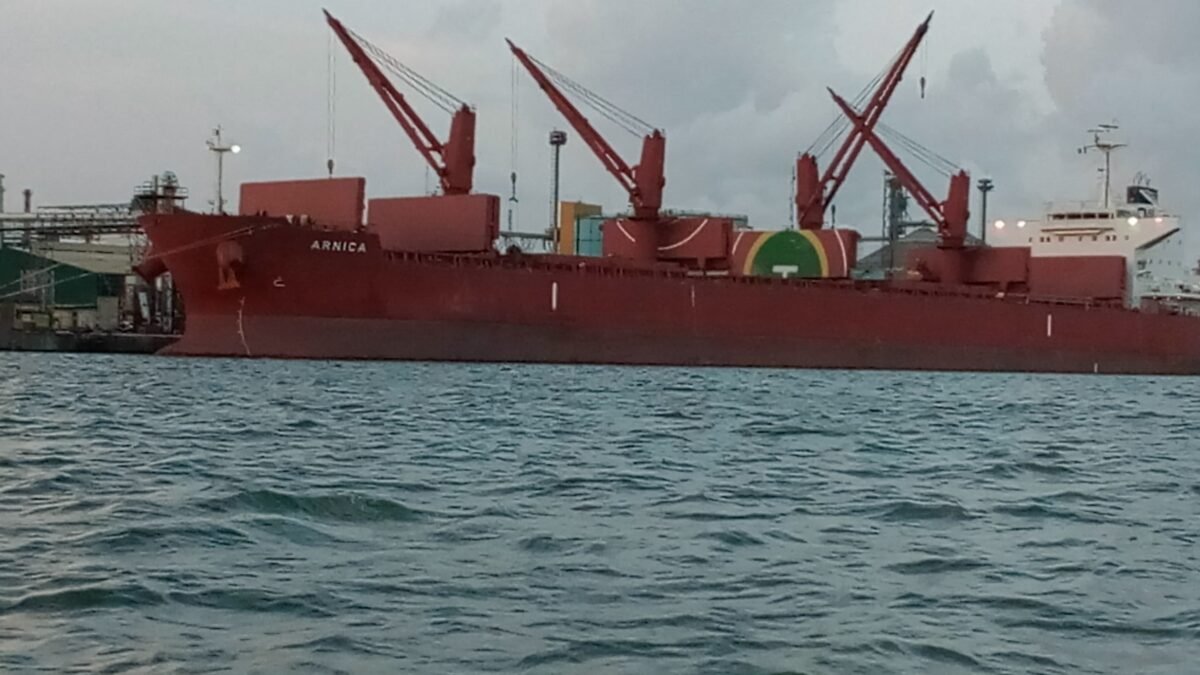
When Nigeria signed a $990 million facility backed by UK Export Finance to rehabilitate the Lagos and Tin Can Island ports, the headline read like a development win. Infrastructure. Investment. Progress. But infrastructure headlines in Africa have a habit of concealing what they transfer, not just cargo, but control. If you strip the announcement down to its structural mechanics, it is not a development deal. It is a lesson in how influence is exercised without ownership, how capital circulates without compounding on the continent, and why Africa’s largest economy keeps growing in size while standing still in power.
How the Loop Works
UK Export Finance is a British government institution. Its mandate is not African development; it is the promotion of British exports and the protection of British commercial interests. UKEF guarantees exist to reduce risk for UK exporters doing business abroad. They are, by design, state-backed mechanisms to ensure British contractors win contracts in markets that might otherwise entail sovereign risk. In this deal, approximately £236 million flows directly back to UK suppliers. This is not an accusation. It is the mechanism operating exactly as designed.
The arrangement is a structured return loop: Nigeria receives the infrastructure, the UK government underwrites the risk, British companies win the contracts, and British capital earns the returns. The infrastructure remains in Nigeria. The financial value chain does not.
Nigeria’s ports are not broken because of bad luck. Lagos Port Complex and Tin Can Island have suffered from something more systemic: a governance culture that treats infrastructure as an endpoint rather than a process. Dwell times, the measure of how long cargo sits before clearing, consistently rank among the highest on the continent. Congestion, corruption, and regulatory layers have made what should be West Africa’s dominant trade gateway into an operational bottleneck. The $990 million facility is framed as a solution to this, and in one dimension it is. But in the dimension that defines long-term sovereign capacity, it is something else: debt-financed repair. Nigeria is not borrowing to build a new frontier. It is borrowing to fix what institutional failure allowed to decay.
Debt-Financed Repair
The deeper question is not whether the ports will be upgraded. They will. The question is whether the upgrade builds Nigeria’s capacity to manage, maintain, and expand its own infrastructure, or resets the clock for the next borrowing cycle, fifteen years from now, when the same ports will again require rehabilitation through the same external financing model, with the same structural leakage intact. A state that cannot convert infrastructure spend into institutional capacity is not developing. It is maintaining the conditions of its own dependency.
Hub or Transit
This is what distinguishes export finance from neutral development capital. Neutral development capital would prioritise technology transfer, local contractor quotas, and long-term capacity building. Export finance prioritises market access for the guaranteeing country’s commercial sector. Financing terms shape what gets built and how. Contractor selection determines whose technical standards become the operational baseline. Those standards then persist in maintenance contracts, upgrade protocols, and system compatibility requirements long after the initial loan is repaid. This is control without a deed. It is leverage without equity. Nigeria owns the liability. Others own the leverage.
The geopolitical context sharpens the missed opportunity. Global supply chains are under structural stress. Red Sea disruptions have rerouted cargo flows. Energy volatility continues to reorder trade logistics. African ports, particularly those positioned along West Africa’s coastline, are emerging as strategic alternatives in a fragmenting global supply system. Nigeria, with the largest economy on the continent and the most significant port infrastructure in West Africa, is positioned to turn this moment into a lasting strategic advantage. The question is not whether Nigeria’s ports get upgraded; they must. The question is whether the upgrade model positions Nigeria as a value hub or a transit economy.
A value hub captures processing, manufacturing, and logistics services. It moves up the value chain, earns in high-margin sectors, and builds industrial density. A transit economy moves goods efficiently for others while capturing only the thin margin of throughput. The current financing model, which imports capital, contractors, standards, and profits, is the architecture of a transit economy dressed in the language of infrastructure development. Mandating technology transfer clauses in every infrastructure deal, building a local shipyard and logistics ecosystem, creating African contractor participation quotas, and integrating port upgrades into AfCFTA trade corridors and export processing zones: none of this is part of the current deal structure. That is a policy failure, not a financing constraint.
The $990 million Nigeria-UKEF port facility is not an anomaly. It is an instance of a pattern that has shaped African infrastructure financing across generations and geographies. The actors change—the flag on the guarantor changes. But the structural logic holds: Africa provides the sovereign risk and the repayment obligation; external actors provide the capital structure and capture the value chain. The trap is not the debt itself. The trap is the absence of sovereignty over the capitalist structure. Until that control shifts, Africa’s largest economy will continue to grow, its ports will be rehabilitated, and its debt will accumulate. Still, the structural condition that defines a sovereign economy, the capacity to convert scale into power, will remain deferred.