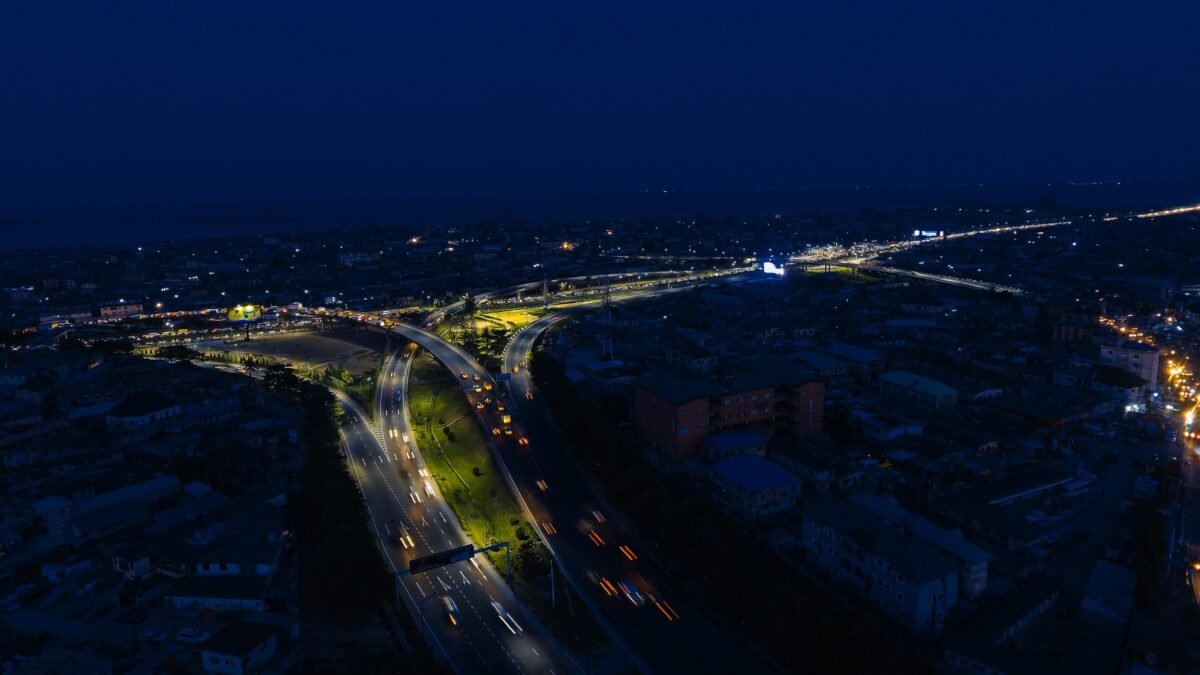
Nigeria’s coastal road project is framed as a transformational infrastructure investment, a highway stretching the length of the country’s Atlantic coastline, connecting Lagos to Calabar, linking ports and industrial zones, and providing the logistical spine that a $400 billion economy needs but has never had. The vision is credible. Nigeria’s coastal geography has always been an economic asset underserved by its infrastructure, and the argument that properly designed road connectivity would generate returns across agriculture, manufacturing, trade, and tourism is not difficult to make. The harder question is not whether Nigeria needs this road. The harder question is why a project of this stated importance has been designed, announced, and stalled across multiple administrations without reaching the point of sustained construction.
The Lagos-Calabar Coastal Highway, as the current iteration of the project is designated, received renewed attention under President Bola Tinubu’s administration, with contract awards announced in 2024 and groundbreaking ceremonies held at multiple points along the proposed route. The government’s projection of the project’s length, roughly 700 kilometres, and its estimated cost, in excess of $13 billion, positions it as one of the most ambitious single infrastructure projects in Nigerian history. Those numbers also position it as one of the most demanding in terms of financing, procurement integrity, and construction management capacity, the three variables where Nigeria’s infrastructure record is most problematic.
A Record of Non-Completion
The history of large Nigerian infrastructure projects is not a history of successful completion on timeline and budget. The Abuja-Kaduna Standard Gauge Railway took years beyond its original schedule and opened at a cost substantially above initial estimates. The Second Niger Bridge, a critical piece of national connectivity infrastructure, spent over fifty years between first conception and eventual opening. The pattern is consistent enough to constitute a systemic analysis, not a series of isolated project failures. What Nigeria has demonstrated repeatedly is that the capacity to announce, fund through initial disbursement, and begin major infrastructure projects is not matched by the institutional capacity to see them through to operation, to manage procurement integrity across long construction periods, to maintain political attention and budget allocation through electoral cycles, and to resist the capture of project economics by contractors with political connections who benefit from delay rather than completion.
Why Delay Pays
That last phrase contains the mechanism, and it deserves to be made explicit, because it is where the financing explanation collapses. A project that is never finished is not a failure for everyone involved. For a contractor whose revenue flows from mobilisation payments, variation orders, and renegotiated milestones, the most profitable road is the one perpetually under construction, never delivered, never closed out, never audited against a completed result. Delay is not a malfunction of the procurement system; it is one of its outputs, because the incentives reward the beginning of work and rarely penalise its non-completion. Until the people who profit from the groundbreaking are made to depend on the ribbon-cutting, the announcement will keep arriving on schedule and the highway will not.
The coastal road’s coastal geography compounds the technical challenge. A highway running alongside the Atlantic coast through the Niger Delta crosses some of the most ecologically sensitive and socially complex terrain in West Africa. Land acquisition in communities whose relationship to their land and water carries political and cultural weight that formal expropriation processes cannot simply override requires a degree of community engagement that the project’s announced timelines do not appear to have seriously incorporated. The communities that sit in the coastal road’s path have interests that are not reducible to compensation schedules, and a delta that has spent decades watching its resources extracted with the benefits flowing elsewhere does not extend the state the benefit of the doubt.
A Governance Gap, Not a Financing One
None of this makes the project wrong. Nigeria needs the connectivity that the coastal road would provide, and the economic case for it, reduced transport costs, better port connectivity, access to agricultural hinterlands that cannot currently reach markets efficiently, is genuine. The argument being made here is structural: that the gap between what Nigeria announces and what Nigeria builds is not primarily a financing gap. It is a governance gap. The project management systems, the procurement oversight, the political insulation of infrastructure delivery from electoral pressures, these are the institutional requirements that make large projects deliverable. And they are what Nigeria’s infrastructure sector has persistently struggled to develop and sustain.
The financing structure of this iteration makes the governance test sharper, not softer. A project funded through counterpart arrangements and tolled concessions ties public obligation to private return for decades, which means the terms being signed now, on traffic guarantees, on renegotiation triggers, on who absorbs cost overruns, will bind budgets long after the administration that announced them has left office. A road can be a public asset or a forty-year invoice, and the difference is decided in clauses nobody reads at the groundbreaking.
The coastal road is a test of whether the Tinubu administration’s stated commitment to infrastructure delivery is matched by the institutional investments required to execute it. Groundbreakings are not roads. Contract awards are not tarmac. The measure that matters is not the ceremony at the beginning but the highway at the end, and whether the communities that will live alongside it were consulted, compensated, and included in its benefits from the start. On that measure, the project has not yet earned its headlines, and the country has seen enough monuments to the announcement to know the difference.