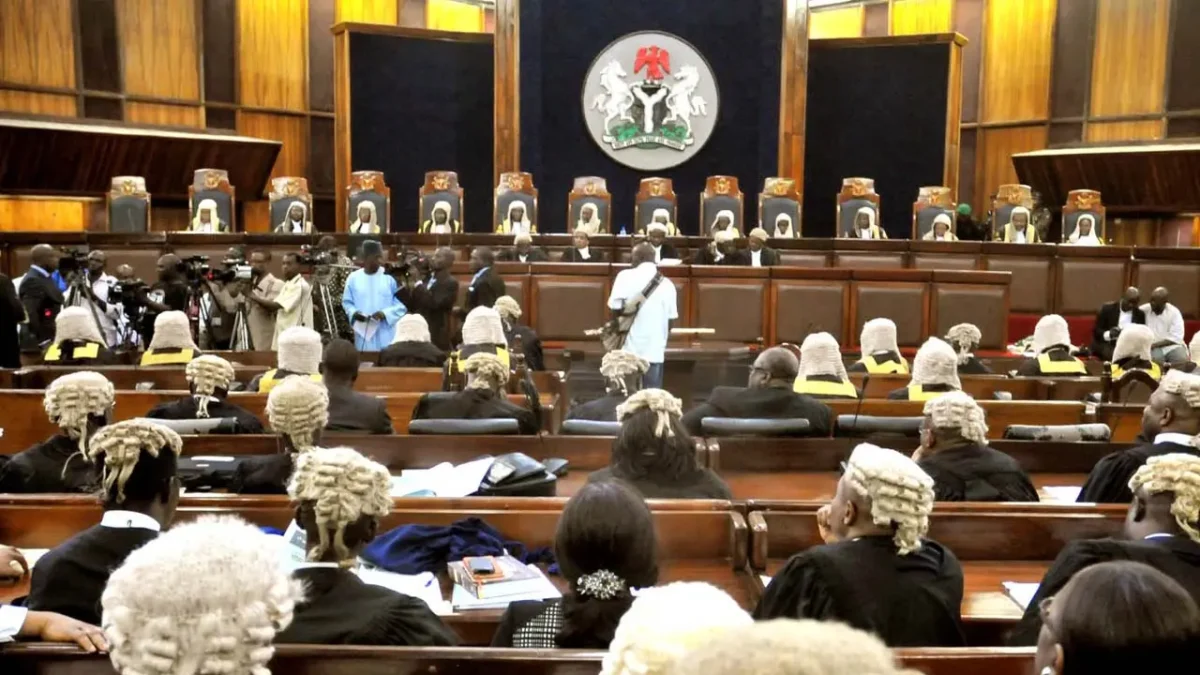
On July 11, 2024, Nigeria’s Supreme Court declared that state governors had been operating an unconstitutional stranglehold over local government finances — and ordered it to stop. The ruling was historic. What happened next will determine whether it was also consequential.
The court’s decision reinforced the financial and administrative autonomy of Nigeria’s 774 local government areas, striking down the practice of state governors withholding federal allocations and installing unelected caretaker committees in place of democratically elected local councils. For a country where governance capacity is most acutely absent at the community level — where basic infrastructure, primary healthcare, and primary education are legally the responsibility of local authorities — the ruling addressed a structural obstruction that has undermined service delivery for decades.
But Nigeria has accumulated a long record of landmark legal victories that were subsequently absorbed into political business as usual. The architecture of gubernatorial control over local government did not emerge spontaneously — it was cultivated deliberately, over years, as a mechanism for controlling patronage networks and suppressing potential political threats from below. A Supreme Court ruling, however unambiguous, cannot dismantle an architecture by decree.
The Anatomy of Local Government Capture
Nigeria’s 1999 Constitution established a three-tier federal structure in which local governments represent the third tier, with defined revenue entitlements from the Federation Account and constitutionally protected autonomy. The reality that evolved bore little resemblance to this design. State governments routinely dissolved elected local councils before their tenures expired, replacing them with appointed caretaker committees loyal to the governor. Federal allocations were collected by state governments and disbursed selectively — often after substantial deductions for projects and programmes determined at the state level without local council input.
What Capture Costs
The practical consequences were predictable. Local government primary healthcare centres became understaffed and undersupplied. Primary schools deteriorated. Basic sanitation infrastructure went unmaintained. The councils that were supposed to respond to community-level needs lacked both the funds and the political independence to function as genuine local authorities. They became extensions of state government machinery rather than representative institutions in their own right.
A Supreme Court ruling, however unambiguous, cannot dismantle an architecture by decree.
What the Ruling Actually Changes
The Supreme Court ordered that federal allocations to local governments be paid directly to democratically elected local councils, bypassing state government control. It declared that state governments have no constitutional authority to withhold or redirect these funds, and that caretaker arrangements — however dressed in legal language — cannot substitute for elected local councils as recipients of federal revenue.
This is a precise and enforceable directive — in principle. In practice, enforcement depends on compliance by thirty-six state governments, each of which has political incentives to resist the ruling’s implementation. The federal government’s willingness to monitor compliance and sanction non-compliant states will determine whether the ruling has operational effect or joins the extensive archive of Nigerian constitutional principles honoured in text and ignored in practice.
The Deeper Question of Democratic Localisation
Fiscal autonomy without electoral integrity produces a different but equally distorted outcome. Local government elections in Nigeria are conducted by State Independent Electoral Commissions — bodies appointed by and accountable to the same governors whose control over local councils the Supreme Court just curtailed. Where SIEC elections have been held, the results have consistently mirrored governing party dominance at rates that strain statistical credibility. True local government autonomy requires not merely the direct payment of federal allocations but the conduct of credible local elections by an independent electoral process.
Nigeria’s governance deficit at the community level is not merely a resource allocation problem — it is a representation problem. Communities that cannot hold their local governments accountable cannot generate the political pressure required to improve service delivery. The Supreme Court ruling addresses one dimension of this structural failure. The deeper reform — transferring local electoral authority to an independent federal commission, or at minimum subjecting SIEC processes to genuine oversight — remains politically untouchable in a system where state-level control of local elections is itself a resource.
What This Reveals About Nigerian Federalism
The July 2024 ruling is important precisely because it exposes what Nigerian federalism has become: a system in which constitutional allocations of authority are routinely subverted by the political economy of centralised control, and in which the judiciary periodically attempts to restore the constitutional design against the resistance of actors who profit from its distortion. The ruling is a correction, not a transformation. It restores a constitutional position that should never have been violated. That it required a Supreme Court intervention to do so reveals how thoroughly the system’s political economy had normalised the violation.
For Nigeria’s 200 million-plus citizens, the question that follows the ruling is neither legal nor constitutional — it is political. Will the federal executive enforce the court’s directive against state governments with the same determination it employs to pursue other federal priorities? The answer will define whether the July 2024 ruling becomes a turning point in Nigerian governance history, or a well-reasoned judgment that state executives quietly outlasted.