Corruption within Nigeria’s National Assembly is not a termite in the walls of an otherwise sound structure. It is embedded in the load-bearing architecture itself, in the way the institution was designed, the way its members are financed, the way its oversight functions are organised, and the way its relationship to the executive has evolved into a system of mutual benefit rather than constitutional counterweight. Understanding why the National Assembly cannot reform itself requires understanding why reform would require its members to dismantle the arrangement that most of them entered politics to access.
The Extraction Mechanisms
The budget padding allegations that have recurred across legislative sessions, involving insertion of fictitious projects into appropriation bills, constituency project funds disbursed without physical implementation, and line items for committee oversight activities that bear no relationship to actual oversight, are not anomalies in an otherwise functional budget process. They represent the primary mechanism through which National Assembly members extract economic benefit from their positions. The quarterly allocation of constituency project funds, which runs into millions of naira per legislator, operates largely outside the formal accountability framework that the Fiscal Responsibility Act and the Public Procurement Act were designed to create. The gap between legislative design and legislative practice is wide enough to drive a construction project that exists only on paper.
The ghost payroll problem, the phenomenon of legislative staff members who receive salaries without performing functions, whose positions were created for political clientelism rather than institutional need, reflects a staffing structure that has expanded consistently beyond any defensible relationship to the actual legislative workload. The National Assembly’s personnel costs consume a proportion of the legislative budget that independent analysts have repeatedly flagged as incompatible with any theory of institutional efficiency. The response to those analyses, when one comes at all, is that legislative independence requires the legislature to determine its own staffing. The principle is correct. Its application has been to insulate waste from scrutiny rather than to protect genuine institutional autonomy.
Oversight for Sale
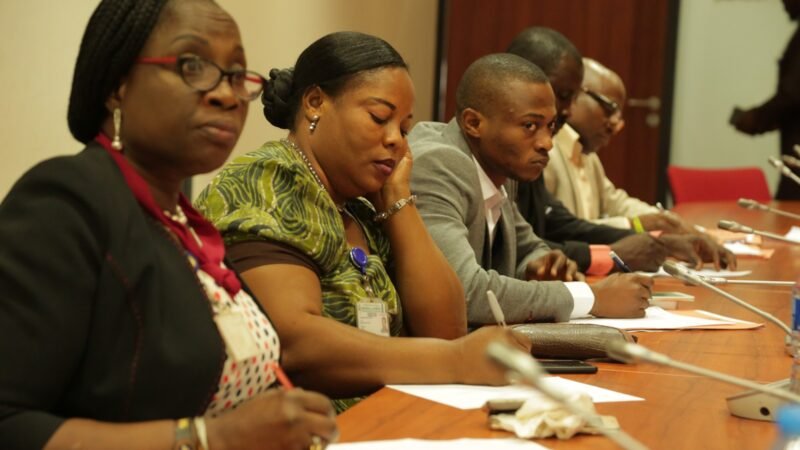
The oversight function, constitutionally the legislature’s most powerful tool for accountability, has been systematically commodified. Committee chairmanships are positions of economic value in the Nigerian legislative market because they provide access to the budgets of the agencies under each committee’s oversight. The relationship between a House or Senate committee and the ministry or agency it is supposed to scrutinise is, in too many cases, a relationship of negotiation over extraction rather than a relationship of accountability. Agencies learn that committee investigations are not threats to be resisted by improving governance but costs to be managed by making the right payments to the right offices.
The pattern is self-concealing as well as self-sustaining. Because every actor in the chain benefits, the scandal that surfaces is almost always the product of a falling-out rather than a functioning control, a spurned partner, a succession fight, a rival’s leak. Investigations open with fanfare, dissolve into committee, and end in the quiet exoneration both sides need to keep trading. The public record therefore understates the system precisely because the system polices its own exposure.
The Foundation of It All
The electoral financing structure is the foundation of this entire arrangement. Running a competitive campaign for a National Assembly seat in Nigeria requires financial resources that a legislator’s official salary cannot generate. The money comes from somewhere: business interests that expect reciprocal access to legislative decisions, executive patrons who expect loyalty over independence, and personal networks that translate into clientelist obligations once in office. A legislature whose members arrive in office pre-captured by the financing relationships that put them there cannot exercise the independent oversight that constitutional design assigns it.
This is the mechanism that converts the others from symptoms into a system. A legislator who borrowed his way into office, in cash, in favours, in the backing of a patron, takes his seat already owing more than his salary can ever repay. The padded budget, the ghost staffer, the monetised committee are not departures from his duty; they are how the debt that bought the seat is serviced. Oversight of the executive becomes impossible not because the rules forbid it but because the executive is frequently the creditor. The constitution imagines a counterweight. The financing produces a subsidiary. No amount of exhortation to integrity survives contact with an arithmetic in which honesty means defaulting on the people who put you in the chamber. This is why anti-corruption campaigns aimed at the character of individual legislators reliably fail. They prosecute the symptom while leaving the equation intact, and the next intake arrives bound by the same terms. Replace every member tomorrow, and the institution would reproduce the behaviour within a single budget cycle, because the behaviour belongs to the structure, not to the people passing through it.
Reform of the National Assembly’s corruption architecture is not impossible. The Electoral Act’s provisions on campaign finance transparency, if implemented and enforced, would begin to change the financing incentives at the entry point. Independent budget scrutiny by credible civil society bodies with guaranteed access to legislative financial records would create external accountability mechanisms that the institution cannot suppress. Constituency project management transferred to state governments with federal oversight would remove the most direct mechanism of legislative fund capture. None of these reforms requires constitutional change. All of them require political will that currently cannot be located inside the institution being reformed. A house does not repair the cracks that hold it up, and that is the structural problem no individual intervention can solve without engaging the system that produces it.