Twenty-five years after the military handed Nigeria back to civilian hands, the opposition is not losing ground; it is being digested. The distinction matters. A losing opposition can recover. An absorbed one has already been turned into a function of the system it was designed to constrain.
The Anatomy of Absorption
The 2023 elections produced the clearest evidence of this structural collapse. Nyesom Wike, a former governor whose G5 faction openly campaigned against the People’s Democratic Party’s own presidential candidate, received a ministerial appointment from the All Progressives Congress administration he had publicly supported. The transaction was not hidden. It was the point. When the line between opposition and government becomes a revolving door, the architecture of democratic accountability loses its load-bearing walls.
This is not simply a story about the PDP’s internal fractures, though those are severe. It is a story about what Nigerian politics does to every party that enters its orbit: it converts political competition into elite negotiation, and it converts ideological commitment into price tags. The opposition’s weakness is not incidental to Nigeria’s governance crisis; it is one of its primary outputs.
The PDP governed Nigeria for sixteen years and understood the machinery of state patronage from the inside. When it entered opposition in 2015, it brought that understanding with it, and used it not to construct an accountability agenda, but to protect internal factions and individual interests. The presidential candidacy dispute of 2023 made this visible: the party’s inability to honour its own power-rotation principles produced defections, a G5 rebellion, and ultimately a governing coalition that included its most prominent governors. The result was an opposition that arrived at election day already partially integrated into the administration it sought to unseat.
The Labour Party Exception
The Labour Party’s emergence represented something different, a genuine disruption of the two-party consensus. Peter Obi’s candidacy mobilised a political generation that had not previously found a vehicle, and the Obidient movement translated frustration into organised energy at a scale that surprised even its architects. The performance in 2023 exposed the limits of PDP and APC dominance in ways that neither party had anticipated.
But the Labour Party’s post-election trajectory reveals the structural trap. Accusations of financial mismanagement at the national secretariat, internal leadership disputes, and a series of high-profile defections have compressed the party’s momentum before it could be converted into institutional capacity. Transitioning from protest movement to governing-ready party requires organisation, resources, and discipline, precisely the elements that patronage politics systematically denies to challengers who cannot be co-opted.
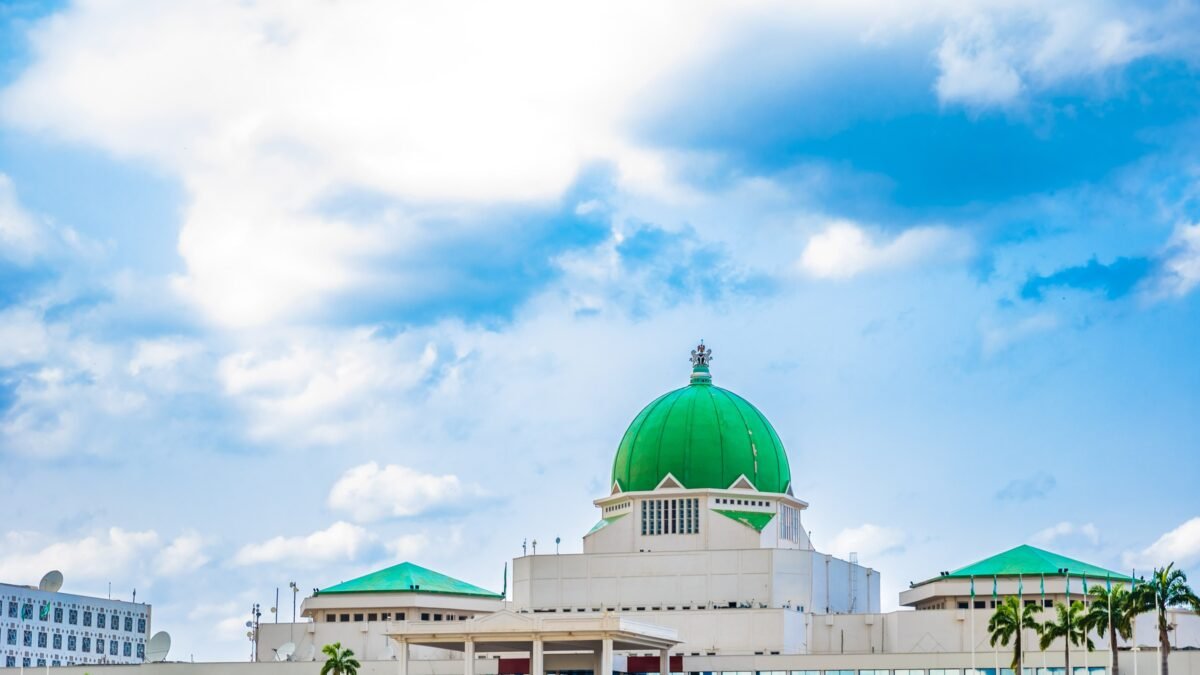
Legislative oversight is where the cost becomes most visible. A functioning opposition holds the budget to account, scrutinises executive appointments, and forces public justification for spending decisions. Nigeria’s National Assembly has instead presided over allegations of budget padding running into trillions of naira, with minimal organised resistance from opposition benches. The 2024 budget controversy exposed not just executive overreach, but an opposition too fragmented, and in some cases too financially entangled, to mount sustained inquiry.
Patronage politics produces this outcome by design. The co-optation of opposition figures through ministerial appointments, state contracts, and party-switching mechanisms is not corruption in the narrow sense; it is the system functioning as intended, converting political competition into managed elite circulation. This is why Wike’s trajectory was not an aberration. It was a template.
The Continental Signal
The implications extend beyond Nigeria’s borders. As the continent’s largest economy and most populous democracy, Nigeria’s democratic health has weight beyond its own borders. A weakened opposition in Abuja signals something to Lagos business people, Accra strategists, and London-based investors simultaneously: that Nigerian politics produces risk-adjusted outcomes independent of who holds formal power, because power in Nigeria is not primarily located in elected office.
Reversing this requires not simply better opposition leaders but structural interventions, campaign finance transparency, electoral body independence that can survive political pressure, and civil society capacity that operates as a permanent accountability function rather than a periodic mobilisation effort. The #EndSARS moment demonstrated that Nigerian youth can organise at scale. The question is whether that energy can be sustained beyond moments of crisis into the patient, institutional work that democratic accountability actually requires.
Nigeria’s opposition will not recover by finding a stronger candidate. It will recover when the structural conditions that make absorption profitable for political actors are dismantled, and not before. That is a longer project than an election cycle, and it demands honesty about what the current system has actually built.