
Africa, a continent of over 1.4 billion people spread across 54 sovereign nations, remains one of the most systematically misunderstood regions in global discourse. From popular Western media to development aid frameworks and international policy debates, it is too often depicted not as a continent of immense diversity but as a single, monolithic entity. The phrase “Africa is not a country” has become a refrain of exasperation, a necessary reminder that beneath the vague references to “Africa” lie a constellation of histories, languages, legal systems, cultures, and political realities that defy any one-size-fits-all categorisation.
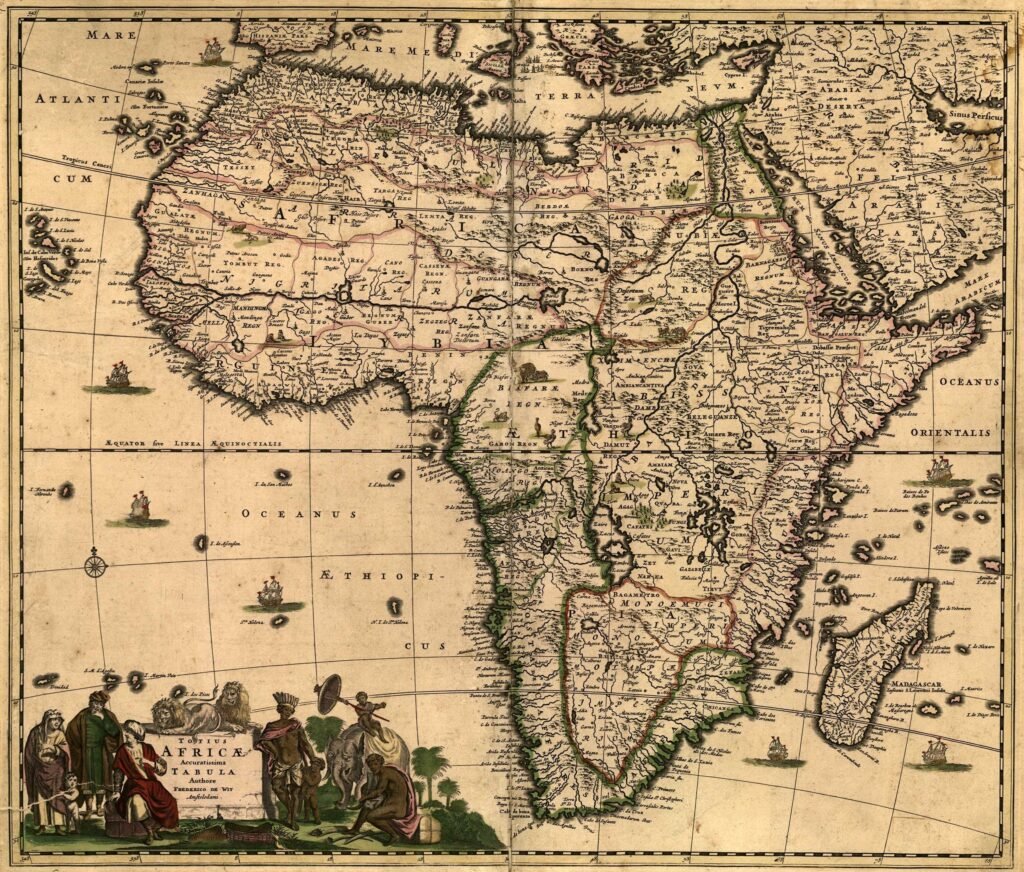
The myth of a singular, undifferentiated Africa has deep roots in colonial imagination. European cartographers, explorers, and imperialists erased or oversimplified preexisting boundaries, lumping vast territories together and naming them arbitrarily, with little regard for linguistic, ethnic, or historical realities. These artificial borders laid the groundwork for political instability and cemented a flattening of African identity in the global imagination. That reductionism persists in Western media, where headlines routinely refer to “an African famine” or “the African way of life”, as if the lived experiences of people in Egypt, South Africa, Togo, and Rwanda could be captured by a single descriptor.
Such portrayals are not only inaccurate, but they are also dangerous. They obscure the continent’s multiplicity, feed stereotypes that shape foreign policy and economic decisions, and rob African nations of their political agency. Africa is home to over 2,000 spoken languages, vast ethnic and cultural diversity, and legal systems ranging from English common law in Ghana to Islamic jurisprudence in Somalia to Roman-Dutch civil codes in South Africa. Political models vary just as widely: Rwanda’s developmental model rooted in reconciliation, Senegal’s tradition of peaceful democratic transitions, Ethiopia’s ethnic federalism. There is no singular African way of governing, just as there is no singular African economic model or worldview.
Why Homogeneity Is a Weapon

The dangers of collapsing Africa into a single narrative are far-reaching. International development strategies that treat the continent as a uniform bloc routinely fail because they do not account for the political, social, and economic differences between nations. What works in Tunisia’s education sector may be entirely unsuitable for Chad or Lesotho. The myth of homogeneity also undermines the legitimacy of African governments and thinkers, erasing localised innovations like Nairobi’s tech hubs, Kigali’s judicial reforms, or Afrobeats’ cultural export power, by subsuming them into a vague idea of “African progress” rather than crediting them to specific national achievements. This erasure encourages narratives of dependency rather than celebrating agency and sovereignty.
There is no one Africa, any more than there is one Europe. There are many, and the refusal to see them is not ignorance. It is a convenience that someone benefits from.
Who Benefits
It is worth asking who that someone is, because the flattening is not random. A single Africa is administratively cheaper to govern from outside than fifty-four of them. One narrative requires one policy, one aid framework, one risk rating, one diplomatic posture, applied wholesale to a continent whose internal variation would otherwise demand fifty-four separate analyses and fifty-four separate negotiations. The monolith is a labour-saving device for the institutions that act upon Africa, and the saving is paid for by the African nation whose specific achievement is absorbed into a vague continental average and whose specific bargaining position is dissolved into a bloc it never agreed to join. Reductionism, in other words, is not a failure of attention. It is an exercise of power that prefers its subject simple.
The price is not only narrative but financial. Risk, in global markets, is priced by category, and when the category is Africa rather than the specific country, a contagion discount spreads across the continent every time any single state defaults, stages a coup, or restructures its debt. A treasury in Gaborone or Dakar borrows at rates inflated by events in countries thousands of kilometres away, with which it shares neither a border, a currency, nor a credit history. Investors who would never price Portugal off Greece’s balance sheet do exactly that to Botswana off someone else’s crisis, because the monolith has been priced into the instruments themselves. The single-Africa story is not merely lazy. It is expensive, and the invoice is paid in basis points by the continent’s most disciplined economies.
Diversity as Strategic Strength
Far from being a hindrance, Africa’s internal diversity is a wellspring of innovation. In literature: Chinua Achebe (Nigeria), Tsitsi Dangarembga (Zimbabwe), Ngũgĩ wa Thiong’o (Kenya), each drawing on their national and cultural heritage to illuminate different aspects of the African experience. In entrepreneurship: Kenya’s fintech boom, Nigeria’s entertainment industry, South Africa’s green energy start-ups, each a product of specific social, political, and market conditions. Pan-African thinkers like Kwame Nkrumah, Cheikh Anta Diop, and Amílcar Cabral understood this. Their visions of unity were never about erasing difference but about building bridges across it.
Rejecting the myth of homogeneity is not a semantic correction; it is a political and intellectual imperative. It opens the door to more effective partnerships, more accurate representation, and more empowering narratives. It calls for education systems, media reporting, and policy frameworks that engage with Africa’s 54 nations as distinct entities with their own intellectual traditions, challenges, and triumphs. The continent’s diversity is not a burden to bear but a blessing to harness, and a foundation upon which unity, resilience, and sovereignty can be built on Africa’s own terms, not terms inherited from those who drew maps without asking the people who lived on the land.