Somalia’s humanitarian crisis acquired something unusually powerful this week: a deadline. The World Food Programme warned that life-saving food and nutrition assistance could halt by July without urgent new funding, placing millions of Somalis at renewed risk as drought, insecurity, displacement, and economic pressure continue to collide. The deadline did not create the crisis. It made visible what was already true, that the international aid architecture sustaining Somalia’s survival is itself beginning to strain.
Humanitarian agencies have issued warnings on Somalia for years, and the country has lived inside those warnings with the grim familiarity of a population that knows it is contingent on systems it does not control. But this week’s WFP Somalia funding signal landed differently. It translated chronic emergency into a rapidly approaching operational cliff. A hard stop tied to a specific month carries different political weight than a warning about deteriorating conditions. It forces attention onto the sustainability of the system itself rather than the scale of the suffering it is meant to address.
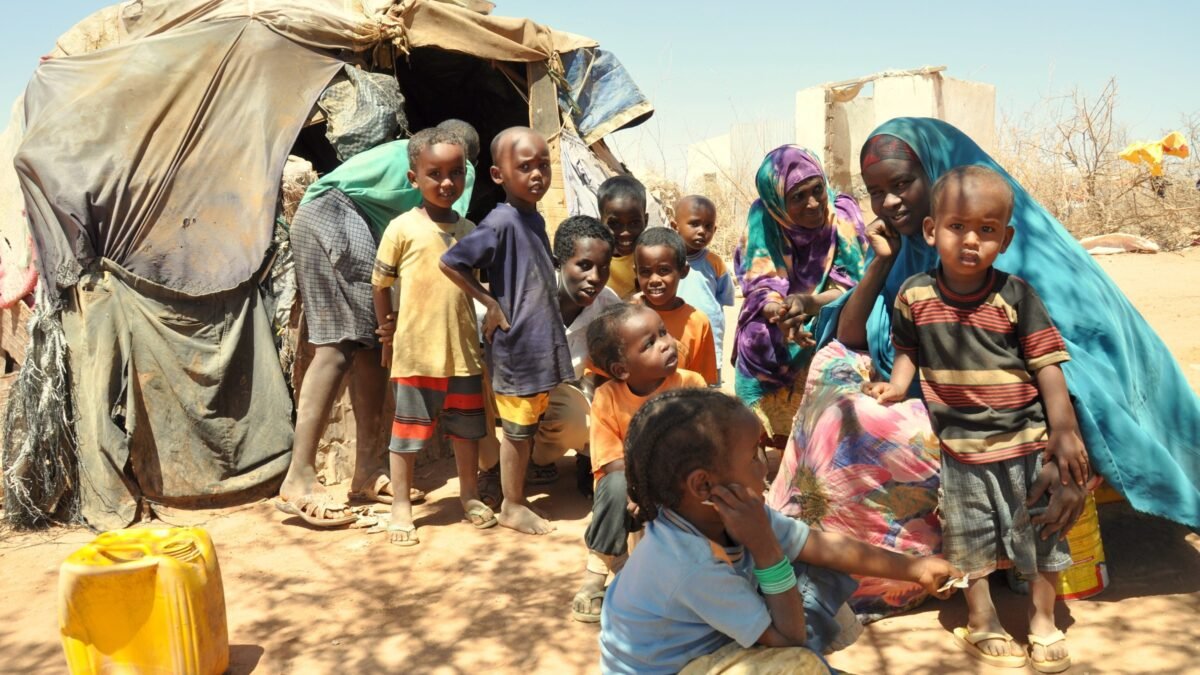
The WFP’s reach has already been sharply reduced, with support scaled down from millions of people to a fraction of earlier levels. UNICEF has separately warned that nearly two million Somali children face acute malnutrition risks this year, while broader UN estimates place millions in severe food insecurity. Those numbers have become grimly familiar. What has changed is the growing sense that the international aid system underpinning Somalia’s survival is no longer capable of absorbing competing global demands without visible reduction in its capacity to respond.
Beneath the humanitarian framing lies a question of sovereignty that the aid vocabulary is designed to avoid. When the function that keeps a population alive is financed, staffed, and timed abroad, the most basic attribute of statehood, the capacity to sustain one’s own citizens, has been outsourced. Somalia does not control the calendar on which its survival is decided. A budget meeting in a European capital, a donor’s domestic politics, a reallocation toward a louder emergency: each of these moves the July line without a single Somali in the room. Dependence of this depth is not merely a fiscal condition. It is a structural transfer of decision-making power over life and death to actors who answer to other constituencies.
The pressure is not emerging from within Somalia alone. International humanitarian systems are simultaneously absorbing conflicts in Sudan, Gaza, Ukraine, and multiple other crises competing for diplomatic attention and donor funding. Somalia’s warning therefore revealed something larger than one country’s emergency. It exposed how vulnerable heavily aid-dependent states become when global priorities shift faster than humanitarian need declines. The crisis has not grown more urgent. The system available to respond to it has grown more constrained.
This exposure reveals the limits of a model built around emergency continuity rather than structural resilience. Somalia’s humanitarian architecture has repeatedly prevented catastrophe, and that success has also, perversely, sustained a system that substitutes emergency response for the harder work of building long-term resilience to recurring drought, conflict, commodity shocks, and displacement cycles. The granary is refilled each season from outside the country, and because it is always refilled, no one is compelled to dig the well. July now looms not simply as a funding problem, but as a test of whether the international system retains both the political appetite and financial flexibility to sustain prolonged crises at scale, or whether competing emergencies have effectively triaged Somalia downward.
For African governments and regional institutions, the implications extend well beyond Somalia’s borders. The Horn of Africa sits at the intersection of migration routes, Red Sea security dynamics, climate vulnerability, and counterterrorism concerns. Large-scale humanitarian deterioration inside Somalia rarely remains contained within the country. Food insecurity becomes displacement. Displacement becomes regional economic disruption and border pressure. The external costs of Somalia’s internal fragility have always been shared unevenly, and they are about to be redistributed again if the July cliff arrives without an adequate response.
That strategic geography is also the clearest source of leverage in the entire arrangement. Somalia matters to external powers precisely because of where it sits, and aid is one of the instruments through which that interest is managed. The same partners who fund the food pipeline also fund the security partnerships aimed at weakening al-Shabab, which means the humanitarian and the geopolitical budgets are read in the same ledger. When the food line narrows, it is rarely a neutral accounting decision. It is a signal about where a fragile state ranks in someone else’s hierarchy of priorities, delivered in the one currency a hungry population cannot argue with.
The timing also cuts against Somalia’s own trajectory. The country has spent recent years attempting to project cautious institutional recovery, through debt-relief negotiations, state-building initiatives, and security partnerships. Humanitarian fragility continuously undermines those gains. States struggling to stabilise politically remain dependent on financial systems they cannot independently sustain, and that dependency makes every donor calculation a political variable in their governance equation. Somalia’s warning this week carried significance beyond the humanitarian statistics. It revealed the architecture of fragility itself: how states designed to manage emergency indefinitely become exposed the moment the external flows sustaining that management begin to narrow. The danger is not simply hunger in July. It is the growing visibility of systems that were never designed to resolve fragility, only to manage it, at a cost and on a timeline determined entirely by others.