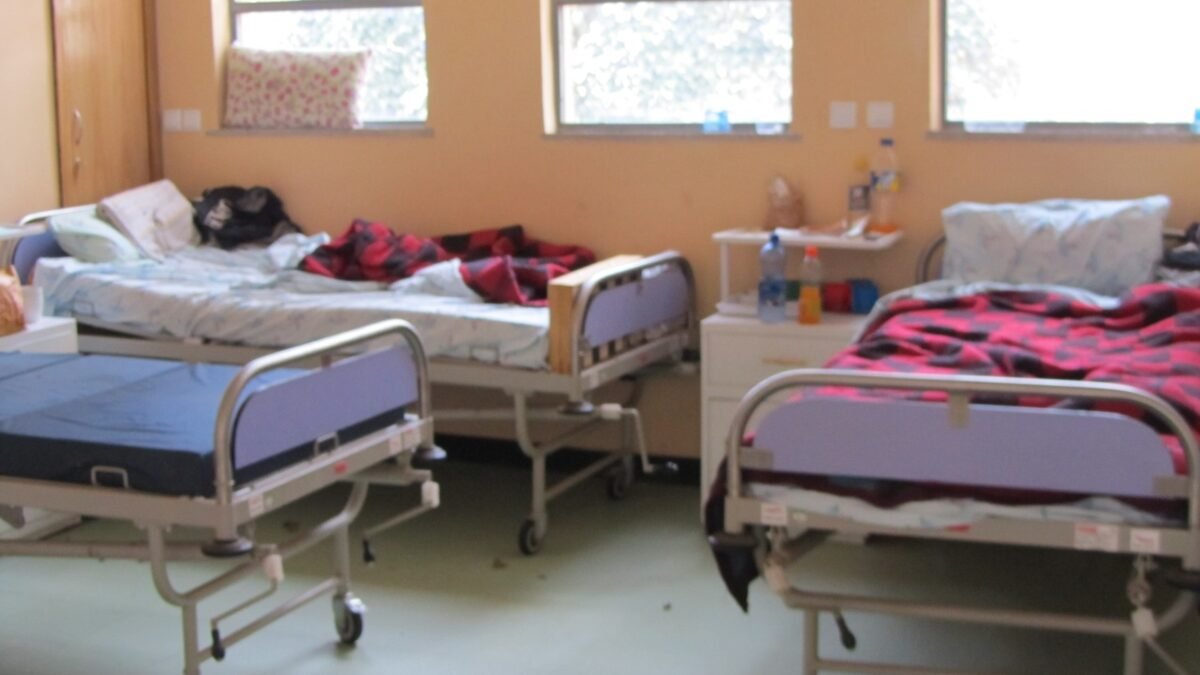
A Kenyan anaesthetist once said: “I left because my hospital had no oxygen for three days.” That sentence does not describe a personal failure. It describes a system that has organised itself to export the very professionals it cannot afford to lose, and to do so at scale, with devastating speed.
Between 2020 and 2025, the number of African-trained doctors practising abroad rose by 32 per cent, led by Nigeria, Egypt, and Kenya [World Bank Africa Migration Study, 2025]. Remittances from these professionals reached nearly $100 billion annually, more than the entire flow of foreign direct investment to sub-Saharan Africa. The numbers are cited as evidence of African success. They are actually evidence of institutional failure so total that it has been rebranded as diaspora capital.
The healthcare brain drain is not a migration story. It is a power and governance story. In countries like Ghana, Zimbabwe, and Malawi, whole wards operate on volunteers after trained nurses depart for the UK’s NHS or Canada’s provincial systems. The departure is not driven by ambition alone. It is driven by a simple arithmetic: salaries delayed for months, power cuts mid-surgery, promises of reform that arrive as policy documents and leave as dust.
“Africa’s diaspora does not vanish into foreign skies; it circles back, seeding what it has learned. But the circularity depends on a homeland capable of receiving what returns.”
The Infrastructure Beneath the Crisis
Africa’s healthcare emergency cannot be separated from its electricity emergency. Unreliable power is not background noise in hospitals; it is the chief clinical hazard. A generator that fails mid-surgery does not generate a statistic. It generates a death that is filed as a complication. The system has learned to absorb these deaths without naming their cause.
The Electricity Hazard
More than 600 million Africans lack access to reliable electricity [AfDB, 2024]. In rural areas, where the majority of the continent’s extreme poor reside, health facilities operate in conditions that would constitute a regulatory crisis in any high-income country. Vaccine cold chains break. Oxygen concentrators fail. Diagnostic equipment sits idle. The continent has been trained to describe this as a resource deficit. It is, more precisely, a governance architecture that treats rural populations as residual, to be managed, not served.
The African continent has one doctor for every 5,000 people on average [WHO, 2024]. The target set by the WHO is one for every 1,000. The gap is not closing. It is widening, because the training pipeline produces graduates who are absorbed into international health systems before domestic systems can retain them. Africa trains for export. It is the most efficient thing it does.
Migration as Rational Response to Irrational Systems
Each departure is individually rational. The Accra-trained cardiologist who accepts a position in Toronto is not betraying the continent. She is responding to a signal the continent’s institutions have been sending for decades: we cannot protect your dignity, your salary, your equipment, or your patients. The cruelty is structural, not personal.
The importing systems are not passive beneficiaries. High-income countries recruit actively, with agencies, fast-track visas, and licensing pathways aimed at professionals whose training was paid for by some of the poorest treasuries on earth. A nurse educated in Blantyre and employed in Birmingham represents a subsidy flowing from Malawi to Britain, unacknowledged in any aid ledger. The WHO’s code on international recruitment is voluntary, and voluntary codes lose to labour shortages every time.
Yet the intra-African movement tells a different story, one largely absent from the brain drain narrative. Intra-African migration now accounts for nearly 40 per cent of all African migration. East Africa’s border towns have become workshops of reinvention. Ethiopian traders in Sudanese markets, Somali entrepreneurs in Nairobi, Tanzanian truckers settled in Zambia- this circulation of people and skills represents the continent’s most honest economic integration, built not by treaty but by necessity.
The AfCFTA’s promise of formalised free movement sits against this backdrop. The question is not whether Africans will move. They will. The question is whether the institutional architecture will be built to make that movement productive rather than desperate, to convert the flight of professionals into a circuit of capacity rather than a one-way export of expertise.
The Return That Rewrites the Calculus
Something else is also true. A quiet reversal is underway. By 2025, more than 250,000 Africans of global descent had relocated or invested in property across Accra, Cape Town, and Dakar [UNESCO, 2025]. Nigerian doctors in Manchester fund telehealth start-ups in Enugu. Ethiopian coders in Berlin mentor youth hubs in Addis Ababa. What economists now term “circular migration capital” describes a model in which departure is a phase, not a final act, one that values what returns as much as what leaves.
Ghana’s Year of Return in 2019 sparked a cultural and economic aftershock still rippling through diaspora communities. Nigeria’s fintech boom, Kenya’s film renaissance, and Ghana’s creative industries owe substantive debt to those who once left. This is the circuit the continent must institutionalise, not with sentiment, but with policy: portable professional accreditation, bilateral health workforce agreements, fiscal incentives for diaspora investment in underserved counties and provinces.
Until African states reward the staying as much as they benefit from the leaving, the calculus will not change. The oxygen crisis in Kenyan hospitals is not a logistics problem. It is a political choice made visible. When that choice is reversed, when the system is restructured to retain what it produces, the birds that have been flying outward will find reason to circle home.