The Tunisian government introduced its anti-fake news decree as a response to escalating concerns about misinformation and its potential impact on national security. That framing, security as the justification, is the one that governments deploying press restrictions have used consistently enough across enough jurisdictions that it has become identifiable as a form, not a rationale. The question Tunisia requires is not whether misinformation is a genuine problem. It is whether a law that criminalises the publication of information that authorities deem false, without independent judicial review of what constitutes falsity, is a response to misinformation or a mechanism for managing dissent.
The design flaw is the point, not an oversight. A statute that punishes false information while leaving the definition of falsity to the same executive whose conduct is being reported does not regulate truth. It nationalises it. The government becomes the subject of scrutiny simultaneously, the arbiter of whether that scrutiny is accurate, and the prosecutor of those who get the verdict wrong in its eyes. Once truth has a single official owner, every inconvenient fact can be reclassified as a crime, and the burden shifts from the state proving a lie to the citizen proving he did not tell one. That is not a safeguard against misinformation. It is a licence written in its language.
From Arab Spring to Consolidation
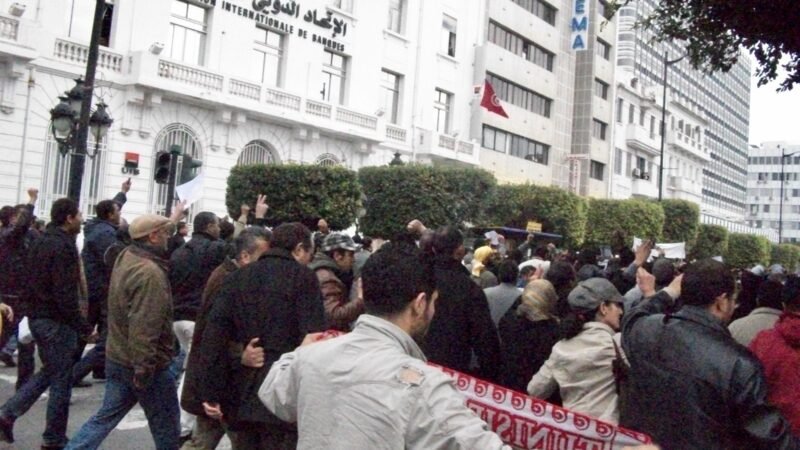
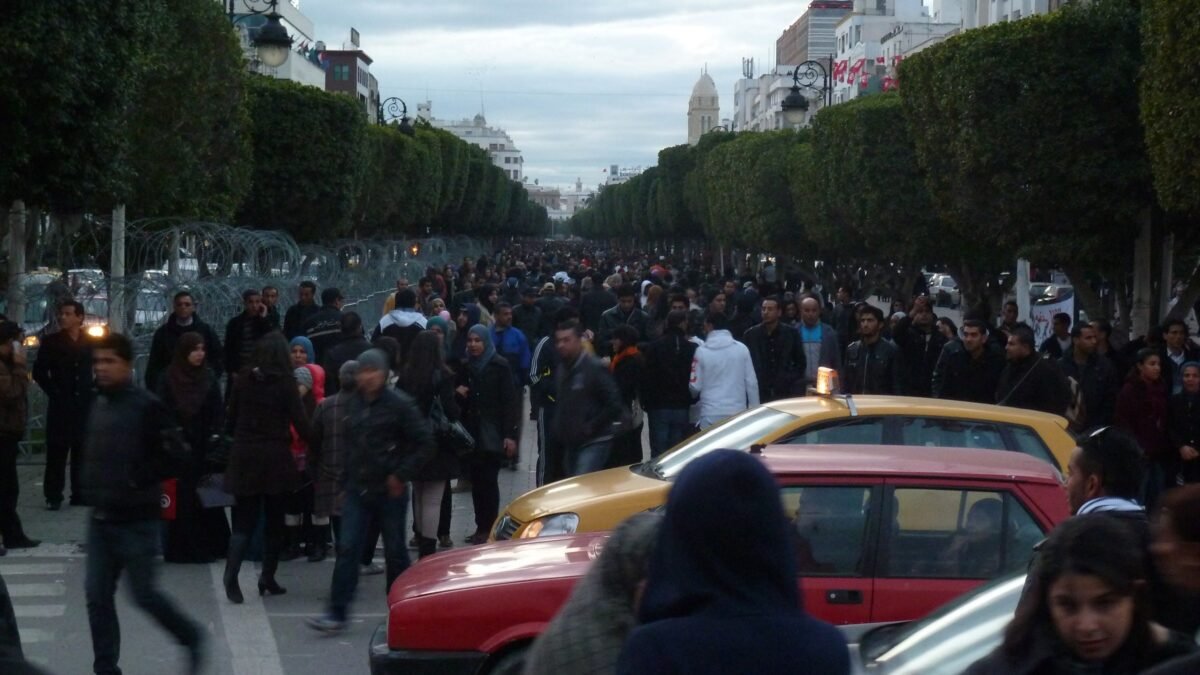
Tunisia in 2024 is not the Tunisia of 2011. The country that lit the flame of the Arab Spring, whose street protests dislodged Zine El Abidine Ben Ali and set off a regional wave of popular mobilisation, has spent the subsequent decade watching the democratic system that replaced him grow, fragment, be suspended, and be redesigned under President Kais Saied’s 2021 consolidation of executive power. The 2022 constitution that Saied authored effectively dismantled the parliamentary system that the post-Ben Ali transition had built, concentrating power in the presidency and reducing the legislature to a consultative role. The fake news decree fits within that consolidation. It is not an isolated instrument. It is part of a governance architecture that is removing the checks that the transitional period built.
How the Law Is Used
Journalists and civil society organisations in Tunisia have documented specific patterns in the application of the law. Cases have been opened against individuals who shared economic statistics that contradicted official government figures. Reporters have been detained for articles that questioned the accuracy of state communications. Social media users have faced criminal charges for posts sharing information about price increases, food availability, and public health, categories of information that a government managing public perceptions of economic conditions would have obvious incentive to control. The pattern is consistent with a law designed not to prevent the spread of fabricated stories but to restrict the circulation of accurate information that reflects badly on governance.
A Price Control on Truth
That the prosecutions cluster around economic data is the clearest tell of all. A government secure in its handling of prices, food supply, and public health does not need to criminalise the citizen who reports on them. The decree therefore functions as a kind of price control on truth: the cost of publishing an inconvenient fact is raised high enough that most will decline to pay it, and the state secures, through fear, the favourable information environment it cannot secure through performance. The chilling effect is not a side effect. It is the product the law was built to deliver.
The regional context matters. North Africa has been a testing ground for this specific category of legal instrument, laws framed around digital security, information integrity, or national cohesion that function in practice as mechanisms for suppressing journalism, opposition, and online speech. Egypt, Morocco, and Algeria each have variants of this legal architecture. Tunisia’s version is notable because it arrived in a country that, as recently as 2019, was ranked among the freest press environments in the Arab world. The regression is rapid and deliberate.
The regional convergence is not coincidence but curriculum. These statutes travel, drafted in one capital, cited in the next, refined at each stop, and every successful prosecution lowers the political cost of the next country’s version. Authoritarian technique diffuses faster than democratic institution-building because a decree can be copied in a week while an independent judiciary takes a generation, and the region’s rulers are borrowing from each other on the shorter timetable.
For the continent’s broader democratic trajectory, Tunisia’s fake news decree is a data point in a trend. The instruments of digital governance, platform regulation, content moderation law, and network shutdown authority are being deployed across African states in ways that systematically disadvantage civil society and advantage governments managing scrutiny of their own performance. The technology is new. The political logic is not. Controlling information about the exercise of power has always been a priority of governments that cannot afford the consequences of citizens being accurately informed.
What Tunisia’s trajectory reveals is that the democratic transitions of the Arab Spring were not secured by the removal of the leaders who prompted them. They required the construction of institutions, independent judiciaries, free press frameworks, civil society with genuine legal protection, that could hold successor governments accountable with the same force that the street held the original regime. Those institutions were built partially, contested continuously, and are now being dismantled with a speed that outpaces the international community’s capacity to respond. The fake news decree is not the cause of Tunisia’s democratic retreat. It is a symptom of a retreat that began when the institutional architecture of the transition proved insufficiently durable to survive a concentrated executive assault.