West Africa’s electoral integrity was tested from two directions simultaneously in early 2019. In Senegal, Prime Minister Mahammed Dionne declared incumbent President Macky Sall the winner of the 24 February presidential election before the independent electoral commission, La Commission électorale nationale autonome, had announced any official result. In Nigeria, the Independent National Electoral Commission conducted the 23 February presidential poll amid documented reports of vote suppression, ballot snatching, and institutional credibility so depleted that international observers chose their words with visible discomfort. Two different states, two different failure modes, one shared lesson: West Africa’s democratic infrastructure remains structurally fragile where it matters most, in the moment of result.
Two Failure Modes
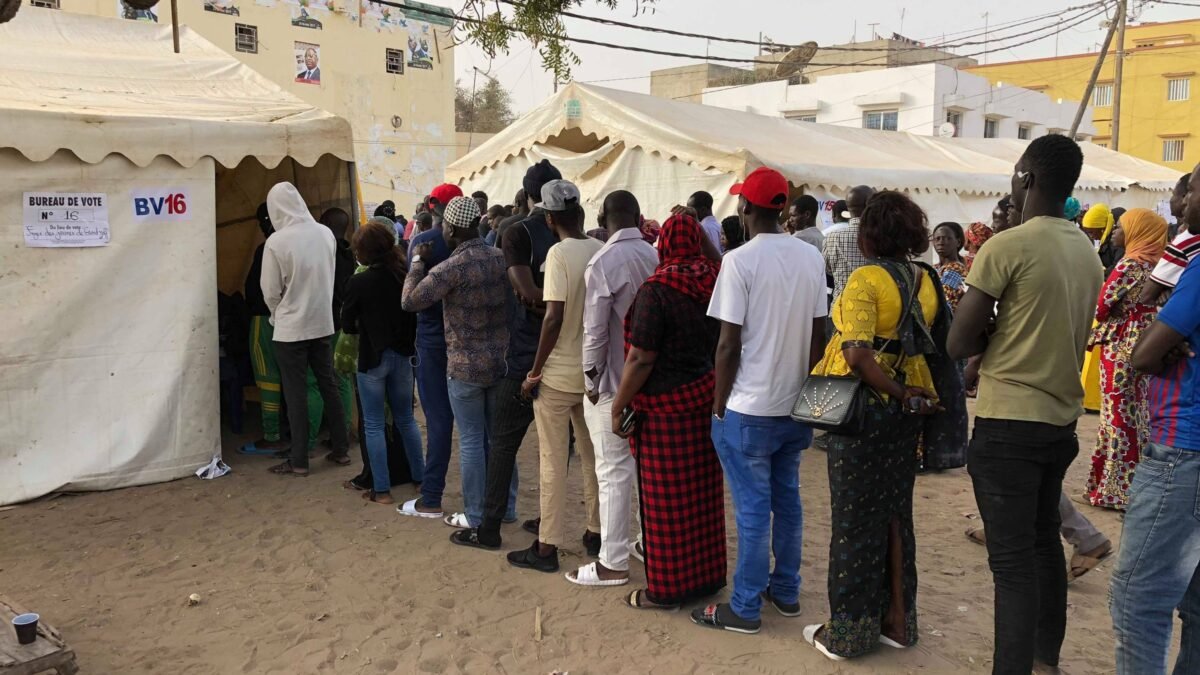
Senegal had earned its reputation as West Africa’s democratic anchor over decades of peaceful transitions and institutional resilience. The baobab, rooted and enduring, had become the continent’s metaphor for what Senegalese democracy represented. The 2019 election did not destroy that reputation, but it tested it in ways the country’s defenders found difficult to dismiss. Dionne’s claim of a minimum 57 per cent first-round victory, made to journalists before the counting was complete, was not a clerical error. It was a calculated political statement, and it produced exactly the reaction such statements produce in societies with long memories of confiscated mandates. Opposition candidate Idrissa Seck rejected it categorically. The youth movement Y’en a Marre, whose mobilisation had been central to Sall’s original 2012 victory, condemned the government’s posture. The African Union and ECOWAS, positioned as institutional elders, called for calm and urged adherence to process. International observers who described the voting as largely orderly had nonetheless chosen “orderly” carefully, a word that does not mean clean, does not mean uncontested, and does not mean complete. Sall ultimately secured a first-round victory when official results were declared, but the manner of the declaration had already done damage to the institutional narrative.
Nigeria’s Worst Case
Nigeria’s situation in February 2019 was structurally different and materially worse. INEC’s credibility had been worn thin by years of inconsistent performance, allegations of partisan interference, and the difficulty of administering elections across the most populous country in Africa. The 2019 presidential contest between incumbent Muhammadu Buhari and former Vice President Atiku Abubakar was conducted against this backdrop. Results released state by state showed Buhari with decisive margins in northern strongholds, Kano by over a million votes, and Atiku performing strongly across the southeast and southwest. The arithmetic eventually confirmed Buhari’s re-election, but the process through which it arrived- the postponement of the original 16 February date at less than five hours’ notice, the reports of intimidation at polling units, the familiar theatre of chaos in contested states- eroded whatever confidence remained in the institution conducting it. EU, AU, and other observer delegations urged transparency in tabulation as a structural minimum. A count done in darkness, as one observer noted, will always produce suspicion regardless of its accuracy.
The Structural Condition
West Africa’s electoral integrity problem is not a crisis of individual elections. It is a structural condition produced by institutional design choices made at independence and never adequately corrected. Electoral commissions that depend on executive appointment for leadership, judiciary systems that are reluctant to overturn executive-favoured results, security services that incumbent administrations instrumentalise- these are not accidents. They are features of state architecture that happen to produce predictable electoral dysfunction. The question of how to address them is answered differently depending on whether one believes the dysfunction serves incumbent interests or represents a genuine governance failure. The evidence, across most of West Africa, suggests both are simultaneously true.
The Senegal and Nigeria cases of 2019 have structural significance beyond the specific results they produced. Both countries are load-bearing pillars of regional stability, Nigeria as the continent’s largest economy and Senegal as Francophone West Africa’s institutional reference point. When either demonstrates democratic stress, the regional implications extend beyond borders. Smaller states with fewer institutional resources and weaker opposition structures use the precedents set by regional anchors as both models and justifications. West Africa’s electoral integrity, when tested and found wanting in Lagos or Dakar, is tested and found wanting in Conakry, Bamako, and N’Djamena simultaneously, because the lesson exported is that process can be managed without consequence.
The accountability gap that these elections exposed remains incompletely addressed. Atiku’s legal challenge to Nigeria’s 2019 result wound through the courts for months before being dismissed. Senegal’s tensions were absorbed by a result that, once formalised, proved difficult for the opposition to contest on grounds beyond process. In both cases, the structural arrangements that allowed these stress points to occur were left substantially intact. Electoral reform rhetoric followed the controversies as it always does, and then, as it always does, decelerated when the political moment passed. Individual election outcomes will not advance West Africa’s democratic consolidation, however clean or contested. It will be advanced by the unglamorous work of building independent institutions that retain integrity when incumbents prefer they did not.
The reason the moment of result is the precise point of failure, rather than the campaign or the ballot, is that everything before it can be performed convincingly. At the same time, everything that matters is decided after. A country can hold a vigorous campaign, open the polling stations on time, and let citizens mark their ballots freely, and still lose the election in the half-lit hours of collation, where the count is assembled by officials appointed by an incumbent and certified by courts staffed by an incumbent. Dionne’s premature declaration and INEC’s opaque tabulation were not different problems; they were the same problem caught at two stages, the assertion of a result before the process could contradict it. This is why electoral reform that fixes the visible theatre of voting while leaving the appointment of the counters and the judges untouched changes nothing. The vote is the part the citizen controls. The count is the part the incumbent controls, and West Africa’s democratic stress lives entirely in that handover.